


What Is the Debasement Trade? Markets Have Picked Three Winners and One Loser



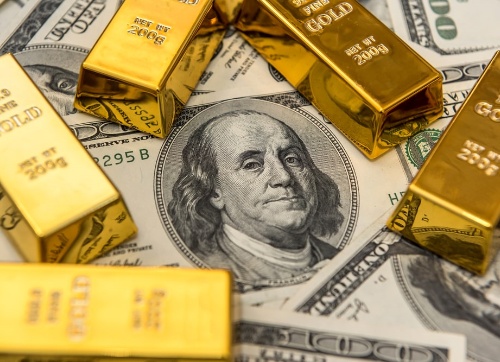
TradingKey - Since October, as the U.S. dollar, yen, and euro weaken, while gold, silver, and Bitcoin surge to new highs, Wall Street has embraced a powerful new investment narrative: the “Debasement Trade.” This term captures the extraordinary shift of capital from traditional currencies and government bonds into alternative assets — though skeptics argue it still needs real-world validation.
What Is the Debasement Trade?
The debasement trade is an investment strategy where investors turn to gold, Bitcoin, and other hard assets to hedge against the declining value of fiat currencies — driven by rising inflation, soaring government debt, and geopolitical instability.
The term "debasement" dates back to ancient times, when rulers like England’s King Henry VIII and Roman Emperor Nero diluted gold and silver coins with cheaper metals like copper, reducing their precious metal content to finance state spending.
This practice — known as coin debasement — eroded public trust in currency and destabilized economies.
In today’s world of fiat money — where governments issue currency based on national credit rather than physical reserves — concerns over inflation, deficits, and central bank credibility have revived this concept. Investors are losing faith in the long-term value of the dollar, euro, and yen, turning instead to gold, silver, and Bitcoin as “harder” stores of value.
JPMorgan popularized the term in its October 2025 research report, describing how investors are now actively seeking alternatives to avoid losses from currency devaluation.
Why Is the Debasement Trade Taking Off?
The rise of the debasement trade reflects a clear market divergence:
- Gold and silver hitting record highs
- Bitcoin gaining mainstream traction
- Major fiat currencies weakening
Bloomberg analysts noted that “debasement” feels like a rational way to describe what has been an extraordinary market shift over recent months.
JPMorgan argues that growing acceptance of this trade highlights surging demand for alternative stores of value, evident in the flood of retail investors into Bitcoin and gold ETFs since late 2024 — a move fueled by fears over:
- Government deficits
- Inflation
- Geopolitical risks
- Central bank credibility
- Fiat currency weakness
Despite global stock markets — including those in the U.S., China, Europe, and Japan — reaching multi-year or all-time highs, uncertainty remains embedded in the global economy.
Key triggers include:
- President Trump reigniting global tariff wars
- Threats to Fed independence
- Political turmoil in France and Japan
- Soaring sovereign debt levels
- Ongoing Middle East conflicts
These forces are undermining confidence in fiat money — and boosting appeal in alternative assets.
Eurizon SLJ Capital said central banks’ response to financial crises and pandemics — slashing rates and buying trillions in bonds — has left governments “addicted to deficit spending.”
Andromeda Capital Management added that aging populations and rising debt burdens make currency devaluation politically attractive. Politicians find it easier than growth reforms or austerity, increasing the risk that central banks will be pulled into monetary accommodation policies that fuel inflation.
Even discussions around gold revaluation, banking deregulation, and changes to central bank mandates suggest policymakers may be moving toward formal monetary resets — potentially leading to:
- Entrenched inflation
- Further currency depreciation
- Higher long-term interest rates
- Positive risk-free risky-asset correlations
The Fiscal Backdrop: Debt at Breaking Point
- U.S. federal debt surpassed $37 trillion in August 2025, reaching $37.86 trillion by October
- The Congressional Budget Office projects U.S. public debt will rise from 99% of GDP in 2024 to 116% by 2034
- Ray Dalio of Bridgewater Associates warns that the coming “debt crisis” could erupt within two to three years
Political instability adds pressure:
- After PM Shigeru Ishiba’s resignation in September, Japan’s coalition collapsed, ending a 26-year alliance
- France faces renewed chaos after Finance MinisterLecornu’s abrupt exit and reinstatement, challenging President Macron’s legitimacy
How to Play the Debasement Trade
Deteriorating political and economic conditions in key economies are driving currency weakness:
- DXY (U.S. Dollar Index): Down over 9% YTD
- EUR/USD: Fell over 1% in the past month
- JPY: Reversed earlier gains, weakening since April
Meanwhile:
- Gold: Up over 56% YTD, recently breaking $4,100/oz
- Silver: Up 76%, outpacing gold amid a historic short squeeze in London markets
- Bitcoin: Up 18% YTD to $111,630, with institutional adoption accelerating
Bank of America and Société Générale project:
- Gold reaches $5,000/oz by 2026
- Silver hits $65/oz in 2026
Institutions are increasingly embracing digital assets:
- Traditional firms opening crypto exposure
- More companies adopting crypto treasury strategies
XTB Ltd. said:
“This is how much the world has changed and it could be a sign that digital assets are becoming a more trusted source of value in the current environment. We do not see this coming to an end any time soon.”
Standard Chartered, Bitwise, and Fundstrat forecast Bitcoin could exceed $200,000 by end-2025.
Will the Debasement Trade Continue?
While price action shows a stark divide, some investors remain skeptical. They point out that global demand for U.S. Treasuries and dollar-denominated assets remains strong — suggesting the dollar’s reserve status isn’t under immediate threat.
But Bank of America believes the trade is far from over, citing:
- Evolving Fed policy expectations
- Potential fiscal stimulus
- The possibility of a gold revaluation event, similar to 1934 and 1973
As long as fiscal irresponsibility, monetary expansion, and geopolitical risk persist, the debasement trade — and its winners — may continue to gain momentum.
Recommended Articles









Comments (0)
Click the $ button, enter the symbol, and select to link a stock, ETF, or other ticker.