


Kospi Plunges Over 5% After Nearing 8,000 Points as South Korean Top Official Proposes ‘AI Profit Redistribution’



AI Podcast


The KOSPI index experienced a flash crash, falling over 5% from an intraday high of 8,000 to 7,421.71, driven by Samsung Electronics and SK Hynix. A proposal for a "citizen dividend" funded by AI industry excess profits, as initially interpreted by investors to involve direct profit extraction from companies, triggered market concerns regarding long-term profitability. Despite a later clarification that funding would come from excess tax revenue, market uncertainty persists due to the unclear definition of this revenue source. JPMorgan had recently raised its KOSPI targets significantly.
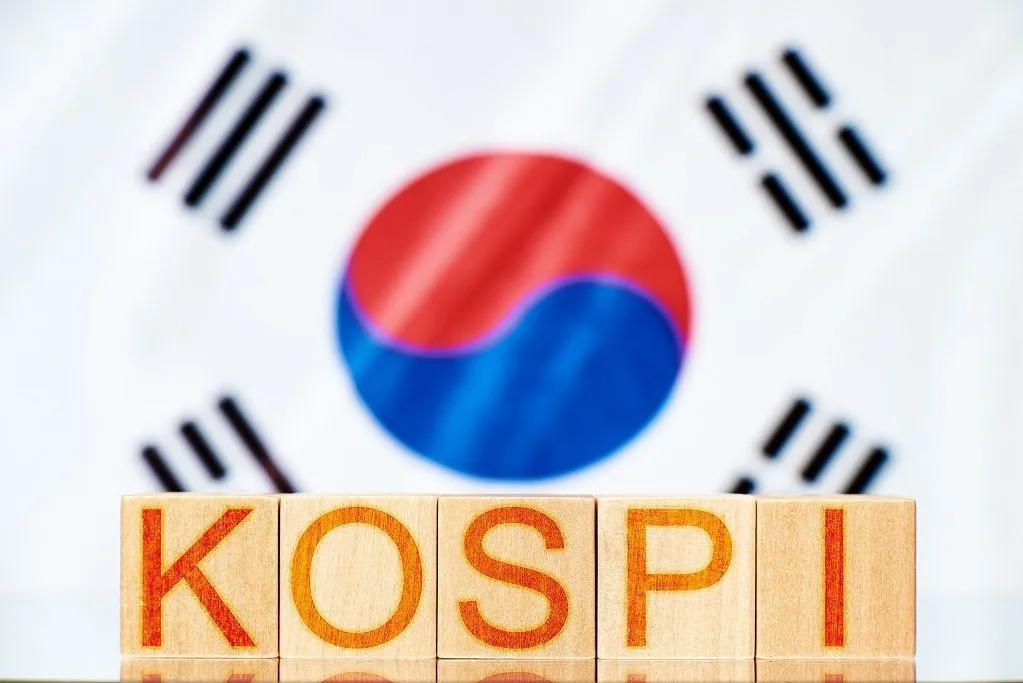
Tradingkey - During early trading on May 12, the KOSPI index briefly touched the 8,000-point mark before reversing to plunge more than 5% to a low of 7,421.71. As of the time of writing, it remains down 1.24%, trading at 7,725.33.
Samsung Electronics and SK Hynix, which account for nearly half of the KOSPI's total market capitalization, were the primary drivers behind this flash crash. Currently, SK Hynix is still down 3.62% at 1.144 million KRW, while Samsung Electronics is down 2.28% at 279,000 KRW.

Just yesterday, JPMorgan raised its targets for the South Korean stock market for the second time this month. The firm increased its base target for the KOSPI from 7,000 to 9,000 points and its bull-case scenario target from 8,500 to 10,000 points. JPMorgan's previous upward revision was at the end of April, when it set the base and bull-case targets at 7,000 and 8,500 points, respectively. This latest adjustment comes less than a month after the last one.
The fuse for this index flash crash was a recent proposal from senior South Korean policymakers. The proposal considers establishing a so-called "citizen dividend," funded by excess profits generated by the artificial intelligence (AI) industry.
Kim Yong-beom, Chief of Staff for Policy at the Presidential Office, stated: "Returns in the era of AI infrastructure are not created by individual companies alone, but stem from the industrial foundation the entire nation has built over the past half-century. Therefore, a portion of these returns should be returned to all citizens through institutional arrangements." He noted that excess profits in the AI era naturally concentrate among a few, and without institutional intervention, domestic wealth inequality will further widen.
This was the primary reason for the sharp decline in the KOSPI. His explicit statement that the funding source would be excess profits from the AI industry led investors to mistakenly believe the government would directly extract funds from corporate earnings.
Currently, the market widely expects SK Hynix and Samsung—two giants benefiting from the AI memory supercycle—to sustain monopolistic excess profits over the next two to three years. However, the government's sudden proposal for profit redistribution has shaken market expectations for their long-term profitability, triggering a valuation rerating.
However, Kim later clarified that the "citizen dividend" from the AI industry would come from excess tax revenue rather than being taken directly from AI company profits. This caused the market's decline to narrow, but because the definition of "excess tax revenue" remains unclear, market concerns have not been fully dispelled.
This content was translated using AI and reviewed for clarity. It is for informational purposes only.
Recommended Articles








Comments (0)
Click the $ button, enter the symbol, and select to link a stock, ETF, or other ticker.