Taiwan Semiconductor Manufacturing Co Ltd Stock (TSM) Moved Up by 3.19% on Apr 10: Drivers Behind the Movement



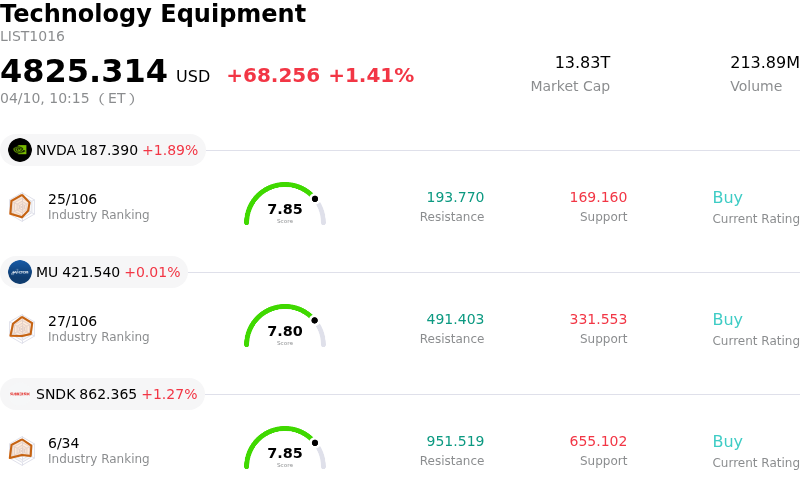
Taiwan Semiconductor Manufacturing Co Ltd (TSM) moved up by 3.19%. The Technology Equipment sector is up by 1.41%. The company outperformed the industry. Top 3 stocks by turnover in the sector: NVIDIA Corp (NVDA) up 1.89%; Micron Technology Inc (MU) up 0.01%; SanDisk Corporation (SNDK) up 1.27%.
What is driving Taiwan Semiconductor Manufacturing Co Ltd (TSM)’s stock price up today?
TSM's stock experienced significant upward movement today, primarily driven by the company's robust first-quarter 2026 revenue report and continued strong demand for artificial intelligence (AI) chips. Taiwan Semiconductor Manufacturing Company (TSMC) announced a 35.1% year-over-year increase in consolidated net revenue for the first quarter, reaching NT$1.134 trillion (approximately US$35.71 billion), surpassing analyst expectations. Revenue for March alone surged 45.2% compared to March 2025.
This strong financial performance signals the sustained momentum of the AI infrastructure boom, as TSMC is a primary manufacturer of advanced semiconductors for major technology firms like Nvidia and Apple, which are heavily investing in AI. The revenue figures indicate that demand for these critical components has remained resilient, even amidst concerns about geopolitical tensions and potential supply chain disruptions, particularly in the Middle East.
Investor sentiment has also been bolstered by positive analyst forecasts and institutional activity. Ahead of the official Q1 earnings release on April 16, analysts had anticipated strong results, with some increasing their price targets and reiterating "Buy" ratings for the stock. One firm, Aletheia Capital, even issued a new "street-high" price target for TSM, citing the company's accelerated capacity expansion plans for advanced node production and anticipated significant earnings growth through 2028.
Furthermore, broader industry trends are contributing to the positive outlook. Gartner projects global semiconductor revenue to exceed $1.3 trillion in 2026, marking the highest growth in two decades, largely fueled by demand for AI processing, data center networking, and memory price inflation. AI semiconductors are expected to constitute approximately 30% of total semiconductor revenue in 2026, underscoring TSMC's pivotal role in this expanding market. Weekly semiconductor sales have also shown a year-over-year increase, with a rising trend in DRAM IC, further indicating a robust market environment.
Technical Analysis of Taiwan Semiconductor Manufacturing Co Ltd (TSM)
Technically, Taiwan Semiconductor Manufacturing Co Ltd (TSM) shows a MACD (12,26,9) value of [-2.41], indicating a neutral signal. The RSI at 60.61 suggests neutral condition and the Williams %R at -14.56 suggests oversold condition. Please monitor closely.
Fundamental Analysis of Taiwan Semiconductor Manufacturing Co Ltd (TSM)
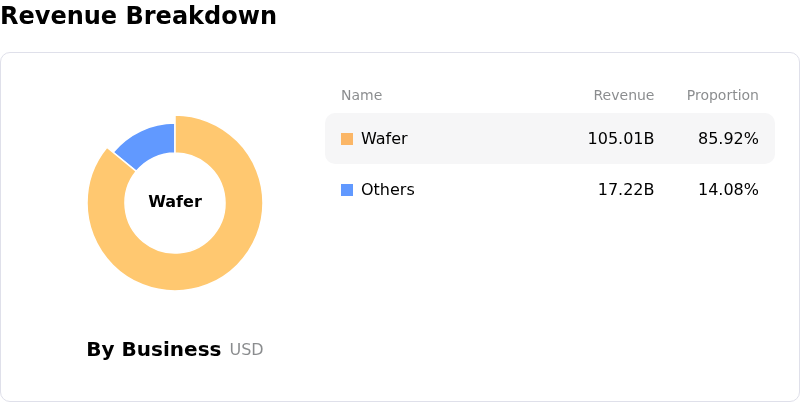
Taiwan Semiconductor Manufacturing Co Ltd (TSM) is in the Technology Equipment industry. Its latest annual revenue is $122.22B, ranking 2 in the industry. The net profit is $55.12B, ranking 2 in the industry. Company Profile
Over the past month, multiple analysts have rated the company as Buy, with an average price target of $411.66, a high of $550.00, and a low of $205.00.
More details about Taiwan Semiconductor Manufacturing Co Ltd (TSM)
Company Specific Risks:
- Persistent geopolitical instability surrounding Taiwan presents a significant "tail risk" for operations and investor sentiment, with potential for rapid stock re-rating should conditions change adversely.
- Despite recent strong revenue performance, the company's valuation is considered elevated by some analysts, with concerns that the stock is priced for "perfect execution" and that decelerating EPS growth projected for FY26 and FY27 could lead to a material price correction.
- Surging demand for AI chips is reportedly straining TSMC's production capacity, creating bottlenecks that may cause customers to seek alternative suppliers and intensifying competition from rival foundries, including new projects by industry players.
Recommended Articles