


Gold’s $5,000 Breaking Point: Why the Middle East Crisis Isn't Saving the Bulls



AI Podcast


Despite escalating US-Iran conflict and safe-haven demand, gold prices experienced a significant plunge, falling over 6% from recent highs. This decline is attributed to a strengthening U.S. Dollar Index and increased demand for liquidity, pushing investors towards cash. While geopolitical risks generally support gold, the current market dynamic suggests profit-taking and selling pressure may outweigh safe-haven inflows. Analysts anticipate this correction to be temporary, with long-term geopolitical tensions expected to eventually drive gold prices higher, provided no de-escalation occurs. The $5,500 all-time high remains a key resistance level.

TradingKey - US-Iran war continues to escalate, but gold prices suddenly plunge. Has it already peaked?
During early Asian trading on Wednesday (March 4), gold ( XAUUSD) reversed the previous day's decline, rebounding by more than 1% to break back above $5,100 per ounce, currently trading at $5,184.
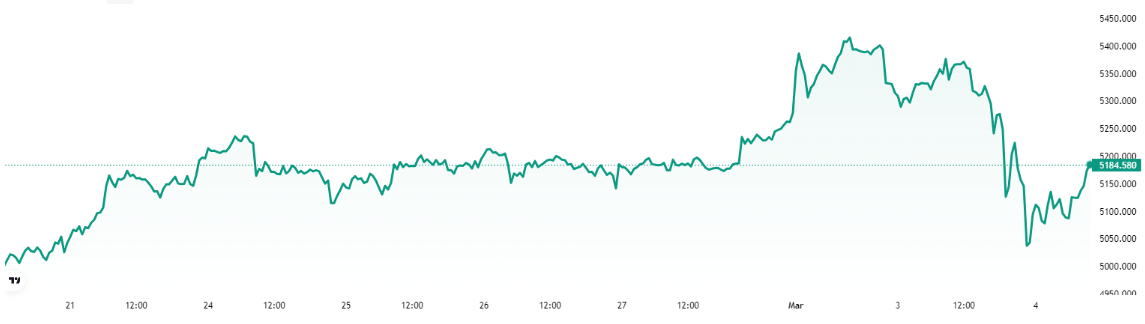 Gold price chart, source: TradingView
Yesterday, spot gold prices saw a maximum drawdown of over 6%, dropping from a high of more than $5,300 to approach the $5,000 psychological level. With the situation in the Middle East continuing to deteriorate, why did gold prices fall instead of rise? This has left investors perplexed.
On the evening of March 3 local time, Iran's Islamic Revolutionary Guard Corps (IRGC) announced it had deployed a massive number of missiles and drones to attack targets within Israel, officially launching the 16th round of attacks under "Operation True Promise 4."
Despite Iranian retaliation, the United States has ignored calls from allies such as the UAE and Qatar to end the war as soon as possible. U.S. President Trump claimed that the U.S. military has sufficient ammunition and can sustain the conflict indefinitely. Furthermore, Trump stated, "I do not rule out sending ground troops to Iran; I don't care about the polls." Currently, instead of showing weakness or negotiating, both sides have launched even more aggressive attacks, entering a state that is nearly out of control.
Although the war has boosted safe-haven demand and provided support for gold prices, a stronger U.S. dollar has become a burden on its upward momentum. Since the plunge on January 27, the U.S. Dollar Index (DXY) has continued to rebound, approaching the 100 mark with a cumulative gain of approximately 5%.
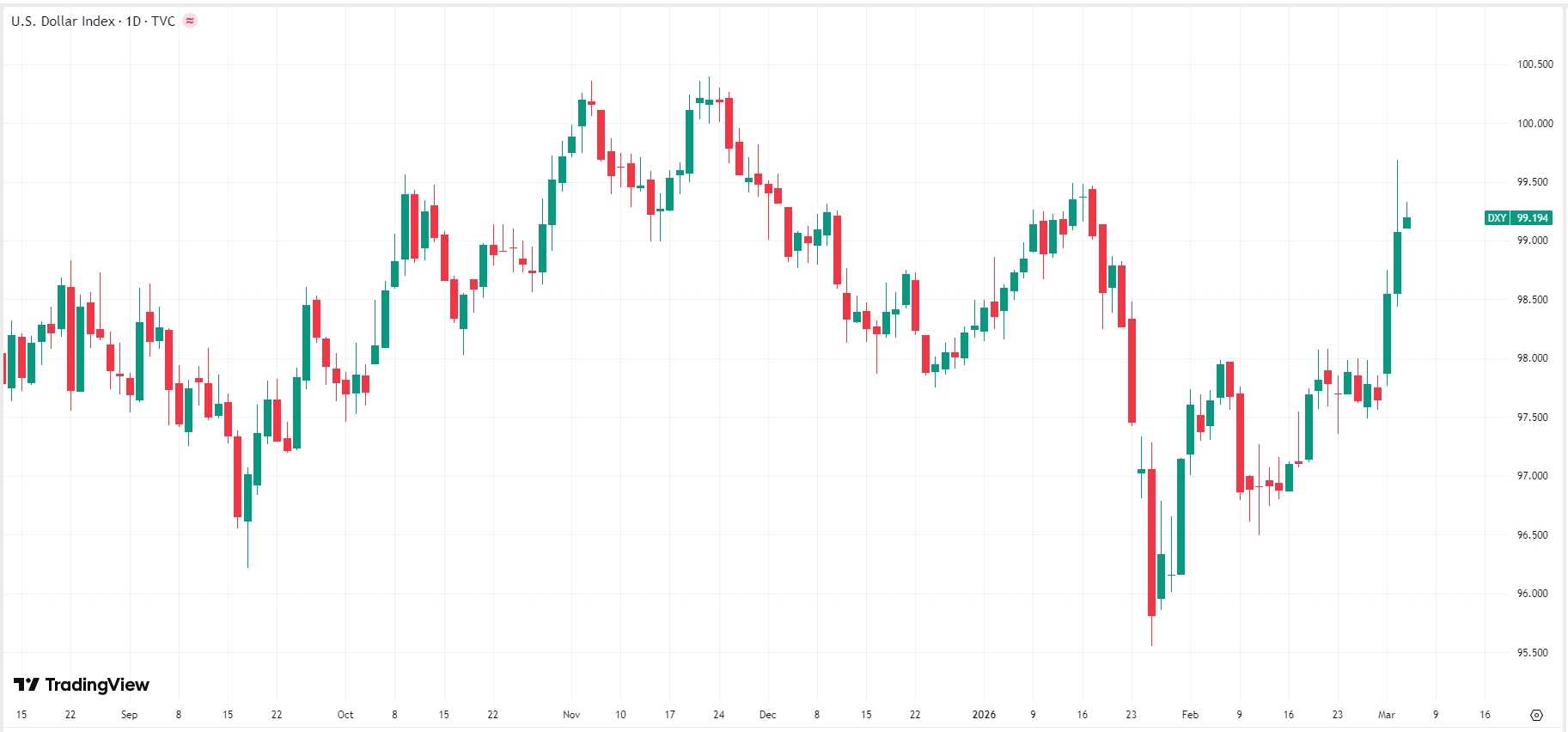 U.S. Dollar Index (DXY) chart, source: TradingView
Furthermore, in the view of analyst Bob Haberkorn, the surge in demand for liquidity is also a major reason for the correction in gold prices. Bob Haberkorn stated, "The chase for liquidity—the demand to move into cash—seems to be causing the pullback in gold prices."
So, how low will gold prices fall? Bob Haberkorn believes this correction is temporary, and that geopolitical risks will continue to drive safe-haven capital into gold and silver, pushing their prices higher.
From a technical analysis perspective, the all-time high of $5,500 reached on January 29 is a key resistance level for gold, and the reversal after the March 2 rally indicates heavy selling pressure at that level. In this scenario, strong buying power is required to absorb profit-taking sell-offs; otherwise, prices will continue to retreat. In other words, without external catalysts or a de-escalation of the US-Iran war, gold prices will lose support.
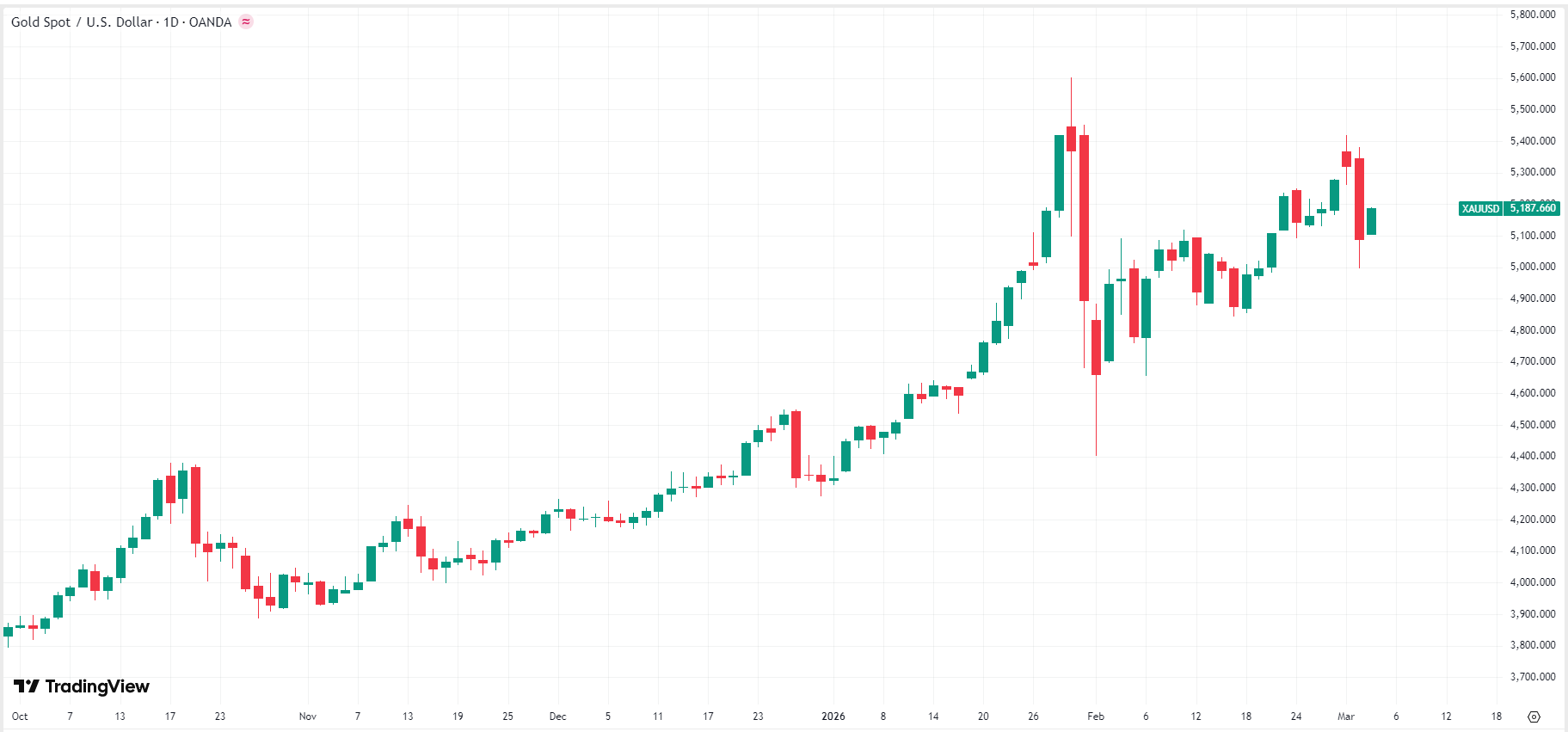 Gold price chart, source: TradingView
This content was translated using AI and reviewed for clarity. It is for informational purposes only.
Recommended Articles








Comments (0)
Click the $ button, enter the symbol, and select to link a stock, ETF, or other ticker.