


Samsung Strike, South Korea Policy Risk: Can Micron Break Through $1 Trillion Market Cap?



AI Podcast


Micron Technology's trading volume exceeded Nvidia's, driven by AI memory demand and a Samsung Electronics labor dispute. The Samsung strike could shift orders to Micron and SK Hynix. South Korea's proposed "citizen dividend" tax proposal, though clarified as a personal opinion, poses a potential tail risk for local semiconductor stocks. Micron, the sole US advanced memory chip producer, benefits from CHIPS Act subsidies but faces export restrictions to China. A recent CEO visit to China may lead to eased import restrictions, partially offsetting geopolitical costs and unlocking growth potential. Micron's market cap growth hinges on AI demand, potential order shifts, and overcoming HBM technology competition.
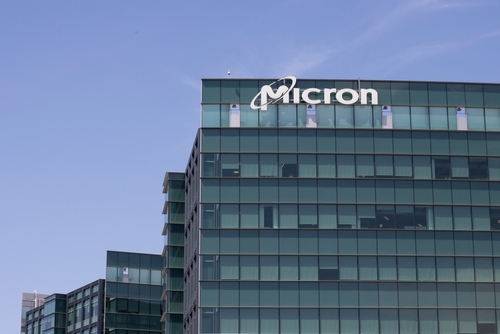
TradingKey - On May 11 ET, Micron Technology ( MU) topped the U.S. market with a turnover of $55.603 billion, surpassing Nvidia. Over the subsequent two trading days, its share price climbed above $800, and its market capitalization broke through $900 billion.
Driving this rally, in addition to AI-driven memory demand, was a labor dispute at Samsung Electronics.
Samsung Strike: Short-term Impact and Potential Order Shifts
Negotiations between the Samsung Electronics labor union and management have collapsed, with more than 50,000 workers planning an 18-day general strike starting May 21. JPMorgan estimates that the strike could drag down revenue for Samsung's semiconductor division by 1% to 2%.
The deeper impact lies in supply reliability. Customers may permanently shift a portion of their long-term orders to Micron or SK Hynix to reduce dependence on a single supplier. Investment bank Jefferies stated that the Samsung strike could affect approximately 3% of global memory chip capacity, accelerating the migration of customer orders to Micron. If this structural shift occurs, it will benefit Micron's long-term market share.
South Korea’s Policy Risk: The Controversy over "National Dividends"
Beyond the strikes, Samsung is also facing policy-level pressure. On May 11, Kim Yong-beom, Chief of Staff for Policy at the South Korean Presidential Office, proposed on social media the introduction of a "citizen dividend" system to return excess AI profits to society via taxes. The news rattled the market: the KOSPI plummeted by more than 5% intraday, as shares of both Samsung and SK Hynix fell and foreign investors offloaded a net 5.6 trillion won.
However, the proposal has not yet been placed on the official agenda. South Korean authorities issued an urgent clarification the following day, stating it represented only a personal opinion. Given that Samsung and SK Hynix account for approximately 30% of South Korea's exports and a significant portion of employment, any substantive tax hike would face staunch opposition from both corporations and the National Assembly.
Analysts believe there is a less than 15% probability of the policy being implemented before 2027, classifying it as a "low-probability, medium-impact" tail risk. Nevertheless, the recurring emergence of this topic could continue to dampen foreign investor confidence in South Korean semiconductor stocks.
Micron’s Relative Advantages and Its Own Costs
As the only manufacturer in the United States producing advanced memory chips at scale, Micron enjoys $6.14 billion in subsidies from the CHIPS Act and a defense supply chain premium. However, this certainty faces multiple tests.
First, industrial policy remains uncertain following the 2026 U.S. election, as additional funding for the CHIPS Act has already sparked controversy in Congress. Second, geopolitics is a double-edged sword; Micron is barred from exporting advanced products to China, resulting in an annual revenue loss of approximately $1.2 billion to $1.5 billion, which nearly matches its average annual subsidy amount.
At the same time, U.S. tech giants are supporting Samsung and SK Hynix as backup suppliers; being the "only domestic provider" does not equate to technological leadership.
Notably, Micron CEO Sanjay Mehrotra recently visited China alongside Trump, which is expected to push for a relaxation of export restrictions. Markets anticipate that following this visit, Chinese regulators may announce that some of Micron's memory products have passed compliance reviews or allow the company to participate in domestic server project bidding. If realized, this would directly unlock growth potential for Micron in China, partially offsetting losses from export restrictions.
In summary, Micron faces a lower risk of South Korean-style "sudden tax hikes" and offers higher policy predictability, yet it still bears the uncertainty of exports to China. The progress of the China visit will be a key variable determining its performance resilience in the coming months.
Can Micron reach a $1 trillion market capitalization?
Whether Micron can surpass a $1 trillion market capitalization depends on three key factors, and the CEO's visit to China could emerge as a new variable:
Demand Growth: The assessment that AI computing demand will maintain a 40% annual growth rate remains unchanged. If the Micron CEO's visit to China facilitates a loosening of import restrictions, the company's market opportunity will expand further.
Supply Gap: The Samsung strike is exacerbating shortages in the short term, but panic stockpiling by customers could pull forward demand from 2027; capacity expansion by the three major manufacturers may close the shortage window earlier than expected. If the China visit is successful, the entry of Micron products into China could alleviate its capacity absorption pressure, though the impact on the overall global gap would be limited.
Technology Share: The shift in customer trust triggered by the strike may help Micron gain share in the SSD and DDR5 segments, but the core HBM track remains dominated by Samsung and SK Hynix. If Micron’s next-generation HBM performance fails to meet standards within the next 12 months, it will be difficult to break through the market share ceiling. The China visit primarily benefits traditional memory and will not alter the HBM landscape.
Technological catch-up remains key.
Trading volume surpassing Nvidia marks a milestone. The Samsung strike provides a short-term tailwind; policy disputes in South Korea are weighing on competitors' valuations. Micron offers higher policy predictability but at the cost of exports to China. The CEO recently visited China with Trump; if China eases import restrictions, it could partially offset geopolitical costs.
The key to the market cap race remains catching up in HBM technology. Distribution issues can suppress competitors' valuations but will not automatically elevate Micron's technical standing. Investors should monitor four variables: the strike's execution and the order migration ratio, whether South Korean policy disputes enter the formal agenda, sampling results for Micron's next-generation HBM, and whether the China visit results in substantive easing measures.
This content was translated using AI and reviewed for clarity. It is for informational purposes only.
Recommended Articles







Comments (0)
Click the $ button, enter the symbol, and select to link a stock, ETF, or other ticker.