



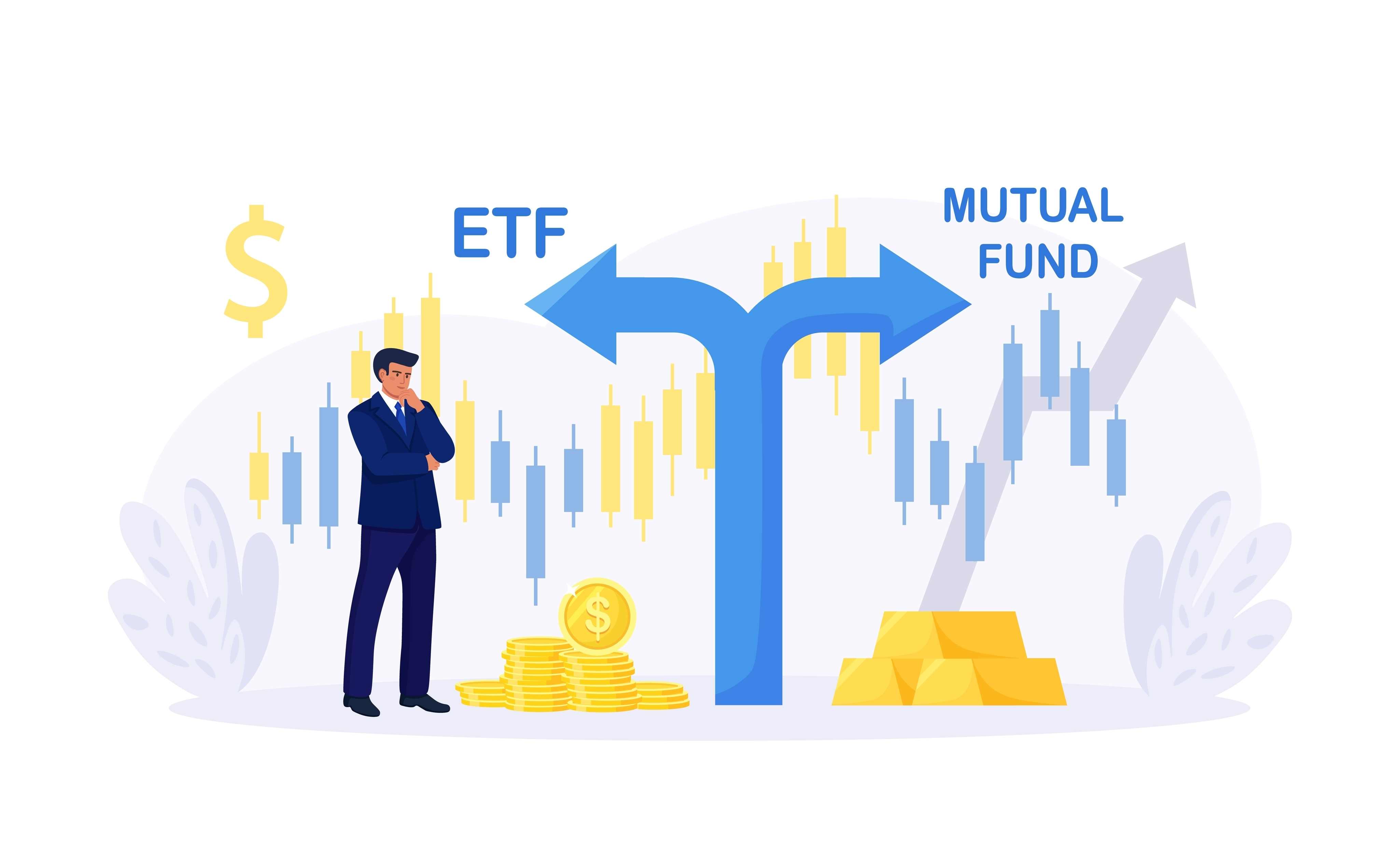
TradingKey - "Which is better, mutual funds or ETFs?"—this ranks among the most frequently asked questions financial advisors receive. On the surface, this question seems to seek a definitive answer. Still, in reality, it reflects investors' ongoing exploration for the tool that best aligns with their personal financial planning needs.
Before making investment decisions, thoroughly understanding the core differences between these two investment vehicles helps identify their respective advantages and enables the formulation of more suitable asset allocation strategies based on liquidity requirements, risk tolerance, and long-term objectives.
As mainstream pooled investment vehicles, ETFs and mutual funds are highly similar in providing diversified asset exposure and mitigating single-security risk. Both can cover various market segments including stocks, bonds, and commodities, and may employ either passive or active management approaches. However, they exhibit fundamental distinctions in operational mechanisms, trading rules, fee structures, and tax treatments.
The following content will elaborate on the definitions of ETFs and mutual funds, followed by comparative analysis across multiple dimensions including fee structures, liquidity metrics, information transparency, and tax efficiency.
(Source: Shutterstock)
What Are Mutual Funds?
Mutual funds are managed investment vehicles that pool capital from numerous investors who share common objectives and risk tolerance levels. These pooled funds are operated by asset management companies and professionally managed by fund managers, who invest the capital in diversified portfolios of securities such as stocks and bonds. Their goal is to achieve capital appreciation or stable returns while managing risk.
Since their inception in 1924, mutual funds have become one of the world's most popular investment vehicles. During the latter half of the 20th century—particularly in the 1980s and 1990s—mutual funds experienced rapid growth and remain crucial tools for both individual and institutional investors seeking asset allocation and wealth accumulation.
Mutual funds are priced based on Net Asset Value (NAV), calculated at the end of each trading day:
NAV = (Total Market Value of Fund Assets - Total Liabilities) / Total Outstanding Shares
Investors purchase or redeem shares at the NAV settled on that day, with transactions processed uniformly after market close, eliminating intraday price fluctuations.
Most mutual funds employ active management, where professional portfolio managers develop strategies and select/adjust holdings through in-depth research and market analysis to outperform market averages.
Of course, some passively managed mutual funds exist, typically designed to track specific market indices, offering options for investors seeking low-cost solutions with returns consistent with index performance.
Advantages of Investing in Mutual Funds
Compared to directly purchasing individual stocks or bonds, mutual funds offer several significant advantages:
- protecting
Operated by experienced professionals with deep financial expertise, these managers leverage data analysis platforms, research resources, and macroeconomic insights to make more robust decisions in complex and volatile markets—a particularly valuable service for individual retail investors.
- Diversification
By investing across multiple industries, regions, companies, and even asset classes, mutual funds effectively reduce the risk of single-security volatility impacting the overall portfolio, protecting those seeking steady growth.
- Variety of Product Choices
Whether preferring aggressive growth strategies or conservative stable returns, the current market offers a rich selection of fund types, ensuring investors with various styles and financial goals can find suitable matches.
- High Liquidity
The vast majority of mutual funds allow daily purchases and redemptions, all executed at that day's closing NAV, providing users with sufficient flexibility to address changing liquidity needs.
- Automation and Convenience
Many platforms support automatic recurring investment plans, enabling users to contribute evenly on monthly or weekly schedules, enhancing long-term financial discipline while avoiding uncertainties from market timing attempts. Additionally, as pooled management vehicles, mutual funds generally do not charge per-transaction commissions, making them more friendly to those accustomed to long-term holding strategies.
- No Bid-Ask Spread Interference
With only one daily NAV calculation and all purchases/redemptions priced at the current NAV, investors avoid the bid-ask spreads that can occur with ETFs, reducing short-term trading errors and providing a simpler, clearer experience for average users.
(Source: Shutterstock)
What Are ETFs?
ETF stands for "Exchange Traded Fund," an investment vehicle that combines the diversification benefits of mutual funds with the trading flexibility of stocks.
Similar to mutual funds, ETFs pool investor capital, which is professionally managed and invested in a basket of securities. This allows investors to gain diversified exposure by purchasing a single ETF "unit." ETFs cover nearly every market segment—they can hold traditional stock or fixed-income portfolios, incorporate "alternative" assets, and even employ complex strategies typically inaccessible to retail investors.
One key feature of ETFs is their ability to be traded like regular stocks throughout the day on stock exchanges. This distinctly differentiates them from traditional mutual funds, which can only be transacted at the daily closing net asset value (NAV). ETFs offer real-time tradability, with prices fluctuating intraday based on market supply and demand.
Learn more: "ETF Essentials: A Clear Guide to Structure, Mechanics & Core Strategies"
Advantages of Investing in ETFs
- Low Cost
Many ETFs follow passive strategies requiring minimal active analysis, resulting in lower operating expenses. Core index ETFs often charge annual fee ratios as low as 0.1% or less—particularly advantageous for long-term investing, as reduced fees preserve more capital appreciation.
- Real-Time Trading Capability
With stock-like mechanics, users can place buy/sell orders during market hours. This enables short-term traders to capture price fluctuations while providing strategic flexibility for timely entries/exits during sharp declines or pullbacks.
- Strong Diversification
Even with modest capital, purchasing a single ETF holding dozens or hundreds of stocks/bonds instantly delivers broad diversification, significantly reducing the impact of individual company or sector failures on the overall portfolio.
- Transparent Holdings
Most ETFs provide daily portfolio disclosures, allowing investors to track exactly where their money is allocated. This high transparency—unlike many actively managed mutual funds that disclose holdings only quarterly—is crucial for risk-conscious investors prioritizing informed decision-making.
- Superior Tax Efficiency (U.S. Example)
Due to their "in-kind creation/redemption" structure, capital gains typically aren't forced to be realized prematurely. This helps delay tax liabilities, enhancing compounding benefits. (Note: Tax advantages vary by jurisdiction and may not apply outside the U.S.)
- Extensive Investment Scope
Modern ETFs now span virtually all standardized financial instruments, including but not limited to:
- Index/sector/style equity strategies;
- Domestic and international sovereign/corporate bonds;
- Gold, oil, and commodities;
- Foreign currency assets;
- Emerging markets and thematic strategies.
- Compatible with Automated Trading Systems
Increasingly, online brokerages support systematic investment plans for ETFs, enabling gradual wealth accumulation. Additionally, most platforms offer zero-commission trading, reducing long-term operational costs and friction losses.

(Source: Shutterstock)
Similarities Between Mutual Funds and ETFs
At their core, both are pooled investment vehicles sharing the same fundamental objective—to provide investors with diversified, professionally managed, and risk-controlled investment solutions. They share several key characteristics that have long made them essential components of robust investment portfolios.
In terms of investment options, both ETFs and mutual funds offer exceptionally diverse allocation possibilities. Through a single transaction, these products provide broad exposure across multiple sectors, companies, or asset classes, effectively dispersing risks associated with individual securities.
Both ETFs and mutual funds enable individual investors to access diversified security portfolios at lower costs without needing to purchase multiple individual assets separately. In some cases, a single fund may hold hundreds or even thousands of stocks or bonds, significantly reducing concentration risk and serving as a vital tool for mitigating market volatility shocks.
Professional management represents another commonality between the two. Although management approaches differ—with most ETFs employing passive index-tracking strategies while mutual funds more commonly use active management—all funds are overseen by licensed professionals.
Fund managers continuously monitor and adjust portfolios according to investment guidelines specified in fund prospectuses, ensuring alignment with established objectives. This professional oversight not only saves investors substantial research time but also provides institutional-level market insights.
Regardless of approach, the management teams behind both vehicle types conduct research and make investment decisions based on established strategies. This enhances operational efficiency while allowing retail investors to indirectly leverage expert knowledge when participating in capital markets.
Additionally, both ETFs and mutual funds operate under strict regulatory oversight requiring regular disclosure of portfolio composition and performance data.
For example, in the United States, these products must comply with Securities and Exchange Commission (SEC) regulations, while in Canada they fall under supervision by authorities like the Canadian Securities Administrators (CSA).
This means all products must disclose comprehensive information before launch and remain subject to ongoing regulatory scrutiny to protect holder interests, enhancing security from a compliance perspective.
Differences Between Mutual Funds and ETFs
Although ETFs (Exchange-Traded Funds) and mutual funds are both pooled investment vehicles providing diversified exposure through baskets of securities, they exhibit significant differences in trading mechanisms, fee structures, tax efficiency, and liquidity.
Understanding these distinctions helps investors make better-aligned choices based on their financial goals and risk tolerance. Below is a comprehensive comparison of ETFs and mutual funds across multiple critical dimensions.
- Trading Methods and Flexibility
ETFs trade like stocks on exchanges throughout the trading day, with prices fluctuating in real time. This allows investors to use limit orders, market orders, and other order types for flexible entry/exit while capturing precise market timing.
Mutual funds, however, are priced and transacted only once per trading day—at the closing net asset value (NAV). This means investors cannot control exact execution prices and lack the intraday liquidity of ETFs.
This structural difference creates multiple implications: ETFs offer superior liquidity and operational flexibility, better suiting investors who prefer active position adjustments or precise timing. Mutual funds suit long-term holders with lower sensitivity to entry/exit timing.
- Cost Fee Structures
ETFs typically employ passive index-tracking strategies with lower operational costs, averaging expense ratios between 0.05% and 0.75%.
Mutual funds predominantly use active management, relying on frequent portfolio adjustments by fund managers. Their expense ratios generally range from 0.5% to 2%. This cost gap can significantly impact net returns through compounding over time. Notably, mutual funds often charge sales loads (front-end or back-end) and redemption fees, while ETF transactions may incur brokerage commissions but lack such additional charges.
- Tax Efficiency
Due to their "in-kind creation/redemption" mechanism, most ETFs effectively minimize capital gains events. For example, when institutions redeem ETF shares, securities can be reallocated without realizing capital gains, deferring tax liabilities.
Conversely, mutual funds facing large redemptions must sell underlying assets to meet cash needs, potentially generating capital gains distributed to all shareholders—even those who didn't sell shares.
ETFs generally offer superior tax efficiency, particularly beneficial for investors holding them in taxable accounts. Many investors with long-term holding objectives prefer placing mutual funds in tax-advantaged accounts to avoid annual capital gains tax impacts.
- Information Transparency
ETFs typically disclose full portfolio holdings daily, enabling investors to track asset composition and weight changes in real time.
Most actively managed mutual funds update holdings monthly or quarterly, resulting in lower frequency of public disclosure.
- Minimum Investment Thresholds and Participation Methods
ETFs trade like regular stocks on exchanges, usually with no minimum investment requirements. Investors can purchase single units through brokerage accounts at prevailing market prices.
Many traditional mutual funds impose minimum investment thresholds, typically ranging from $500 to $5,000, creating barriers for investors with limited initial capital.
- Liquidity and Lock-Up Period Considerations
Generally, ETFs benefit from secondary market mechanisms and high trading volumes in popular products, offering highly convenient trading with no lock-up periods.
Certain mutual fund types may impose lock-up periods or short-term redemption fees (e.g., ELSS products typically have 3-year lock-ups), restricting liquidity and making them unsuitable for aggressive short-term trading.
Comparison Dimension | ETFs | Mutual Funds |
Trading Method | Trade like stocks on exchanges throughout the day | Priced and transacted once daily at closing NAV |
Management Style | Predominantly passive + some active options | Primarily active management |
Cost Structure | Lower—typical annual fees <1%; no sales loads | Higher—may include ongoing sales/subscription fees |
Tax Treatment | In-kind creation/redemption mechanism reduces capital gains obligations | Internal rebalancing often triggers taxable events |
Portfolio Transparency | Daily disclosure | Typically quarterly disclosure |
Investment Threshold | No minimums; can buy single shares | Minimum initial investment required |
Lock-Up Period | Typically none; free entry/exit | Some products have lock-up/redemption cycles |
How to Choose: ETFs or Mutual Funds?
Choosing between ETFs and mutual funds isn't a simple either/or decision—it requires matching these vehicles to your personal investment needs, behavioral habits, and financial objectives. Each has distinctive characteristics suited to different investor profiles.
Critical Considerations Before Investing: Defining Goals and Style
1. Are you aiming for long-term wealth accumulation, or seeking to capture short-term market opportunities?
2. Do you prefer managing your portfolio independently, or would you rather entrust capital to professional managers?
3. What matters most to you: trading flexibility, cost control, or automated convenience?
4. What is your risk tolerance level?
Reading the following analysis with these questions in mind will help clarify your direction.
- Suitability Based on Investment Thresholds
For capital-constrained novice investors, ETFs often present greater appeal. ETFs can be purchased in single shares, with minimum investments potentially as low as the price of one share—enabling small amounts of capital to build diversified portfolios. In contrast, mutual funds generally impose minimum investment thresholds.
- Trading Characteristics and Investor Behavior
Investors who prefer controlling trade timing may lean toward ETFs. ETFs trade on exchanges with real-time pricing, supporting complex order types like limit orders and stop-loss orders that allow precise entry/exit points—even enabling intraday trading and short-selling strategies.
Mutual funds, however, are priced and transacted only once daily at closing NAV. Investors cannot participate in intraday price movements, but this mechanism also prevents overtrading temptations. Notably, mutual funds support automated investment plans for executing dollar-cost averaging strategies. ETFs typically lack this functionality, requiring manual execution for each transaction.
- Management Style and Investment Objectives
Passive investors—those seeking low-cost market tracking—may consider ETFs or index mutual funds.
ETFs typically offer lower fees due to structural advantages and superior tax efficiency. Index mutual funds, while slightly more expensive, may provide more convenient automated investment experiences.
Active investors—those expecting professional managers to deliver excess returns—might better suit actively managed mutual funds, despite their higher fees and the challenge of consistently outperforming benchmarks over the long term. It's critical to note that past performance doesn't guarantee future results, and active management success rates carry inherent uncertainty.
- Financial Life Stage and Risk Preferences
Investors at different life stages face varying needs:
Young investors with stable income and long time horizons might consider equity mutual funds for long-term growth.
Mid-career investors may prefer balanced mutual funds to achieve equilibrium between risk and return.
Those approaching retirement might favor bond mutual funds to reduce portfolio volatility.
Risk-averse investors should note mutual funds' stable pricing mechanism (trading at NAV without bid-ask spreads), while volatility-tolerant investors might appreciate ETFs' tactical adjustment flexibility.
Of course, investors aren't limited to choosing just one. If both align with your strategy, combining them can be advantageous.
How to Purchase ETFs and Mutual Funds
To begin investing in ETFs or mutual funds, first identify suitable products and select appropriate purchase channels. For ETFs, trading occurs through existing securities brokerage accounts.
Funds like VOO (tracking S&P 500), QQQ (tracking Nasdaq-100), and iShares series trade on major exchanges and can be bought/sold in real time during market hours.
Mutual funds, by contrast, typically require purchase through licensed financial institutions, third-party platforms, or direct subscriptions with fund companies. These platforms often support automated recurring investments and dividend reinvestment features. When uncertain, consider consulting an independent registered financial advisor who can integrate your financial situation, tax planning, and asset allocation goals to develop a comprehensive investment strategy.
The Bottom Line
Overall, both ETFs and mutual funds can effectively support long-term wealth growth. The key is clearly defining your investment objectives and understanding which product characteristics align with your specific needs. Independently evaluating these factors will help you make more rational and efficient asset allocation decisions, optimizing your overall investment strategy and establishing a solid foundation for achieving financial goals.
