



TradingKey - Cristiano Castro, Head of Business Development for BlackRock Brazil, recently stated that the company's Bitcoin spot ETF has become its most profitable product line. This growth momentum has even exceeded internal expectations and has been called a "pleasant surprise" by management.
Data shows that the combined assets under management of the U.S.-listed iShares Bitcoin Trust (IBIT) and the simultaneously launched IBIT39 product in the Brazilian market have approached the $100 billion mark. Notably, the U.S. version of IBIT surpassed $70 billion in assets just 341 days after its approval and listing in January 2024, setting a record for the fastest achievement of this milestone in global ETF history.
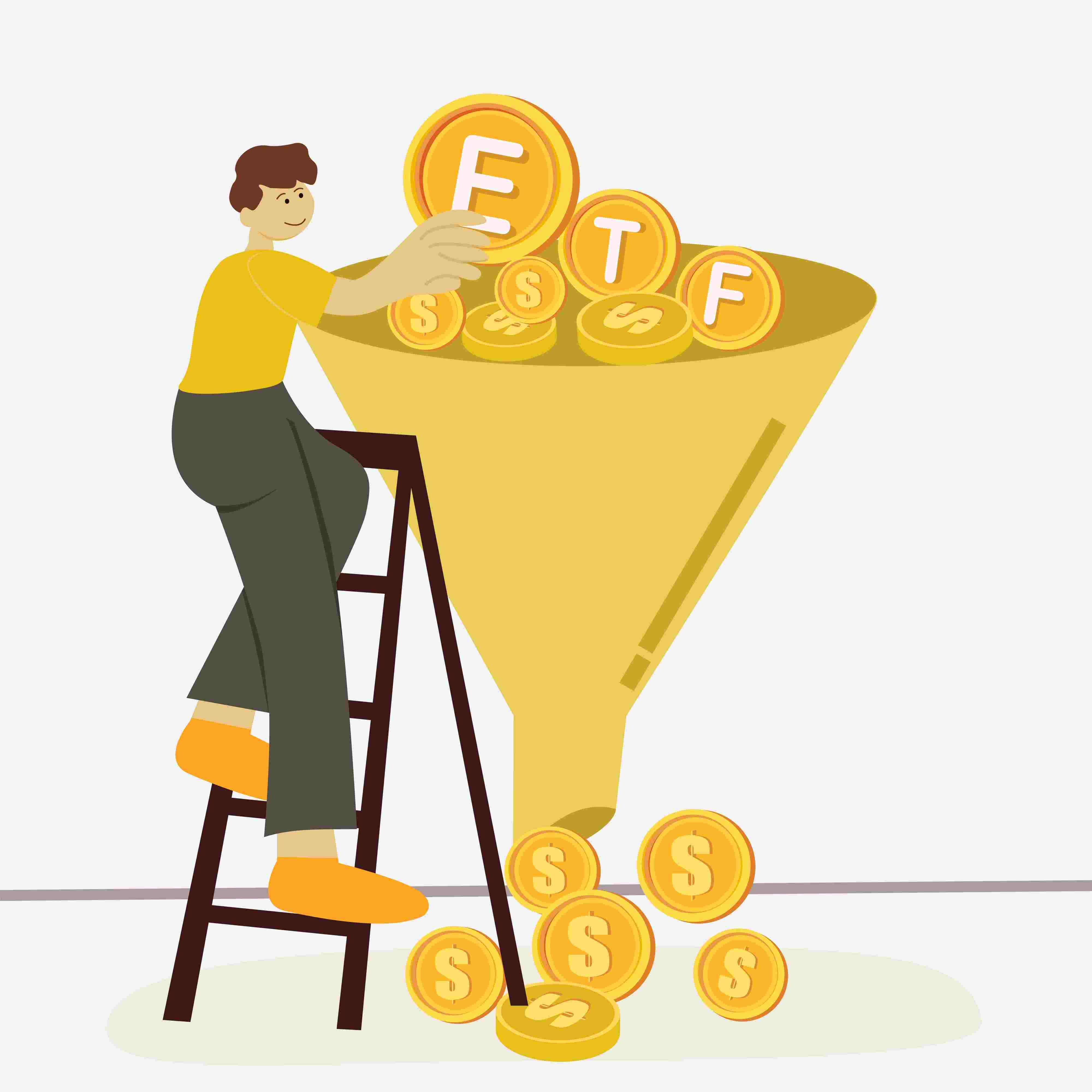
This case illustrates that ETFs are investors' top choice for asset allocation, but investors should be cautious as not all ETFs align with their investment objectives. Whether you're a novice or an experienced investor, selecting the right ETF is crucial for achieving financial goals while managing risk. The following sections will focus on 8 essential evaluation dimensions to help investors accurately identify high-quality ETF products that match their investment logic.
(Source: Shutterstock)
Liquidity
Liquidity refers to an ETF's ability to execute trades without significantly impacting market price, directly affecting investment costs and execution quality.
High-liquidity ETFs typically exhibit narrow bid-ask spreads and stable price movements, enabling investors to enter or exit positions near fair value. Low-liquidity products, however, often suffer from price gaps and rising hidden costs—especially during large transactions.
Two market layers actually support ETF liquidity:
- Primary Market: Maintained by authorized participants (APs) and fund issuers through the in-kind creation/redemption mechanism, ensuring ETF prices closely track net asset value (NAV). When secondary-market prices deviate, APs automatically correct spreads through arbitrage.
- Secondary Market: Reflects trading activity on exchanges, formed by market makers and retail investors. High-volume ETFs like SPDR S&P 500 ETF (SPY)—with daily turnover exceeding 80 million shares—offer near-instant liquidity. Niche sector ETFs may see daily volumes under 10,000 shares, where large orders easily trigger price volatility.
Low liquidity not only raises visible transaction costs but also creates hard-to-quantify hidden risks. Persistent bid-ask spread widening often causes execution prices to deviate significantly from fair value, leading investors to unknowingly absorb extra losses.
Moreover, single large trades can trigger stepwise price declines—especially when market depth is insufficient. Sell orders progressively push down execution prices, amplifying actual losses. During market crises, liquidity often vanishes first.
Expense Ratio
The expense ratio represents the annual cost of holding an ETF, expressed as a percentage of assets under management. It is directly deducted from your investment returns. This ratio reflects total fund operational costs, including management fees, administrative expenses, and custody fees. This seemingly small figure is one of the most critical ETF evaluation metrics because it compounds year after year, significantly impacting long-term returns.
For example, investing $100,000 in two similar ETFs with a 0.30% expense ratio difference creates a $300 annual cost gap—money that could have compounded within your portfolio over time.
Expense ratios vary considerably across ETFs, primarily influenced by three factors:
- Fund Type: Broad-market index ETFs typically have the lowest costs; select products with ratios under 0.20%. Specialized sector ETFs or funds investing in foreign securities usually carry higher fees due to elevated research and trading costs.
- Asset Size: As ETF assets grow, fixed costs spread across more investors, naturally reducing expense ratios.
- Management Style: Passively index-tracking ETFs generally have much lower fees than actively managed ETFs, which incur additional costs for investment research and frequent trading.
When selecting ETFs, prioritize expense ratios as a primary consideration. Ideally, choose the lowest-cost ETF available, though sometimes a balance must be struck among fees, liquidity, and tracking accuracy.
When comparing similar ETFs—especially those tracking identical indices—select the lower-cost option. Over time, even a 0.10% fee difference can create tens of thousands of dollars in portfolio value divergence. Remember, low-cost investing is one of ETFs' core advantages; choosing high-fee products undermines this benefit.
Learn more: "ETF Costs and Fees Breakdown: Uncovering the Hidden Fees That Are Silently Draining Your Returns"
Tracking Error
Tracking error measures the performance volatility between an ETF and its benchmark index, serving as a key metric for evaluating index fund performance. A lower tracking error indicates that the ETF can stably replicate its target index—this is the foundation of successful passive investing strategies. When an ETF’s performance consistently deviates from its index, investors may fail to achieve expected market returns.
For example, if an ETF has a tracking error of 50 basis points (0.50%), statistically its performance gap with the index will fluctuate within ±0.50% of its average tracking difference approximately 68% of the time. Lower tracking error translates to more predictable performance.
Investors can compare ETF and benchmark index performance over 1-3 year cycles. Ideally, the tracking difference should align closely with the fund’s expense ratio. If an ETF consistently underperforms beyond what its expense ratio would explain, this may signal management inefficiency or hidden costs.
Major ETF providers typically disclose historical tracking data in annual reports—information far more valuable than marketing materials.
Different investment objectives require focus on distinct tracking metrics:
- Long-term total return investors: Should prioritize tracking difference. Even with moderately higher tracking error, an ETF remains valuable if its long-term performance closely mirrors the index.
- Volatility-sensitive investors: Should prioritize tracking error to ensure portfolio stability.
For instance, Fund A shows an annual average tracking difference of -0.38% and a tracking error of 0.45%; Fund B shows -0.35% annual average tracking difference but a 0.95% tracking error. Long-term investors might prefer Fund A (lower total cost), while stability-focused investors might choose Fund B (reduced performance volatility).
In ETF selection, when tracking error significantly exceeds industry peers, even the lowest expense ratio cannot offset performance uncertainty. True low-cost index investing requires balancing cost efficiency and tracking precision—not merely chasing the lowest fee product.
Assets Under Management (AUM)
Assets Under Management (AUM) serves as the core metric for measuring ETF scale, profoundly influencing fund operational efficiency and investor experience.
Larger ETFs typically leverage economies of scale to achieve lower operational costs—often translating to more competitive expense ratios. They also attract professional market makers who provide tighter bid-ask spreads, effectively reducing transaction friction costs.
Most importantly, a substantial asset base significantly enhances fund survival safety margins. When AUM reaches critical scale, the risk of fund closure decreases exponentially, providing stable expectations for long-term investors.
It must be clarified that AUM is not an isolated metric—it should be analyzed alongside average daily trading volume. Certain niche ETFs may have moderate AUM but high trading activity (e.g., specialized sector funds), potentially offering greater practical advantages than large-AUM but low-liquidity broad-market ETFs.
Investors should monitor fund inflow/outflow data in quarterly reports—mid-sized ETFs with sustained net inflows often hold greater growth potential than large ETFs experiencing continuous outflows.
When building core holdings, prioritize ETFs with dual advantages in both AUM and trading volume. This approach captures liquidity benefits while avoiding delisting risks, allowing index investing to truly harness long-term compounding advantages.

(Source: Shutterstock)
Underlying Assets
Understanding an ETF’s actual holdings—especially for sector or theme-based products—is critically important.
Funds with seemingly similar names may exhibit entirely different risk-return profiles. Investors should systematically review a fund’s top-ten holdings concentration and industry subsector allocation.
For example, one technology ETF might concentrate 70% of assets in five mega-cap companies, while another evenly allocates across semiconductor, software, and hardware subsectors. This structural difference directly drives performance divergence.
Some ETFs labeled "artificial intelligence" may allocate only 15% of assets to core AI companies, with the remainder in traditional tech stocks. Such strategy mismatch not only impacts expected returns but may also undermine overall asset allocation logic.
Simultaneously assess synergy with existing portfolios. After holding a broad-based ETF covering global technology stocks, adding a single-country technology theme ETF could create hidden risk overlap.
When the top three holdings exceed 50% of the fund or single-country exposure surpasses 35%, the risk profile has already deviated from standard index products.
Professional investors typically evaluate underlying asset quality through three dimensions: holdings concentration, geographic distribution, and factor exposure—ensuring the ETF genuinely aligns with established investment objectives.
Historical Performance
While past performance cannot predict future results, it remains an essential reference for ETF evaluation. Systematically compare the fund’s relative performance across different market cycles (bull markets, bear markets, sideways trends), with particular focus on its persistent tracking difference against the benchmark index.
If an ETF consistently underperforms its benchmark beyond what its expense ratio would explain, or exhibits abnormal volatility, this may signal underlying strategy flaws or execution problems.
Dividend Yield
Dividend yield is a core consideration when selecting preferred stock ETFs, but this metric requires careful interpretation. Surface-level high yields may conceal risk factors, while relatively lower yields often correspond to more stable investment characteristics.
Investors should look beyond the number itself to deeply evaluate dividend sustainability—whether the ETF has long-term stable cash flows supporting continuous distributions, and how different tax structures impact net returns.
When dividend income forms a critical component of investment strategy, systematically compare yield levels among peer ETFs. Treat dividends as part of total return rather than an isolated metric, integrating them with capital appreciation potential for comprehensive assessment—ensuring unity between return quality and asset security.
Tax Efficiency
Tax efficiency reflects an ETF’s ability to minimize taxable events for shareholders through structural design—a crucial hidden factor affecting long-term compounding.
High-efficiency ETFs effectively avoid distributing capital gains to investors through mechanisms like securities lending income optimization, redemption basket strategies, and tax loss harvesting. This tax advantage proves particularly significant in taxable accounts—when two ETFs deliver identical 7% annual returns, differences in tax efficiency can cause their actual values after 10 years to diverge by 15–20%.
To evaluate an ETF’s tax efficiency, review its historical capital gains distribution records. Funds with multiple consecutive years of zero capital gains distributions typically possess superior tax structures. Additionally, product legal frameworks (such as U.S. umbrella trusts versus European UCITS) and cross-border tax treatment mechanisms significantly impact actual tax burdens for different investor types.
Comprehensive Considerations Before Purchasing an ETF
Evaluating ETFs should not focus solely on short-term chart patterns or chasing recently high-performing products. Successful ETF investing requires systematic analysis of multiple core metrics, precisely aligned with personal financial goals and risk tolerance. This comprehensive assessment approach helps avoid investment surprises, optimizes cost structures, and enhances portfolio long-term resilience. The deeper your understanding of an ETF before purchase, the greater your probability of achieving long-term investment success.
Investors are advised not to shy away from multi-angle comparisons of different funds and to actively seek professional resources. Investment decisions require patience and deep reflection, while recognizing that any single evaluation metric reflects only part of an ETF’s value—not the complete picture.
When selecting ETFs, investors should ask these critical questions about the underlying index:
Goal Alignment
Does this index genuinely align with your investment objectives? Typically, risk levels correlate positively with long-term returns. Your ETF selection and its tracked index should match your risk tolerance and financial goals.
Examine in depth whether the index’s functional positioning (such as its exposure to stock or bond markets) satisfies personal investment needs.
Methodology Reliability
Is this index based on solid research and historical validation, or chasing short-term market trends? Robust index design should rest on authoritative academic research and possess at least three years of verifiable historical data from reputable index providers.
Transparency and Comprehensibility
Can you clearly explain the index’s construction logic and operational mechanics? If even basic principles are difficult to articulate to others, it may indicate incomplete understanding of the ETF’s core value. Generally, the more complex the index structure, the higher the potential risks and outcome uncertainties.
Performance Verification
Has the index’s actual performance met expectations? Index providers should supply ample historical data enabling objective assessment of past performance and verification of whether design objectives were truly achieved. This verification should include not just return metrics but also risk-adjusted return analysis.
Through this systematic evaluation framework, investors can make more rational and personally appropriate ETF investment decisions, establishing a solid foundation for long-term wealth accumulation.
