


Japan and South Korea Stocks Rise in Early Trade, Samsung Rebounds Over 3%, Trump Arrives in Beijing With Tech Giants



AI Podcast


Asian stock markets experienced a broad rally, with Japan's Nikkei 225 and South Korea's KOSPI showing significant gains, driven by a rebound in U.S. tech sectors, particularly chip assets. Samsung Electronics saw a rebound after yesterday's sharp decline amid union wage negotiations. Strategists note AI hardware narrative remains strong, though production execution risks are emerging, complicating investment decisions. Despite substantial foreign outflows, domestic institutional and retail buying has supported the KOSPI. Morgan Stanley views Korean stocks positively, citing potential for further upside from structural reforms and industrial cycle recovery. U.S. President Trump's state visit to China, accompanied by prominent tech and finance executives, also contributes to market sentiment.

TradingKey - Asian stock markets generally rose in Thursday morning trading. The Nikkei 225 Index opened 0.14% higher, with intraday gains expanding to 200 points at one stage, as SoftBank Group followed with a rise of over 1%. The KOSPI opened 0.4% higher and rallied quickly, with intraday gains reaching 1% and reclaiming the 7,900-point mark. LG Electronics led the constituents with a rise of over 5%.
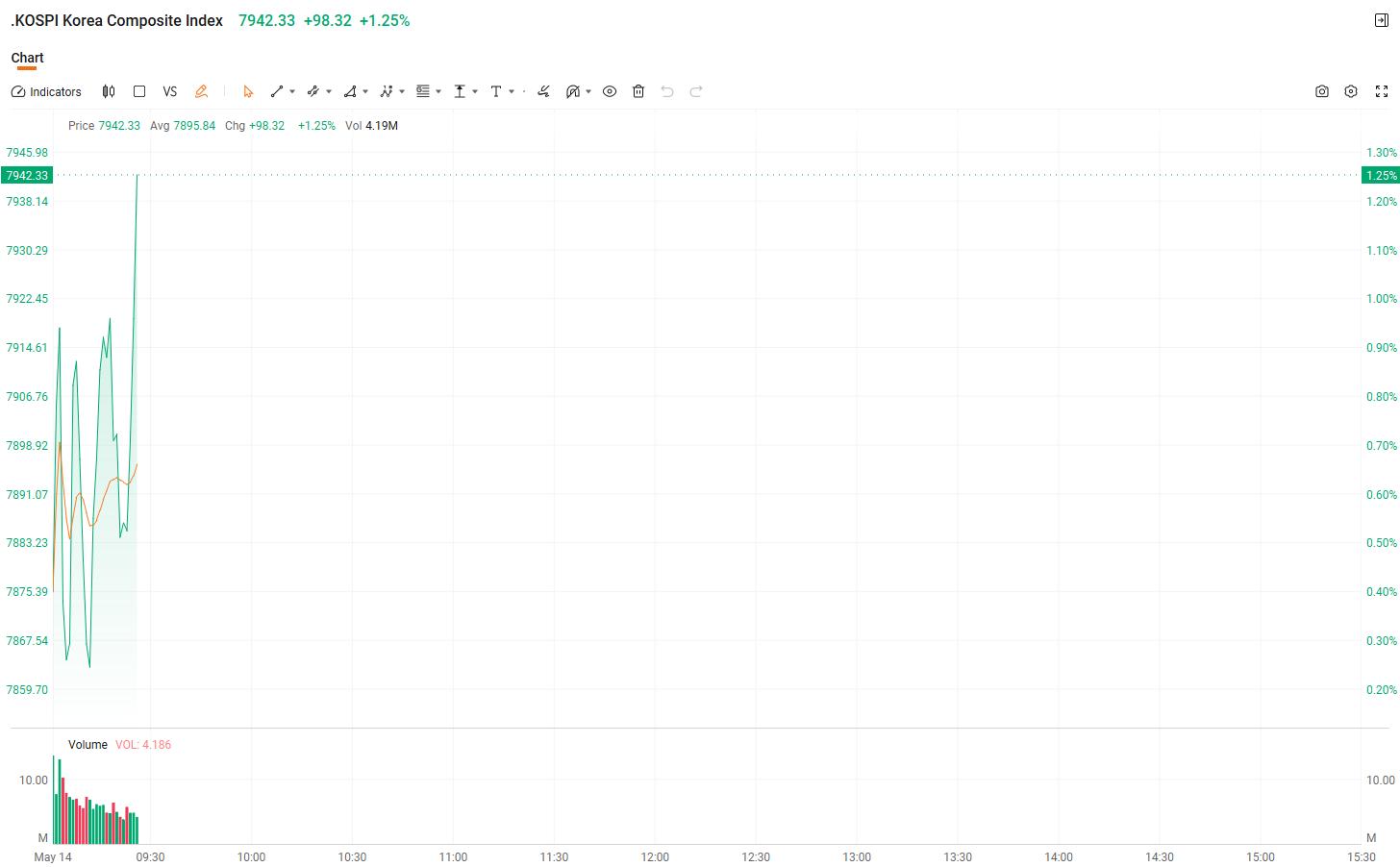
The recovery in market sentiment was primarily driven by the overnight rebound in U.S. technology sectors, particularly the strength in chip assets, providing positive guidance for Asian tech stocks.
Samsung Electronics' stock price fluctuations became the focus of the Korean market. Following the breakdown of wage negotiations with its largest union, the stock plummeted by as much as 6.1% intraday yesterday, though the decline narrowed sharply to less than 1% by the close. It rebounded by more than 3% in early trading today,
Dilin Wu, a strategist at Pepperstone, noted that the AI hardware narrative driving the record-breaking rally in Korean stocks remains intact, but production execution risks are simultaneously emerging, increasing the complexity of positioning decisions to some extent.
Foreign investors have net sold more than $45 billion worth of Korean stocks so far this year. However, sustained buying from domestic institutions and retail investors has effectively hedged the outflow pressure, supporting the KOSPI’s year-to-date cumulative gain of 84%, the highest among major global markets. In a report released Wednesday, Morgan Stanley stated that Korean stocks still have room for further upside, benefiting from expectations of structural reforms and a recovery in industrial cycles.
Meanwhile, at the invitation of President Xi Jinping, U.S. President Donald Trump arrived in Beijing on the evening of May 13, Beijing time, for a state visit to China. This marks the second face-to-face meeting between the two heads of state since their encounter in Busan last October, and the first visit to China by a U.S. president in nine years. During the visit, both sides will exchange in-depth views on the direction of China-U.S. relations and issues such as global peace and development.
Notably, the accompanying delegation is highly influential, including NVIDIA ( NVDA) founder Jensen Huang, Apple ( AAPL) CEO Tim Cook, Tesla ( TSLA) and SpaceX chief Elon Musk, BlackRock ( BLK) Chairman Larry Fink, as well as executives from Meta ( META ), Visa ( V ), JPMorgan Chase ( JPM ), Boeing ( BA ), and Cargill, who arrived in Beijing together.
This content was translated using AI and reviewed for clarity. It is for informational purposes only.
Recommended Articles







Comments (0)
Click the $ button, enter the symbol, and select to link a stock, ETF, or other ticker.