


US May Michigan Consumer Sentiment Index Preview: Markets Focus on Inflation, How Will US Stocks, Dollar, and Gold Markets React?



AI Podcast


The U.S. May consumer sentiment index is expected to remain at 48.2. While sentiment is subdued due to high prices and financial pressures, market focus is on 1-year and 5-year inflation expectations. Preliminary data shows a decrease in both, but levels remain elevated. A further drop could signal cooling inflation and reduce Fed tightening expectations, benefiting stocks and gold, while pressuring the dollar. Conversely, an upward revision would reinforce high-rate expectations, potentially boosting the dollar and Treasury yields, while weighing on equities and gold. The key is the interplay between confidence and inflation expectations.

TradingKey - On May 22, Eastern Time, the U.S. will release the University of Michigan's consumer sentiment index for May. Market consensus currently expects the index to hold at 48.2, unchanged from the preliminary reading. While the indicator reflects consumer views on the economy, income, and purchasing conditions, investors in the current market environment are focusing more on the 1-year and 5-year inflation expectations, as these will directly impact Federal Reserve policy expectations, U.S. Treasury yields, the U.S. dollar, and gold ( XAUUSD) trends.
US University of Michigan Consumer Sentiment Index (May)
According to preliminary data, the University of Michigan Consumer Sentiment Index fell to 48.2 in May from 49.8 in April, indicating that U.S. consumer sentiment remains subdued. High prices, tariff uncertainty, gasoline prices, and personal financial pressure are the primary factors weighing on confidence. However, the market has already anticipated a weakening in consumer confidence to some extent; what truly might trigger asset volatility is whether inflation expectations continue to stay high.
At the same time, the preliminary May data showed that 1-year inflation expectations dropped to 4.5% from 4.7% in April, while 5-year inflation expectations fell to 3.4% from 3.5%. Although they have retreated, absolute levels remain elevated. If tonight's final reading shows a further downward revision in inflation expectations, the market may perceive a moderation in inflationary pressure, reducing the need for the Fed to maintain high interest rates; conversely, an upward revision could reinforce the logic of high rates staying for longer.
Current market views are relatively divided. On one hand, hard U.S. economic data remains resilient, as employment and corporate earnings have not yet shown significant deterioration; on the other hand, sluggish consumer sentiment, sticky inflation, and high Treasury yields have caused market concerns that high-valuation U.S. stocks are facing pressure. Therefore, the key to tonight's data is not whether the confidence index is slightly above or below 48.2, but the combination of consumer confidence and inflation expectations.
How are US stocks, the US dollar, and gold markets reacting?
For U.S. stocks, the most favorable scenario is a stabilization or slight improvement in consumer confidence alongside a decline in inflation expectations. This would imply that consumption remains resilient while inflationary pressures are cooling, which is conducive to a recovery in risk appetite, and technology and consumer stocks may benefit. Conversely, if confidence weakens and inflation expectations rise, the market may worry about a combination of slowing U.S. economic growth and sticky inflation, which would be unfavorable for U.S. equities, especially high-valuation growth stocks.
For the U.S. Dollar Index, the impact of the data is primarily transmitted through Treasury yields and Fed expectations. If inflation expectations are revised upward, the market may reduce bets on future rate cuts, driving Treasury yields higher and supporting the dollar, which may once again challenge the 100 psychological level. If inflation expectations fall, the dollar may come under pressure, especially if the market reprices rate cut expectations. Overall, the dollar's sensitivity to inflation expectations is likely higher than its sensitivity to the consumer confidence index itself.
For gold, the key lies in real interest rates and the dollar's trajectory. If inflation expectations fall and drive Treasury yields lower, gold may benefit as the opportunity cost of holding gold decreases, and a weaker dollar would also enhance gold's appeal, potentially testing the $4,600 mark. If inflation expectations are revised upward, the dollar and Treasury yields may strengthen, putting short-term pressure on gold and potentially leading it to further test the $4,360 support level. However, if confidence drops sharply while inflation remains high, stagflation concerns could trigger safe-haven buying, increasing gold volatility.
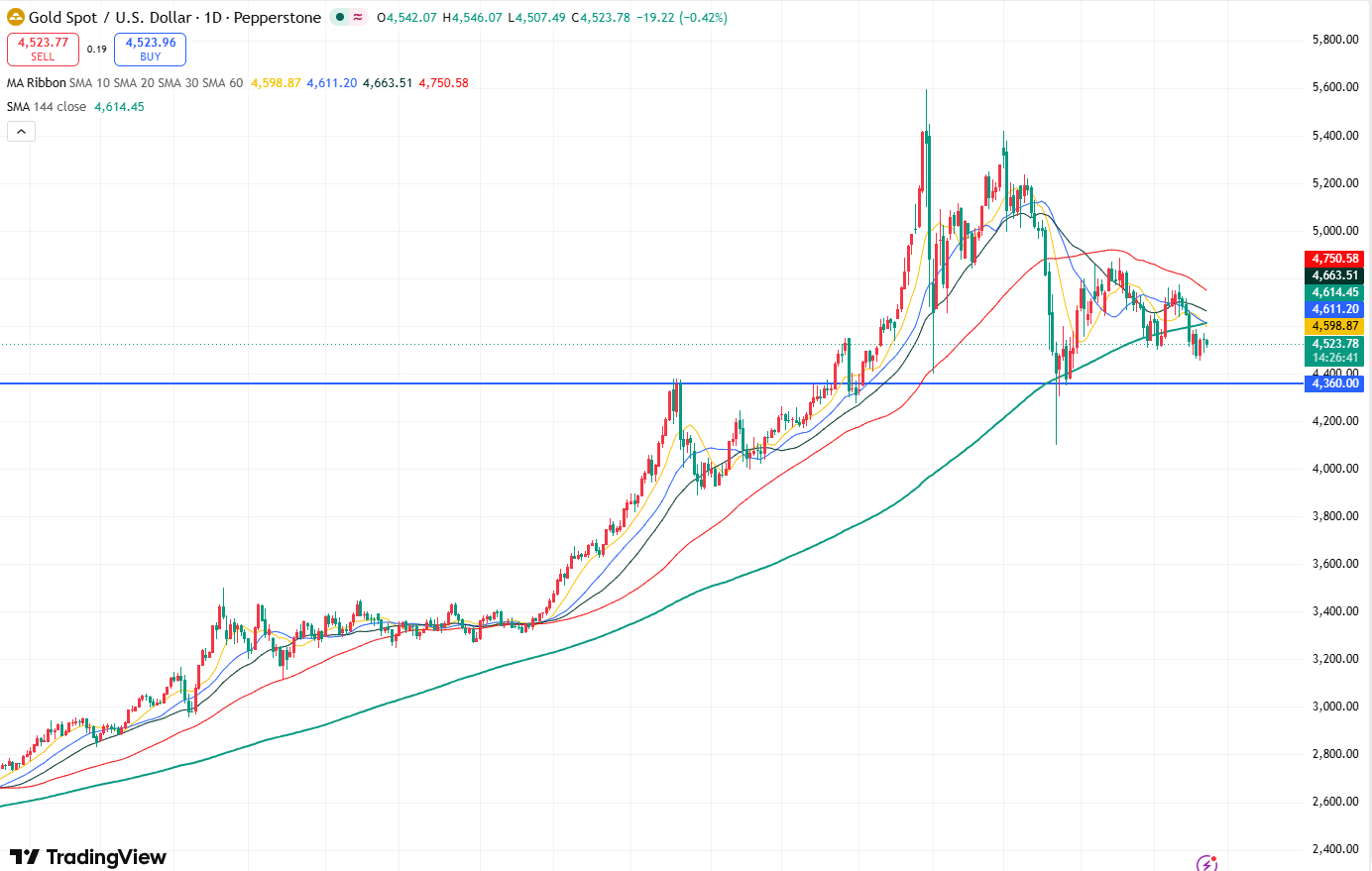
Gold Price Daily Chart, Source: TradingView
Overall, the core focus of tonight's Michigan Consumer Confidence data is whether inflation expectations can continue to cool. If the data shows stabilizing confidence and falling inflation expectations, it would be positive for U.S. stocks and gold, and negative for the dollar; if confidence weakens and inflation expectations rise, it could suppress U.S. stocks, support the dollar, and increase short-term volatility in gold. The market has currently accepted the reality of weak consumer sentiment but remains highly sensitive to whether inflation expectations will affect the Fed's policy path.
This content was translated using AI and reviewed for clarity. It is for informational purposes only.
Recommended Articles











Comments (0)
Click the $ button, enter the symbol, and select to link a stock, ETF, or other ticker.