


WTI (USOIL) Is down 2.39% on Jul 1: Key Drivers to Watch



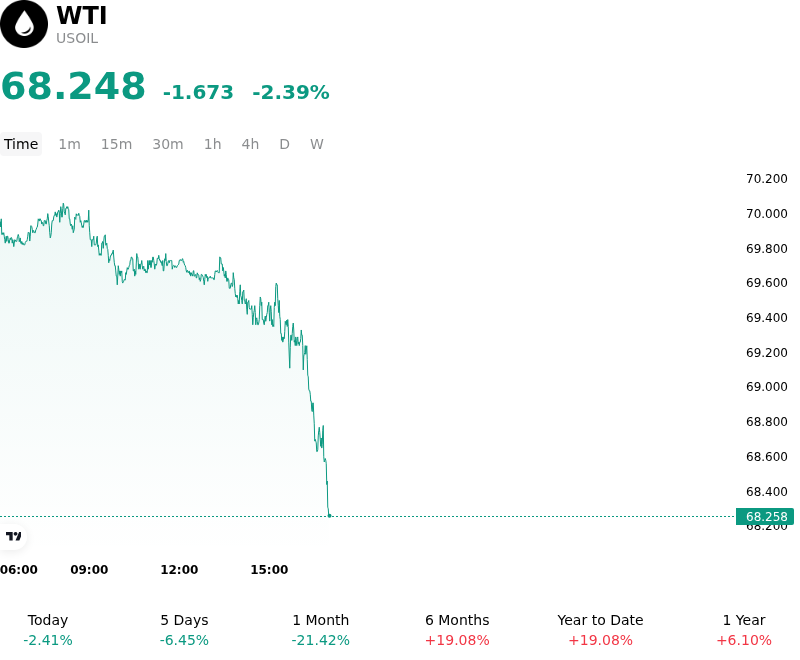
WTI (USOIL) is down 2.39% at Jul 1 05:00(ET), now at $68.248, with a 7-day down of 2.17%.
What is driving WTI (USOIL)’s stock price down today?
The primary catalyst driving the downward pressure on West Texas Intermediate crude oil is a structural shift in global supply expectations, stemming from progress toward a diplomatic resolution in the Middle East. The mid-June ceasefire framework between the United States and Iran has significantly defused geopolitical risk premiums. Most crucially, the resulting reopening of the Strait of Hormuz has allowed maritime tanker traffic to steadily normalize and recover.
This easing of supply-side constraints has triggered a wave of physical crude returning to the global market. Iran has shipped substantial volume since the removal of naval blockades, while Russian exports have simultaneously surged to record levels, leading to an unexpected buildup of barrels at sea. The rapid return of these sidelined volumes has outpaced initial expectations, causing analysts to revise down their oil price forecasts and raising fears of a looming global supply glut.
Adding to the supply-side pressure are the cumulative production decisions from OPEC+. The group's consecutive output quota hikes have steadily injected hundreds of thousands of additional barrels per day into the market. This expanding supply is entering a global market characterized by weakening demand expectations. Major energy forecasting agencies have lowered their global oil demand growth projections for the year, pointing to a looser market balance and an impending surplus.
Macroeconomic headwinds also continue to weigh on long-term pricing expectations. Persistent inflation driven by historically high energy costs earlier in the year has sustained market concerns that major central banks, particularly the Federal Reserve, will keep interest rates higher for longer. This restrictive monetary environment threatens to damp global economic activity and further constrain industrial demand for fuel.
While market participants continue to monitor short-term setbacks in direct diplomatic talks, the fundamental outlook has clearly shifted. The combination of accelerating seaborne exports, steady OPEC+ output increases, and cooling demand forecasts suggests that the market is transitioning from a period of high risk-premium volatility toward a structurally oversupplied environment.
Technical Analysis of WTI (USOIL)
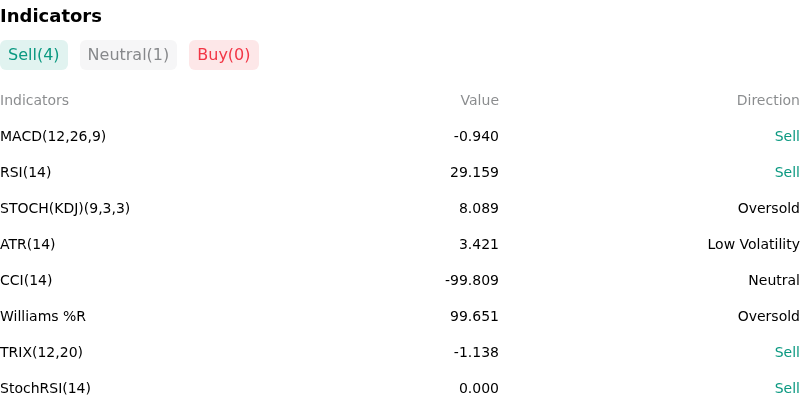
Technically, WTI (USOIL) shows a MACD (12,26,9) value of -0.940, indicating a sell signal. The RSI at 29.159 suggests sell condition and the Williams %R at 99.651 suggests oversold condition. Please monitor closely.
More details about WTI (USOIL)
Recent Events and Risks:
- Unwinding of Geopolitical Risk Premium: WTI crude futures have descended near the key psychological support level of $70 per barrel, registering a substantial second-quarter deficit of approximately 31%. This sharp drop follows progress on a U.S.-Iran ceasefire agreement and a 60-day truce, which has effectively reopened the Strait of Hormuz and eroded the geopolitical supply risk premium that had pushed oil to four-year highs earlier in the year.
- Rapidly Accelerating Global Supplies: Supply-side pressures are mounting as Persian Gulf exports recover to at least 75% of pre-conflict levels. Morgan Stanley recently warned of potential market glut risks, slashing its long-term Brent price forecasts. Meanwhile, Russian crude exports have surged to a post-2022 high of 4.13 million barrels per day, further saturating the physical market.
- Slowing Global Oil Demand Growth: Macroeconomic headwinds continue to weigh on consumption forecasts, with the International Energy Agency (IEA) warning of a deeper 1.1 million barrels per day contraction in global oil demand for 2026 due to structural challenges, economic slowdowns, and rapid electric vehicle adoption.
- Rising Domestic U.S. Output: Intraday volatility is exacerbated by rising domestic production, with the Department of Energy raising its 2026 U.S. crude production estimate to 13.72 million barrels per day. Concurrently, the domestic active oil rig count surged by 7 to a one-year high of 440 rigs, indicating resilient future shale drilling activity.
This article may include AI-generated content that is human-reviewed, which is for reference and general information purposes only and does not constitute investment advice.
Recommended Articles









Comments (0)
Click the $ button, enter the symbol, and select to link a stock, ETF, or other ticker.