Palo Alto Networks Inc Stock (PANW) Moved Down by 9.15% on Apr 10: What Signal Does It Send?



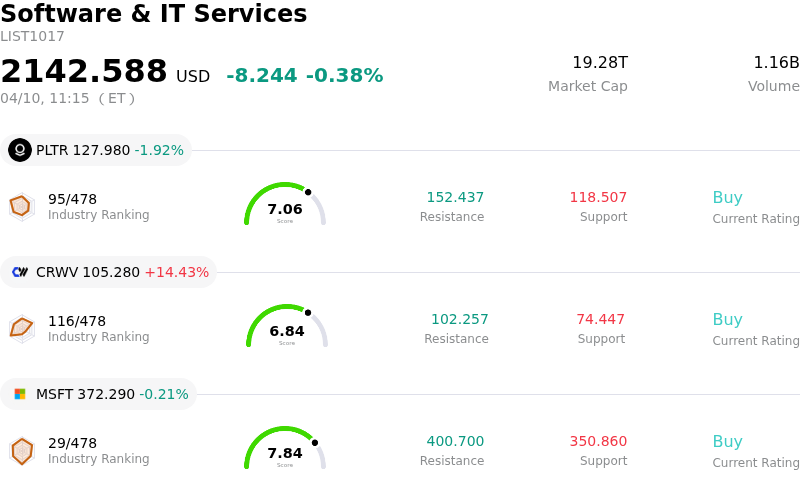
Palo Alto Networks Inc (PANW) moved down by 9.15%. The Software & IT Services sector is down by 0.38%. The company underperformed the industry. Top 3 stocks by turnover in the sector: Palantir Technologies Inc (PLTR) down 1.92%; CoreWeave Inc (CRWV) up 14.43%; Microsoft Corp (MSFT) down 0.21%.
What is driving Palo Alto Networks Inc (PANW)’s stock price down today?
Palo Alto Networks (PANW) experienced a notable decline in its share price, largely influenced by persistent concerns surrounding its financial outlook and the costs associated with recent acquisitions. The company's cautious earnings-per-share (EPS) forecast for the current quarter, which followed its fiscal second-quarter 2026 report in February, fell short of analyst expectations, despite robust revenue growth. This conservative guidance is primarily attributed to the substantial expenses incurred during the integration of major acquisitions, most notably the $25 billion CyberArk deal.
Furthermore, Palo Alto Networks previously reduced its full-year fiscal 2026 EPS guidance, citing higher acquisition-related costs and the dilutive effect from issuing 112 million shares for the CyberArk transaction. This ongoing narrative of "growing pains" during integration has led to investor apprehension.
In response to the revised financial outlook, several financial analysts have either downgraded the stock or lowered their price targets, expressing concerns about the company's near-term growth trajectory and its valuation. Analysts are currently re-evaluating their assumptions for the company's profitability and growth, with some expected to adjust price targets downwards to reflect the lower guidance and increased execution risk.
Compounding these company-specific issues, broader market sentiment within the cybersecurity sector has also played a role. There are ongoing debates about how artificial intelligence might impact the cybersecurity landscape, with some investors worried that new AI models could potentially weaken demand for traditional security platforms. This uncertainty surrounding AI's long-term effects on the industry, coupled with the company's already high valuation, has contributed to recent volatility and led to a repricing of Palo Alto Networks' long-term valuation and risk profile.
Technical Analysis of Palo Alto Networks Inc (PANW)
Technically, Palo Alto Networks Inc (PANW) shows a MACD (12,26,9) value of [-0.30], indicating a neutral signal. The RSI at 54.10 suggests neutral condition and the Williams %R at -34.33 suggests oversold condition. Please monitor closely.
Fundamental Analysis of Palo Alto Networks Inc (PANW)
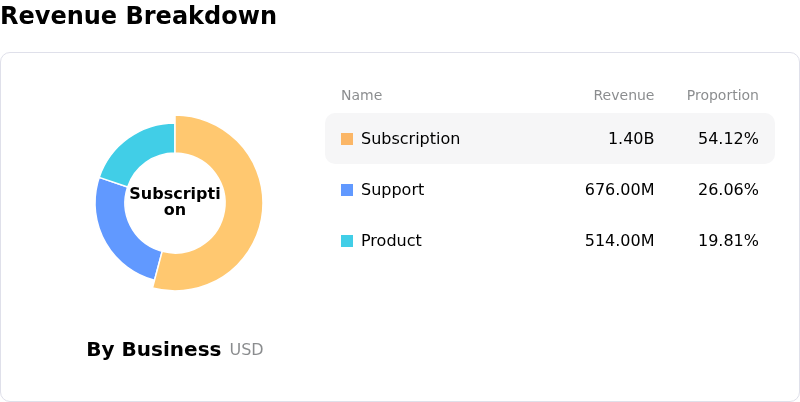
Palo Alto Networks Inc (PANW) is in the Software & IT Services industry. Its latest annual revenue is $9.22B, ranking 40 in the industry. The net profit is $1.13B, ranking 42 in the industry. Company Profile
Over the past month, multiple analysts have rated the company as Buy, with an average price target of $210.79, a high of $325.00, and a low of $114.00.
More details about Palo Alto Networks Inc (PANW)
Company Specific Risks:
- Recent analyst downgrades by multiple firms, including BTIG, Deutsche Bank, and Guggenheim, citing a muted forward outlook, declining Annual Recurring Revenue (ARR), and concerns over business performance and U.S. federal IT spending moderation.
- Multiple insider sales by executives and a former director, evidenced by SEC filings on April 1, 3, 7, and 8, 2026, which may signal a lack of confidence in the company's near-term growth prospects or current valuation.
- Ongoing competitive pressures, including aggressive bundling strategies from major tech players like Microsoft and competition from AI-driven solutions and hyperscaler-native offerings, are contributing to market share erosion and slowing organic growth.
- The company's stock trades at a significantly elevated Price-to-Earnings (P/E) ratio of 109.94x, substantially higher than the broader software industry average, indicating potential overvaluation and increased susceptibility to market corrections if growth expectations are not consistently met.
Recommended Articles