


Intuit Inc Stock (INTU) Moved Down by 3.14% on Mar 18: Key Drivers Unveiled



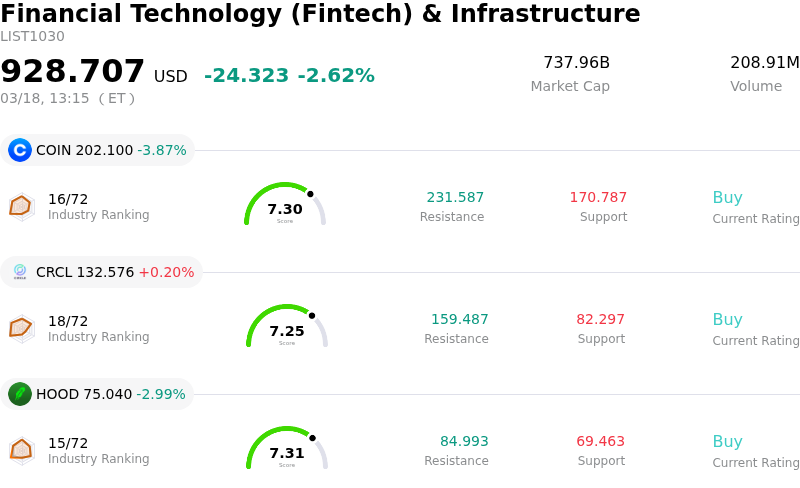
Intuit Inc (INTU) moved down by 3.14%. The Financial Technology (Fintech) & Infrastructure sector is down by 2.62%. The company underperformed the industry. Top 3 stocks by turnover in the sector: Coinbase Global Inc (COIN) down 3.87%; Circle Internet Group Inc (CRCL) up 0.20%; Robinhood Markets Inc (HOOD) down 2.99%.
What is driving Intuit Inc (INTU)’s stock price down today?
Intuit (INTU) experienced a decline in its stock price, likely influenced by a combination of regulatory concerns, competitive pressures, and prevailing market sentiment regarding the broader software sector.
A significant factor contributing to the negative movement is the proposed "Direct File Act" (S.3948) introduced in the Senate. This bill aims to establish a free, government-run direct tax-filing system, which could materially reduce revenue and pressure pricing for Intuit's highly profitable TurboTax segment if enacted and widely adopted. This represents a clear regulatory and competitive risk to the company's core tax preparation business.
Further competitive headwinds are emerging from third-party migration efforts, such as those by Xendoo and Xero, which are ramping up tools to attract customers away from QuickBooks. This intensified competition coincides with Intuit's move to sunset legacy desktop products, posing an immediate challenge to customer retention and small and medium-sized business (SMB) market share.
The broader market sentiment towards the software sector also played a role. Concerns about the potential for Artificial Intelligence (AI) to disrupt established software business models continue to weigh on valuations across the industry. Debt investors have reportedly been trimming their exposure to software companies due to credit-market stress, which can amplify volatility for individual stocks like Intuit. Despite Intuit management publicly pushing back on these AI disruption fears, emphasizing its "category of one" position and the high cost of financial errors for customers, investor skepticism appears to persist.
Some analyst forecasts have reflected a more cautious outlook on Intuit. Wells Fargo & Company and KeyCorp notably lowered their price targets on the stock in late February, while Mizuho and Daiwa Securities Group also adjusted their objectives downward in early March. These downward revisions in price targets, alongside a neutral rating from BNP Paribas Exane, suggest a re-evaluation of Intuit's growth prospects by certain firms. Additionally, the average analyst price target for Intuit has seen a downward revision over the past three months.
While the company recently reported strong financial results for Q2 2026, surpassing analyst expectations for both earnings per share and revenue, and reaffirmed its full-year guidance, these positives were likely overshadowed by the aforementioned risks. Furthermore, Intuit's decision to accelerate its share repurchase program and its executive team halting pre-scheduled stock sales, actions typically seen as positive signals of management confidence, did not prevent the day's decline.
Macroeconomic data released today, showing a significant increase in the Producer Price Index for February, could also contribute to broader market caution around inflation and interest rate trajectories, which can impact valuations for growth-oriented technology companies. This sentiment is echoed by concerns from the Bank of Canada regarding rising inflation and geopolitical events.
Technical Analysis of Intuit Inc (INTU)
Technically, Intuit Inc (INTU) shows a MACD (12,26,9) value of [-11.14], indicating a neutral signal. The RSI at 53.82 suggests neutral condition and the Williams %R at -24.29 suggests oversold condition. Please monitor closely.
Fundamental Analysis of Intuit Inc (INTU)
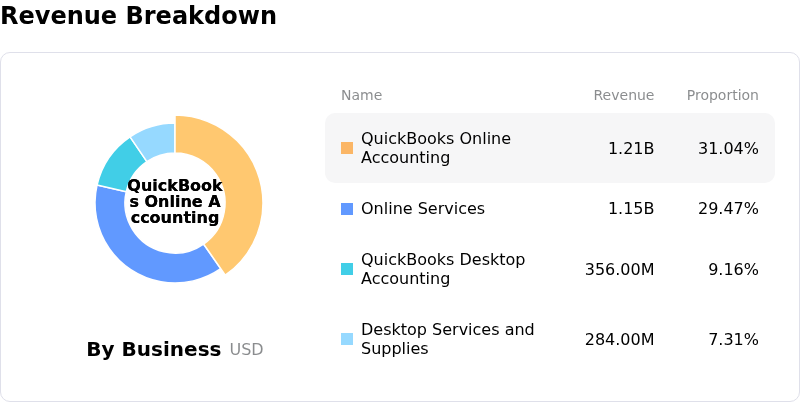
Intuit Inc (INTU) is in the Financial Technology (Fintech) & Infrastructure industry. Its latest annual revenue is $18.83B, ranking 2 in the industry. The net profit is $3.87B, ranking 1 in the industry. Company Profile
Over the past month, multiple analysts have rated the company as Buy, with an average price target of $611.79, a high of $916.00, and a low of $425.00.
More details about Intuit Inc (INTU)
Company Specific Risks:
- Persistent investor concerns regarding the potential for artificial intelligence (AI) to disrupt Intuit's core software business model continue to drive significant stock underperformance and valuation risk.
- Recent institutional selling, including a 33.3% reduction in holdings by Insight Holdings Group LLC on March 16, 2026, coupled with a history of substantial insider selling, indicates a lack of confidence from key stakeholders.
- A projected slowdown in Q3 revenue growth to 10% from Q2's 17% and ongoing integration issues with Mailchimp are creating operational headwinds.
- A series of recent analyst downgrades and significant price target reductions, such as Barclays cutting its target from $785 to $540 and Truist from $739 to $500, contribute to negative market sentiment.
This article may include AI-generated content that is human-reviewed, which is for reference and general information purposes only and does not constitute investment advice.
Recommended Articles









Comments (0)
Click the $ button, enter the symbol, and select to link a stock, ETF, or other ticker.