


$1.5 Billion in Crypto Assets Liquidated, Bitcoin Falls Below $66,000 Mark. What Is the Reason?



On June 2, Bitcoin fell below $70,000, experiencing the year's most severe liquidation wave totaling $1.624 billion, with $680 million in long Bitcoin positions liquidated. This decline was triggered by Strategy selling 32 Bitcoins, a hawkish Fed stance increasing rate hike probabilities, and persistent geopolitical risks, causing capital rotation from crypto to U.S. equities, particularly AI semiconductors. Spot Bitcoin ETFs saw an 11-day outflow streak totaling $3.5 billion, turning annual inflows negative. Technical indicators suggest a potential drop below $60,000 if the $65,000-$67,000 support breaks, with extreme fear dominating market sentiment.

TradingKey - On June 2 ET, the cryptocurrency market suffered its most severe concentrated liquidation so far this year, as Bitcoin ( BTC) fell below the $70,000 psychological level for the first time since April 2026, plunging through the $69,000, $68,000, $67,000, and $66,000 marks, a decline of more than 14% from its high of $77,799 reached two trading days ago.
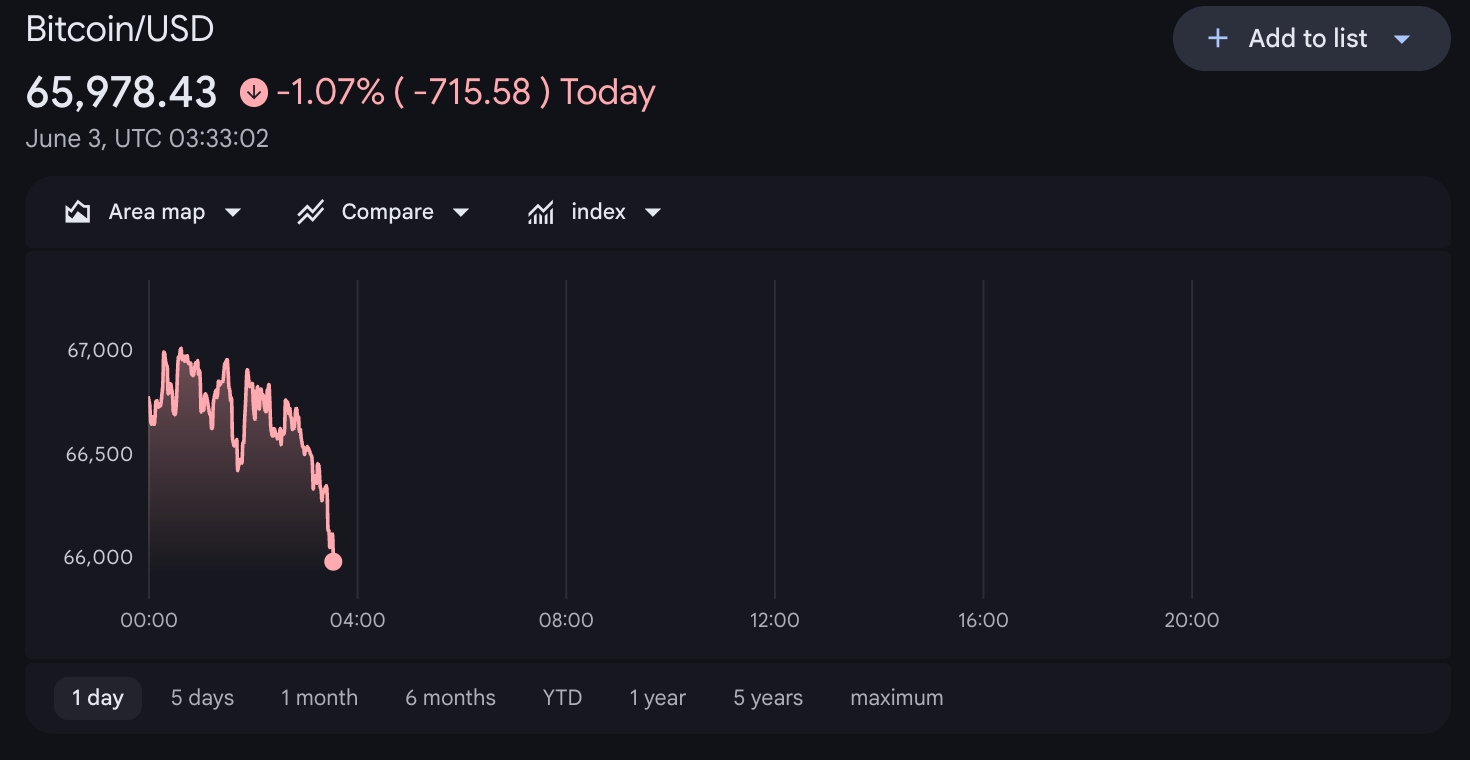
[Bitcoin Plunges Nearly 6.4% in 24 Hours, Google Finance]
As of press time, Bitcoin was trading at $65,978, a 24-hour decline of nearly 7%. According to CoinGlass data, a total of 263,429 traders were liquidated in the past 24 hours, with total liquidations amounting to $1.624 billion. The largest single liquidation occurred on Hyperliquid - BTC-USD, valued at $27.4927 million.
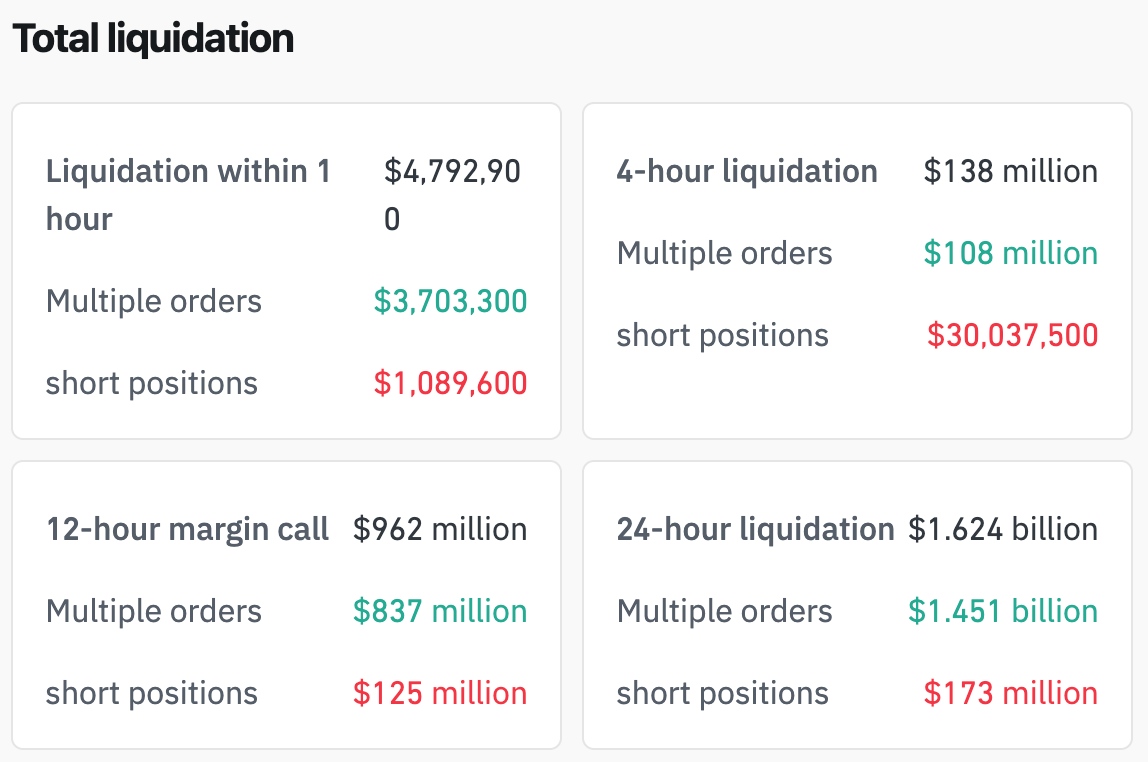
[Global Liquidation Data, Source: CoinGlass ]
In Bitcoin alone, approximately $680 million in long positions were liquidated.
Reasons for the Bitcoin crash
Previously, the world's largest corporate holder of Bitcoin Strategy (formerly MicroStrategy) announced another reduction in its holdings. According to disclosures, Strategy sold 32 Bitcoins on June 1, cashing out approximately $2.5 million at an average price of about $77,135 per coin.
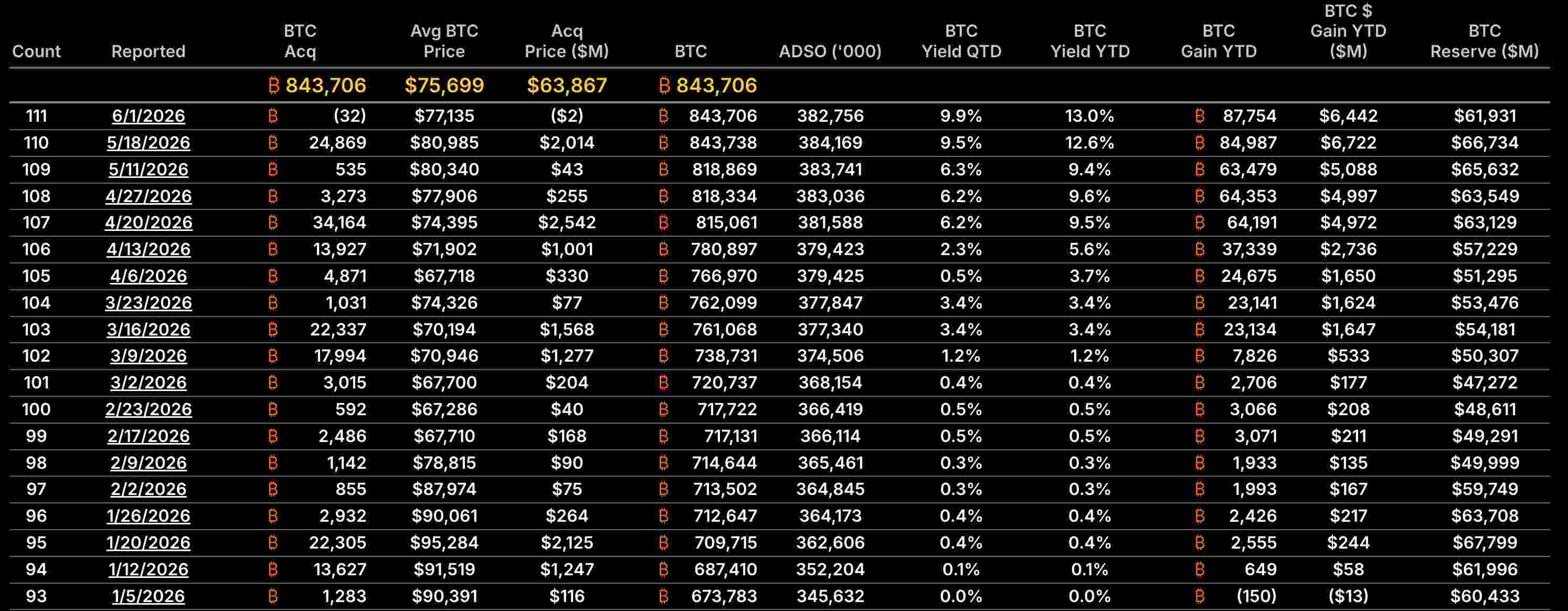
[Strategy reduces Bitcoin holdings, source: Strategy ]
Although the amount is small, the blow to the crypto market is massive. The company's founder, Michael Saylor, has for years instilled an investor creed of never selling.
Previously, CEO Phong Le clearly stated during an earnings call: 'When selling Bitcoin is beneficial for the company, we will sell.' He also noted that the company's goal has shifted from growing total Bitcoin holdings to increasing Bitcoin per share.
The head of derivatives trading at FalconX explicitly stated that if Bitcoin confirms a daily or weekly close below $70,000, it would signal a structural shift in the market, rather than just a reaction to short-term news events.
Bitcoin ETFs record $3.5 billion in consecutive outflows.
Bitcoin spot ETFs are experiencing their longest consecutive net outflow cycle on record.
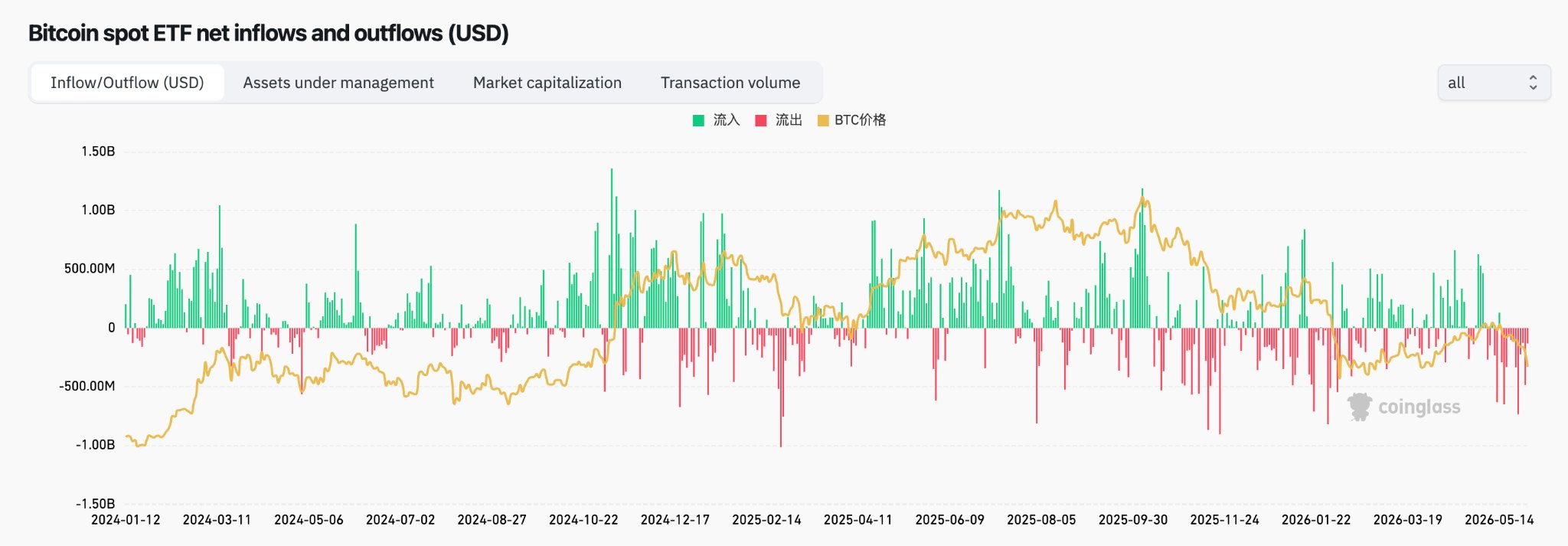
【Bitcoin suffers multi-day net outflows, Source: CoinGlass】
Data compiled by Bloomberg show that U.S. spot Bitcoin ETFs have recorded net outflows for 11 consecutive trading days, with a cumulative withdrawal of approximately $3.5 billion during this period. For the full year of 2026, net ETF inflows have officially turned from positive to negative, as institutional supply continues to pressure the market.
The structure of crypto derivatives has deteriorated in tandem. Bitcoin open interest fell from approximately $42 billion to about $28.4 billion, and perpetual funding rates have turned negative across the board. This indicates that the positioning of market participants has completely shifted from bullish to bearish, providing a narrative basis for further price declines.
A Dual Squeeze from Macro and Geopolitical Pressures
New Fed Chair Warsh's hawkish stance is translating into substantial liquidity pressure. Ahead of the June FOMC meeting, the market widely expects rates to remain unchanged, while CME FedWatch shows the probability of a July rate hike has risen to approximately 6.3%, with a rate cut nearly out of reach; institutions are engaging in de-risking ahead of time in this context.
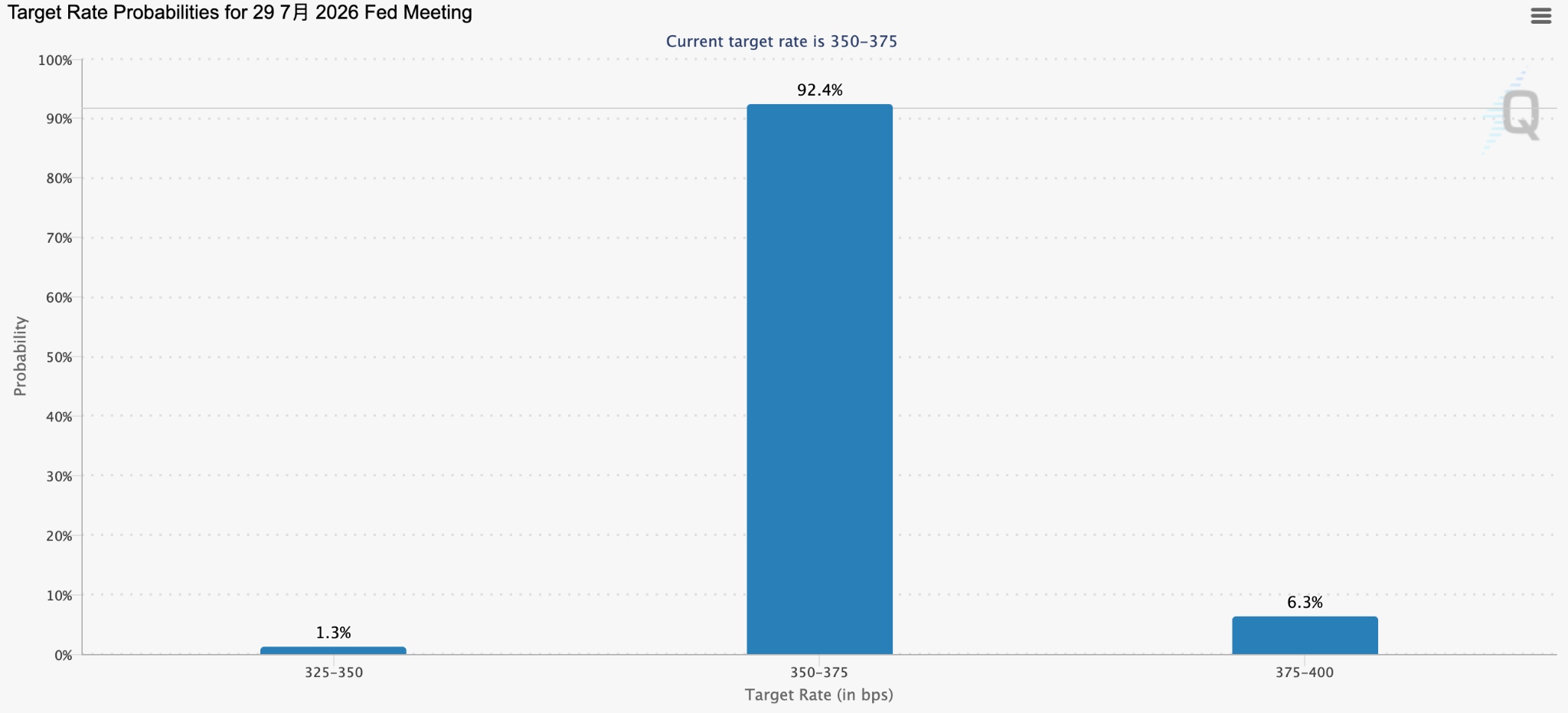
[Market pricing for the probability of a July Fed rate hike rises to 6.3%; Source: FedWatch]
Meanwhile, Iran has unilaterally halted negotiations, and persistent geopolitical tail risks continue to suppress the pricing elasticity of all risk assets, with crypto assets being the first to come under pressure in a risk-off environment.
In contrast to the crypto industry, the three major U.S. stock indices have repeatedly hit record highs, with the S&P 500 breaking the 7,600 level for the first time on June 2, while the Nasdaq simultaneously reached a new all-time high.
Capital is flowing on a massive scale from Bitcoin and Ethereum into U.S. thematic assets such as AI semiconductors. The complete decoupling between record-high U.S. stocks and the crypto market suggests that if this divergence continues to widen, it will be extremely difficult for the crypto market to rebound through its own momentum in the short term.
Technical indicators
The 200-day moving average lies within the $65,000 to $67,000 range. With current prices tightly hugging this long-term trend support, a break below it would technically open the door to sub-$60,000 territory.
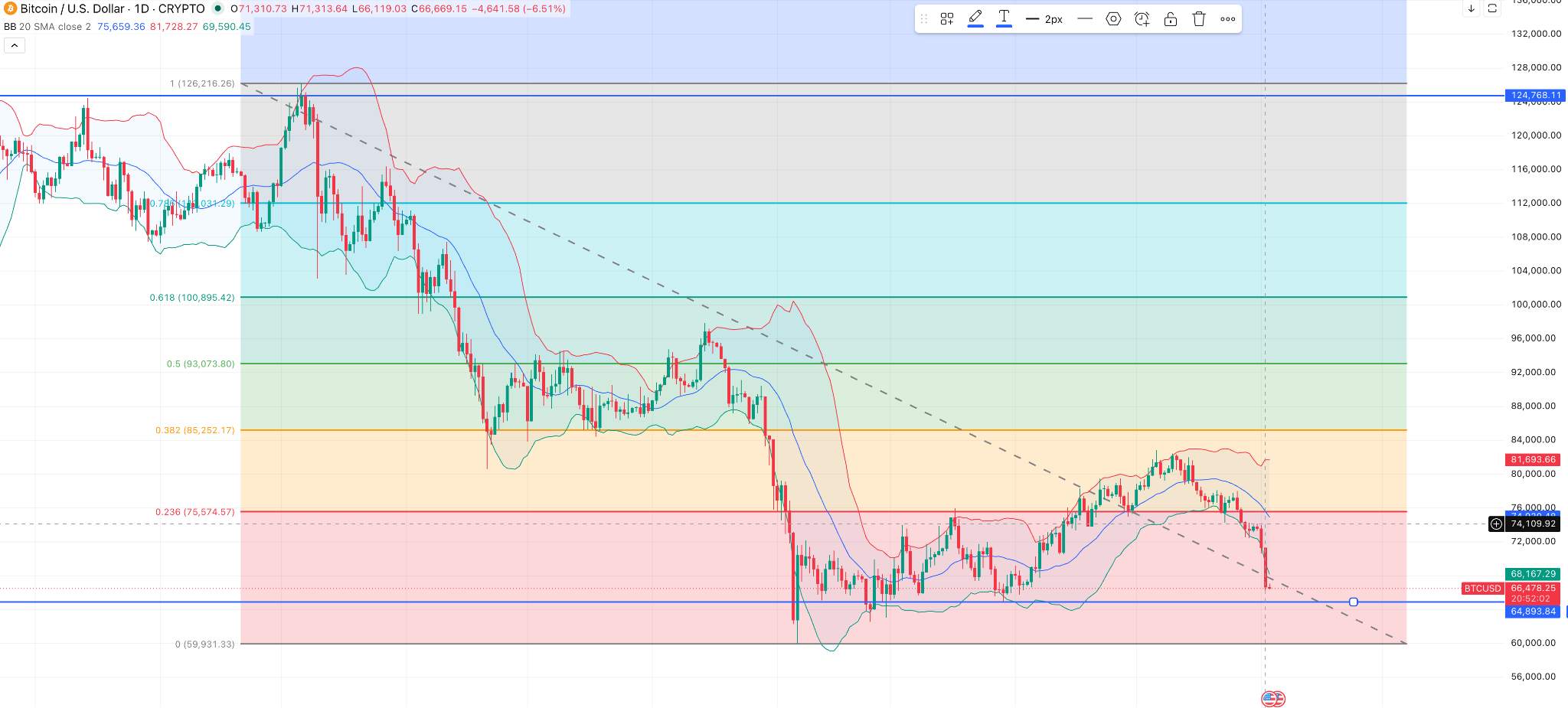
Market sentiment has bottomed out. The Fear and Greed Index plunged to 11 (Extreme Fear) from 23 yesterday—a 12-point collapse in a single day—sending sentiment to a freezing point.
Summary
The essence of this crash lies in a chain-reaction deleveraging storm triggered by the excessive accumulation of long leveraged positions, the disintegration of the 'never sell' faith, massive institutional ETF outflows, and the confluence of macro tightening expectations and geopolitical risks.
While $1.78 billion evaporated in an instant, the market is undergoing a profound reshaping of asset positioning; against the backdrop of global capital continuing to flood into the AI sector, Bitcoin’s 'digital gold' narrative is facing an unprecedented test.
This content was translated using AI and reviewed for clarity. It is for informational purposes only.
Recommended Articles










Comments (0)
Click the $ button, enter the symbol, and select to link a stock, ETF, or other ticker.