


SpaceX IPO Expansion: Why is Musk Rushing a $60B Acquisition of AI Startup Cursor?



AI Podcast


SpaceX intends to acquire AI startup Cursor for $60 billion, 30 days post-IPO, potentially by July. Cursor, a rapidly growing developer tool company with a $50+ billion valuation, offers AI programming expertise crucial for SpaceX's AI division, xAI, which lags competitors technologically. Cursor’s strong ARR growth and positive gross margins, unlike xAI’s significant losses, present a profitable business that can leverage SpaceX’s computing power. This acquisition aims to enhance SpaceX's AI capabilities, particularly in coding and hardware-software integration, and bolster its IPO valuation by positioning it as a tech empire.
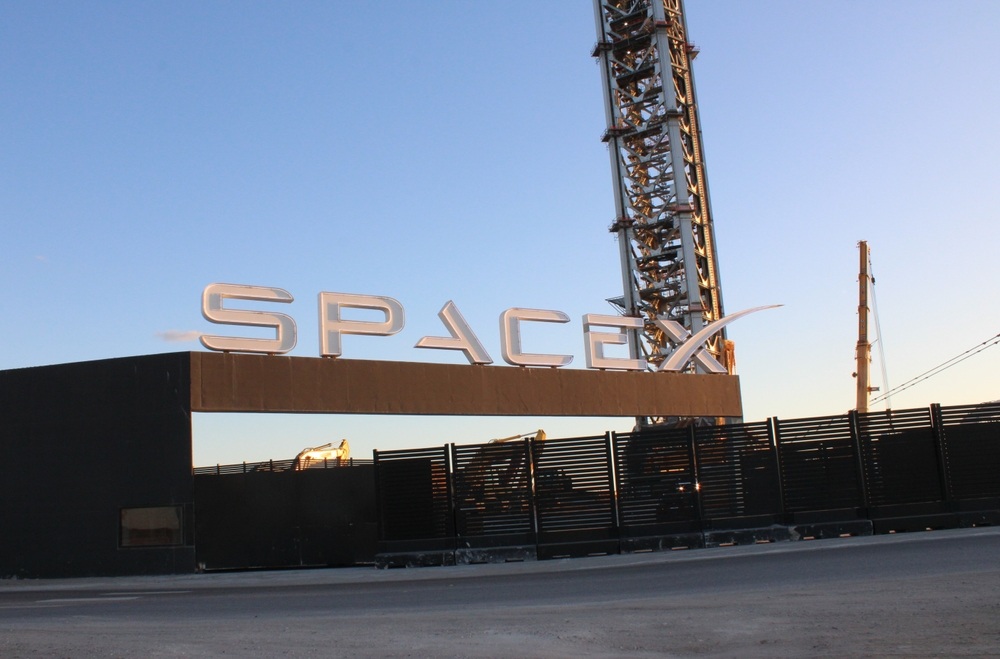
TradingKey - Bloomberg, citing sources familiar with the matter, reported that Elon Musk’s SpaceX expects to move forward with the acquisition of AI startup Cursor 30 days after its IPO and official listing, with the deal potentially closing as early as this July.
Recently, SpaceX stated it had reached an agreement with Cursor, granting it the right to acquire the company for $60 billion later this year—a figure far exceeding Cursor’s most recent private market valuation—or to pay $10 billion to advance their partnership.
This news has thrust Cursor into the spotlight. Given that SpaceX already has xAI, why does it need to acquire another AI company? Just how vital is Cursor to SpaceX that it would move to finalize the acquisition immediately after listing?
What is Cursor? The Fastest-Growing AI DevTools Unicorn
Cursor is an AI unicorn startup founded in 2022 by four individuals born in the 2000s. In terms of valuation, reports indicate that Cursor is advancing a new Series E funding round of approximately $2 billion, corresponding to a valuation of over $50 billion, with potential investors including Nvidia (NVDA) , a16z, Thrive Capital, and other institutions. If this funding round is completed as expected, Cursor will become one of the highest-valued developer tool (DevTools) companies in the world.
Cursor holds a dominant position in the developer tools sub-sector within the AI field. While many well-known companies remain active in the global DevTools space—such as the most prominent, GitHub, which was acquired by Microsoft in 2018 (MSFT) , and Atlassian (TEAM) , which went public in 2015—Cursor is not only one of the most highly valued among these companies but also the fastest-growing.
In terms of valuation, the most highly valued among these DevTools companies is the publicly traded DataDog (DDOG) , a cloud-native observability and monitoring platform that helps developers monitor the performance of applications, databases, and infrastructure in real time, with its latest closing market capitalization reaching $77.6 billion. Other prominent DevTools companies have valuations lower than Cursor's; for instance, GitHub was valued at only $7.5 billion when acquired by Microsoft, and Atlassian's latest closing market cap is $20.8 billion. Vercel, a frontend cloud company that assists in the development, deployment, and global acceleration of websites and applications, has a latest post-money valuation of $9.3 billion.
Regarding growth speed, Cursor is the fastest-growing DevTools company in history. It took Cursor only 12 months to grow its ARR (Annual Recurring Revenue) from $1 million to $100 million. By last November, the company's ARR had reached $1 billion, and it doubled to $2 billion by February of this year. Bloomberg reported that the ARR hit $3 billion in late April, and the company even forecasts that its revenue could surpass $6 billion by the end of 2026.
Despite its relatively small scale, Cursor has already launched several popular products. Its tools are used by more than half of the Fortune 500 companies, including Uber (UBER) and Adobe (ADBE) ; Google (GOOG) (GOOGL) and Nvidia are both investors in and partners of Cursor.
In 2023, Cursor launched its first AI coding assistant, which quickly went viral and drove the rise of "vibe coding." Earlier this month, Cursor released Cursor 3, defining it as a unified workspace for building software assisted by AI agents. Recently, the company also launched Composer 2, claiming it possesses frontier-level programming intelligence.
Nvidia CEO Jensen Huang has publicly stated that his favorite enterprise AI service is Cursor, noting that Nvidia's engineers now work with the assistance of this AI coding tool, resulting in a dramatic increase in productivity.
xAI vs. Cursor: Why SpaceX Needs a New AI Coding Platform
SpaceX's primary motivation for pursuing Cursor is an urgent technical requirement. In February this year, Elon Musk announced the merger of xAI with SpaceX, establishing xAI as SpaceX's dedicated AI division. Following this landmark merger, Musk announced a reorganization of the AI business at an all-hands meeting that month, clearly defining four core segments. AI programming—Cursor's long-term area of expertise—is one of those segments, which explains the logic behind SpaceX's acquisition interest.
In addition, the inherent limitations of xAI must be considered. It is well known that xAI lags behind its competitors technologically. In March this year, forecaster Peter Wildeford noted in a report that among the world's leading AI developers, Anthropic, Google, and OpenAI are in the first tier, while xAI and Meta (META) trail that first tier by approximately seven months. Musk has candidly acknowledged this, stating that the company will catch up and eliminate the gap by the end of 2026.
The reason xAI lags significantly behind other large models is that its training data is primarily sourced from social media data on X. This is useful for training the Grok chatbot but provides limited improvement for reasoning, programming efficiency, and multimodal processing. By acquiring Cursor, SpaceX's AI division is expected to quickly bridge the gap in its programming capabilities.
Furthermore, the acquisition of Cursor will help Musk solve hardware-software integration issues. Cursor has deep expertise in understanding and indexing massive codebases (Monoliths), facilitating easier system-wide architecture and excelling at translating physical-world formulas and concepts into code.
Can Cursor's High Margins Offset xAI’s Massive Losses?
Current market concerns regarding SpaceX are primarily centered on xAI, which is acting as a "drag" on the company.
According to a prospectus filed by SpaceX this Wednesday, its full-year revenue for 2025 reached $18.7 billion, up 33% year-over-year, but it recorded a net loss of $4.9 billion. Revenue for the first quarter of 2026 was approximately $4.7 billion, with net losses already reaching $4.3 billion. SpaceX divides its business into three segments: Space, Connectivity, and AI. The Connectivity segment, centered on the Starlink satellite internet service, is currently the only profitable business. In the first quarter of this year, Starlink generated $3.26 billion in revenue, accounting for 69% of the company's total revenue, with an operating profit of $1.19 billion.
Meanwhile, the AI segment is the largest factor weighing down overall profitability. AI-related capital expenditure reached $7.7 billion in the first quarter of this year, accounting for over 75% of the company's $10.1 billion in total capital expenditures. The AI segment's capital expenditure far exceeds the sum of the other two segments.
Based on these financial figures, the necessity for SpaceX to acquire Cursor appears even more compelling. First, unlike xAI, which continues to lose money and demand funding from SpaceX, Cursor's financial data is very encouraging. In addition to revenue consistently doubling, its gross margin performance is also strong. Following the launch of the Composer model in November 2025 and the optimization of its cost structure, Cursor recently achieved positive overall gross margins, with its enterprise client business—which accounts for about 60% of revenue—now generating positive gross profits.
Cursor's strong financial performance is due to its robust "self-sustaining" capability and exceptionally high revenue per employee. According to LinkedIn data, the company currently has 201-500 employees. An ARR of $3 billion means each employee generates at least $6 million in annual revenue, far exceeding the efficiency of Silicon Valley giants. Cursor is not only profitable but also has a stable client base, as most of its revenue comes from enterprise customers such as Uber and Adobe. As long as Cursor maintains its status as a top-tier coding tool, customer churn remains unlikely.
SpaceX's acquisition of Cursor effectively provides it with a business capable of generating consistent and stable profits in the future. Given SpaceX's massive computing power reserves—some of which are currently idle—the acquisition of Cursor can directly convert this idle capacity into revenue. This would offset the erosion of profit margins caused by asset depreciation costs, while simultaneously turning around the financial performance of SpaceX's AI segment and continuing to drive revenue growth for the entire group.
How Cursor Completes SpaceX’s AI Valuation Narrative
For SpaceX, the AI model's capability is currently the most significant valuation driver in its IPO narrative. Having dominated commercial aerospace via Starlink and Starship—frontiers that are difficult to 'fast-track'—SpaceX seeks a shortcut for valuation growth by leveraging large model advancements. Its blueprint involves transitioning from a commercial aerospace firm into a tech empire of 'computing power + data + large models + aerospace,' a narrative that underpins its high market valuation.
At this stage, an acquisition of any advanced AI model firm would help SpaceX complete this narrative loop and present a perfect business case to Wall Street, but Cursor is undoubtedly the best choice.
Technically, Cursor represents AI's ultimate direction: code reasoning. Unlike highly substitutable general-purpose models like ChatGPT, it maintains a technical moat; its code reasoning provides the technical base for 'zero-error' control of SpaceX's physical facilities. Once aerospace hardware matures, the upper limit of the AI 'brain' will determine the winner.
Financially, unlike the capital-intensive xAI, the currently gross-margin-positive Cursor will serve as a high-margin valuation anchor for SpaceX's 'space data center' narrative. Long-term, the resulting valuation multiple expansion will far exceed the $60 billion acquisition cost.
Why SpaceX Must Lock Down Cursor Immediately Post-IPO
Following its public listing, SpaceX will have ample capital to acquire Cursor; furthermore, given Cursor’s standout performance in AI developer tools, if SpaceX fails to secure Cursor now, it is highly likely that Google or other AI giants will seize the initiative, potentially depriving SpaceX of the opportunity to catch up in the AI race.
This content was translated using AI and reviewed for clarity. It is for informational purposes only.
Recommended Articles







Comments (0)
Click the $ button, enter the symbol, and select to link a stock, ETF, or other ticker.