


SanDisk Breaks 1,000 Yuan, Micron Hits New High: Memory Chip Price Hike Logic Accelerates Realization



AI Podcast


US memory stocks rallied as Goldman Sachs significantly raised 2026 DRAM and NAND price forecasts to 250%-280% and 200%-250% respectively, citing robust AI demand and persistent supply shortages beyond 2027. The DRAM supply-demand gap is projected at 4.9% in 2026. AI inference demand for enterprise SSDs is driving NAND growth, with SanDisk a direct beneficiary. Institutions upgraded price targets, though risks include potential demand slowdown and capacity expansion. SanDisk's earnings on April 30 will focus on margins, guidance, and inventory levels as indicators of sustained price trends.
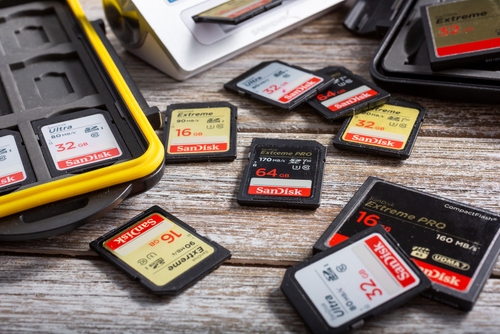
TradingKey - On April 27, Eastern Time, driven by multiple tailwinds such as the surge in demand for AI computing power, Goldman Sachs ( GS) significantly upwardly revising price forecasts for memory chips and the continued widening of the industry's supply-demand gap, U.S. memory concept stocks extended their rally. SanDisk ( SNDK) rose more than 8% to close at $1,070.20; Micron Technology ( MU) gained more than 5% to close at $524.56, with its market capitalization approaching $600 billion. Over the past year, SanDisk has risen more than 3,100%, while Micron's cumulative gain has exceeded 550%.

[Source: TradingKey]
Goldman Sachs Significantly Raises Memory Chip Price Forecasts
Goldman Sachs released a major research report on April 23, raising its forecast for 2026 DRAM price increases to 250%-280% from its January estimate of approximately 150%. NAND price growth projections were also revised upward to 200%-250% from about 100%. At the same time, the firm refuted previous views that supply and demand would rebalance by 2027, noting that the memory shortage could persist beyond 2027.
Goldman Sachs noted that the DRAM supply-demand gap is expected to reach 4.9% in 2026, marking the most severe supply shortage in the past 15 years.
The supply tightness is primarily driven by robust demand for AI servers, limited new industry capacity, and the prioritization of HBM in advanced process production lines. The three major memory manufacturers have diverted significant DRAM capacity to HBM, resulting in a reduction of effective supply for conventional DRAM and NAND.
Furthermore, with wafer fab construction cycles lasting approximately five years, major overseas memory manufacturers have only a few expansion projects slated for 2026, and most new capacity will not come online until the second half of 2027. Consequently, a supply-demand gap for DRAM and NAND is expected to persist throughout 2026 and 2027.
Data from TrendForce indicates that first-quarter contract prices for conventional DRAM were gradually revised upward to 90%-95% from initial estimates of 55%-60% at the start of the year, while NAND prices were raised to 55%-60% from 33%-38%. This significant upward revision in price expectations is primarily due to a structural surge in AI inference demand.
AI Inference Drives Structural Surge in Demand
The focus of AI development is shifting from "model training" to "model usage," fundamentally reshaping the demand structure of the storage market. As token consumption surges during the inference phase, the demand for KV Cache has multiplied. Since expensive DRAM alone cannot satisfy the storage needs for KV Cache, enterprise SSDs are stepping in to serve as "secondary memory" to replace DRAM.
TrendForce predicts that enterprise SSDs will become the largest application market for NAND, with AI server shipments expected to account for over 20% of the total. JPMorgan ( JPM) notes that the annual growth rate of the NAND market size will rise from 10% in the past to 34% over the next three years, significantly exceeding historical cycles.
Institutions ramp up target price upgrades; notable divergence among leading companies becomes evident.
Several institutions have collectively raised price targets ahead of earnings. Morgan Stanley ( MS) significantly raised its price target for SanDisk from $690 to $1,100, maintaining an "Overweight" rating, citing sustained NAND pricing momentum and robust demand for AI and enterprise SSDs.
Cantor Fitzgerald raised its price target for SanDisk to $1,400. Evercore ISI assigned a price target of $1,200, with a bull-case scenario of $2,600, the highest on Wall Street.
Micron was initiated with a "Buy" rating and a $700 price target by Melius Research; analysts believe the AI-driven memory cycle will propel long-term demand. KeyBanc maintained its $600 price target.
Bank of America analysts noted that the high profitability of traditional DRAM is causing memory giants to shift more production capacity from HBM to traditional DRAM. This will prolong the tight supply-demand cycle, shifting the memory investment thesis from an AI premium to a traditional supply shortage.
Overall, due to its high proportion of enterprise SSDs, SanDisk has become a direct beneficiary of AI inference demand. Micron is positioned in both HBM and traditional DRAM lines, offering greater flexibility but also carrying a higher valuation premium.
High-Price Risks and Earnings Bellwethers
Memory chip prices are at historical highs. If end-market demand declines or capacity release exceeds expectations in the second half of the year, the magnitude of price increases may narrow. Currently, PC and smartphone manufacturers are passing on costs by raising retail prices, which in turn suppresses demand. Furthermore, technological substitution, characterized by the rising penetration of QLC NAND, is putting long-term pressure on traditional pricing models.
Goldman Sachs proposed three probability paths in its scenario analysis. In the base case (50% probability), the supply-demand gap will slowly close as capacity is gradually released. In the bull case (30% probability), if AI demand continues to exceed expectations while supply remains constrained, there will be further room for price increases. In the downside scenario (20% probability), the price hike cycle may end prematurely if the global economy slows or technological substitution accelerates. Market expectations for the second quarter generally see DRAM and NAND contract prices maintaining a quarter-on-quarter increase within the 35% to 65% range.
SanDisk will release its earnings after the bell on April 30. The key focus will be on whether gross margins continue to improve and if pricing guidance can be maintained at high levels, which serves as a gauge for whether the upward price trend is unlikely to reverse in the short term. A warning signal to watch is days of inventory; an unexpected rise in this data would suggest that end-market demand may be softening.
This content was translated using AI and reviewed for clarity. It is for informational purposes only.
Recommended Articles










Comments (0)
Click the $ button, enter the symbol, and select to link a stock, ETF, or other ticker.