


BOJ Interest Rate Vote Sees Biggest Split in Ten Years, Kazuo Ueda Signals Hawkishness



AI Podcast


The Bank of Japan maintained its short-term interest rate target at 0.75% but showed significant internal division, with three board members proposing a hike to 1.0%. The central bank raised medium-term inflation expectations while lowering its fiscal 2026 GDP growth forecast to 0.5%. Market expectations for a June rate hike have increased, with swap markets pricing in a 74% probability. Governor Ueda signaled a hawkish stance, emphasizing continued rate hikes based on economic conditions and the risk of inflation exceeding forecasts due to strong corporate pricing power and a potential wage-price spiral, though Middle East tensions add uncertainty.
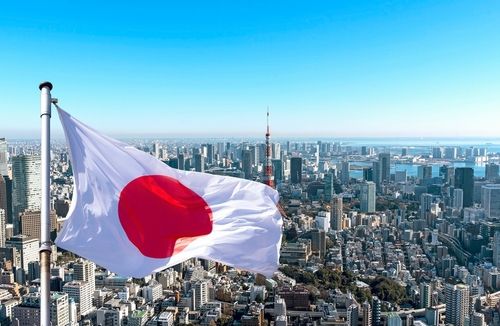
TradingKey - On April 28, the Bank of Japan concluded its two-day monetary policy meeting and announced that it would maintain its short-term interest rate target at 0.75%, a result consistent with mainstream market expectations—approximately 80% of the 51 economists surveyed by the media had predicted that rates would remain unchanged.
However, the voting results of this meeting were particularly noteworthy. A faction represented by three board members—Hajime Takata, Naoki Tamura, and Junko Nakagawa—proposed raising the interest rate to 1.0%, but the proposal was ultimately voted down by a margin of 3 votes in favor to 6 against.
This marks the most significant split in a Bank of Japan monetary policy vote since 2016 and the first instance of such pronounced dissent since Kazuo Ueda took office as Governor in 2023, highlighting the rising internal pressure the BoJ faces in normalizing its monetary policy.
Released alongside the interest rate decision were the latest economic projections. The central bank significantly raised its medium-term inflation expectations while slashing its real GDP growth forecast for fiscal 2026 from the original 1.0% to 0.5%, signaling concerns over insufficient economic resilience under the impact of high oil prices.
Following the meeting, the Bank of Japan reiterated that it will adjust interest rates based on developments in the economy, prices, and financial markets, while also needing to closely monitor the spillover effects of the Middle East situation on the economy and prices, and carefully manage the pace and timing of policy adjustments. Currently, Japan's real interest rates remain in an extremely low range, and the overall monetary policy stance remains accommodative.
Probability of June rate hike rises
The latest research from Bloomberg Economics shows that calls for a rate hike within the Bank of Japan's Policy Board are continuing to rise. At this month's policy meeting, two more members opposed keeping interest rates unchanged; ultimately, 3 out of the 9 members explicitly advocated for a hike, a significant increase from the single dissenting vote at the March meeting.
Market expectations for a June rate hike by the Bank of Japan are heating up rapidly. Bloomberg Economics maintains its forecast of a June hike to 1%, but also notes uncertainty—the pro-stimulus government led by Prime Minister Sanae Takaichi is pressuring the central bank's independence, which, coupled with Middle East instability, has forced the BOJ to soften its hawkish stance from March.
Overnight swap market pricing shows that following the BOJ decision, the probability of traders betting on a rate hike at the June 16 meeting has risen to 74%. Previously, media surveys showed that 57% of economists identified June as the timing for the next rate hike.
Jin Kenzaki, chief Japan economist at Societe Generale, said: "We have pegged the timing of the next rate hike for June. However, if a peace agreement between the U.S. and Iran has not been reached by then and the Strait of Hormuz remains closed, the rate hike could be further delayed until the July meeting."
Meanwhile, with Middle East tensions driving up oil prices, the Bank of Japan significantly raised its inflation forecasts in its latest quarterly outlook report, upwardly revising the core CPI forecast for this fiscal year to 2.8% from 1.9% in January, while lowering the economic growth forecast to 0.5% from 1.0%.
Kazuo Ueda Signals Hawkish Stance
Governor Kazuo Ueda signaled a clear hawkish stance at the subsequent press conference, emphasizing that rate hikes will continue based on economic conditions. He noted that upside risks to prices now outweigh downside risks to the economy and that the central bank must avoid falling behind the curve in its fight against inflation.
Ueda pointed out that Japanese firms' willingness to raise prices has significantly strengthened, raising the possibility of inflation exceeding expectations. He added that the trend of synchronized wage and price growth is likely to persist, while overall financial conditions remain accommodative.
He explicitly stated that as long as the economy does not face a major recession, rate hikes remain feasible. The Bank of Japan is in the process of gradually raising interest rates toward neutral levels, and the next meeting will involve policy decisions based on economic data.
However, uncertainty in the Middle East has cast a shadow over the policy outlook, as this geopolitical factor reduces the likelihood of the central bank meeting its economic and inflation projections. He specifically warned that the impact of oil price volatility on overall prices could be greater than in the past, necessitating close monitoring of its combined effects on exchange rates, growth, and price levels. Even so, the broader trajectory of monetary tightening remains unchanged.
He also mentioned that while current price trends are slightly below the 2% policy target, upside inflation risks from corporate pricing should not be underestimated, and a significant upward revision to price forecasts cannot be ruled out. Although inflation expectations are not yet fully anchored, the wage-price spiral is expected to continue, firming the central bank's resolve to combat inflation.
Following the Bank of Japan's policy decision on April 28, the yen initially spiked against the dollar to an intraday high of 158.96 before quickly retracing after the press conference. It is currently hovering near 159.60, largely returning to the range seen prior to the decision.
This content was translated using AI and reviewed for clarity. It is for informational purposes only.
Recommended Articles








Comments (0)
Click the $ button, enter the symbol, and select to link a stock, ETF, or other ticker.