


Apple CEO Change: John Ternus to Lead AI Strategy and Apple Silicon Shift



AI Podcast


John Ternus will succeed Tim Cook as CEO on September 1, shifting Apple towards a product and engineering-first strategy amid intense AI competition. Despite market cap growth under Cook, Apple missed early AI opportunities, notably with Siri's delayed evolution post-ChatGPT. Internal divisions and strategic missteps hindered AI development. Ternus is expected to focus on embedding AI features, leveraging third-party solutions like Google's Gemini for Siri. His tenure will likely emphasize proprietary Apple Silicon for on-device AI processing and "Private AI" to capitalize on user privacy, a key differentiator for the company.
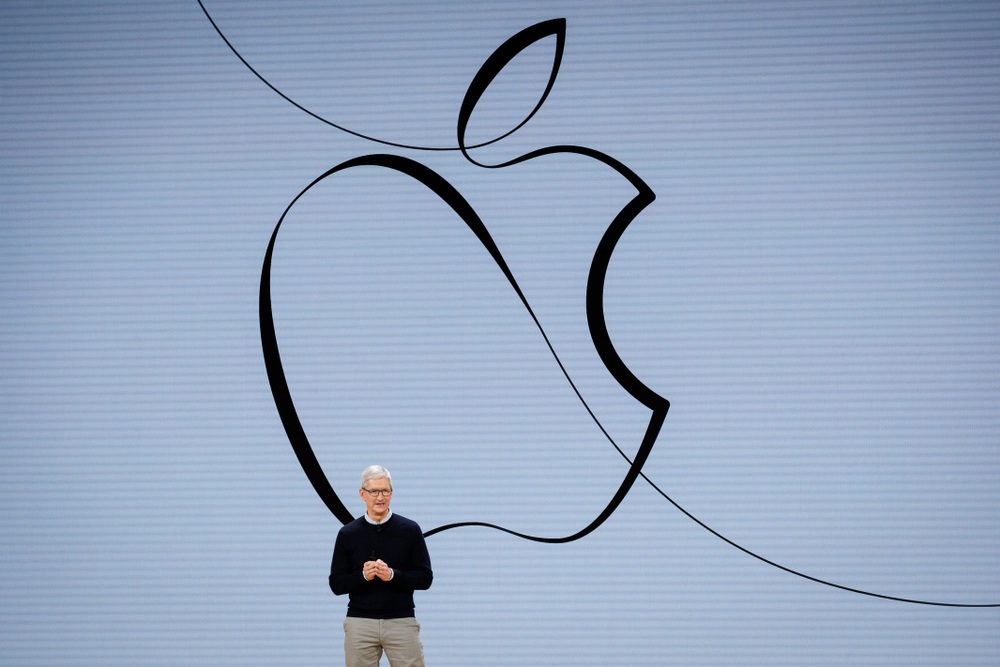
TradingKey - On April 20, Eastern Time, Apple (AAPL) announced that John Ternus, Senior Vice President of Hardware Engineering, will succeed Tim Cook as CEO on September 1, while Cook transitions to the role of Executive Chairman.
Although the announcement has finally been made, Ternus faces a challenging path as CEO amid the intensifying AI race. Prior to his appointment, Ternus was already a core leader of Apple's hardware product lines. His succession of Cook, who is renowned for operational excellence, suggests Apple may shift from an operations-driven strategy to a product- and engineering-first model. Is Apple poised to usher in a new era of hardware-driven AI?
The Cook Era: Why Apple Lagged Behind in the AI Race
Although Apple's market capitalization exploded from $348 billion to over $4 trillion during Tim Cook's 15-year tenure, it also weighed down the company's performance in the AI wave.
As recently as this January, Ross Gerber, co-founder and CEO of Gerber Kawasaki Wealth Management, criticized Apple's leadership, stating that it was time for Tim Cook to resign as Apple had completely missed the opportunity in the AI sector.
Apple once led the AI wave as early as 2010 with its acquisition of Siri, which at the time was one of the world's largest AI products, boasting over 300 million daily active users outside of China. However, following the release of ChatGPT 3.5 in November 2022, Apple's response lagged behind the industry. Simeon Bochev, former head of strategy and operations for Apple’s machine learning platform, noted that Apple failed to promptly adopt a strategy of rebuilding from the ground up around the Transformer architecture, leading to its delayed reaction.
During Steve Jobs' lifetime, he designated Siri as one of the highest-priority development projects; however, for a long period after his passing, Apple shifted its focus to "moonshot" projects like the Vision Pro and the autonomous vehicle initiative Project Titan, causing the company to lose its first-mover advantage in the AI race.
In 2018, Apple poached from Google (GOOG) (GOOGL) its former top executive, John Giannandrea, to head its artificial intelligence division, hoping to address its shortcomings in AI development. However, the internal reforms Giannandrea sought to implement lacked support, primarily due to disagreements among executives. For instance, Craig Federighi, Apple’s software chief, was long reluctant to invest heavily, as he did not view AI as a core capability for personal computers or mobile devices.
Although Federighi finally authorized AI research and development, internal divisions persisted over Apple's AI direction: whether to develop an in-house chatbot or an interactive interface capable of controlling devices; whether to adopt Google's Gemini solution or utilize the technical core of ChatGPT. These factors collectively hindered Apple's progress.
Ultimately, the protracted research and development failed to yield desired results. Giannandrea lost control over Siri, and a significant amount of Apple's AI talent began departing for companies like OpenAI and Meta (META) as well as LoveFrom, the new firm started by former chief designer Jony Ive. This signaled another level of failure for Apple's AI strategy: it was not only unable to produce results but also ultimately lost its talent pool.
Future of Apple Silicon: How Ternus Will Drive Hardware-Centric AI
Bochev stated that Apple has pivoted to a pragmatic AI roadmap of "embedding enough AI features to retain users while leaning heavily on third parties." In January, Apple announced a multi-year partnership with Google, with Gemini providing technical support for the upgraded Siri, for which Apple will pay Google approximately $1 billion annually for access.
What changes might Ternus implement during his era at the helm?
Analysis from CNBC noted that Gene Munster, Managing Partner at Deepwater Asset Management and a veteran Apple observer, expects Ternus to poach heavily from AI firms like Anthropic and OpenAI upon taking office, though he does not believe Apple will go head-to-head with other large language model companies.
Gil Luria, Head of Technology Research at DA Davidson, pointed out that Apple still believes its future lifeline depends on products like smart glasses or foldable phones; for AI models, Apple will directly adopt the results of whichever side eventually wins.
Looking at Ternus's career trajectory, he is likely to reinforce Apple's hardware-driven AI strategy, which may manifest in two ways. First, as Apple needs to deploy AI on-device—namely on smartphones or AI glasses—this imposes higher requirements on its chips.
Apple analyst Ming-Chi Kuo commented that Ternus’s most iconic achievement in recent years was driving the Mac's successful transition from Intel's x86 (INTC) processors to ARM architecture-based proprietary Apple Silicon. This shift toward Apple Silicon may become even more aggressive after he takes over as CEO.
Furthermore, Apple's core advantage is user privacy. The AI strategy under Ternus may focus more on "Private AI," emphasizing the processing of sensitive data on-device and using powerful local hardware to safeguard privacy, which will also demand more from Apple's hardware.
Bochev believes that the privacy strategy could provide Apple with a differentiation advantage in the long run. He stated that the anonymous data accumulated from 2.5 billion active devices, combined with vertical integration control over on-device AI processing, gives Apple an edge in the "secure, private personal AI" segment that is difficult for competitors to replicate.
This content was translated using AI and reviewed for clarity. It is for informational purposes only.
Recommended Articles





Comments (0)
Click the $ button, enter the symbol, and select to link a stock, ETF, or other ticker.