


Improving Geopolitical Expectations Drive Asia-Pacific Stocks to Close Higher, South Korean Stocks Hit Record Peaks



AI Podcast


Asia-Pacific markets advanced Tuesday, led by tech stocks, especially semiconductors, on renewed optimism for U.S.-Iran negotiations. South Korea's KOSPI hit a record high, up 2.7%, driven by Samsung Electronics and SK Hynix. Japan's Nikkei 225 neared its all-time high, gaining 0.9%. Morgan Stanley highlighted continued strong Asian semiconductor exports and persistent AI hardware demand, benefiting South Korea and Taiwan. Foreign investors, who previously sold South Korean equities, are showing signs of returning. Market volatility related to Middle East geopolitical risks is moderating. Positive U.S. tech earnings and capex guidance could further re-rate regional tech valuations.

TradingKey - Optimistic expectations regarding the resumption of U.S.-Iran negotiations were the core driver for Asia-Pacific markets on Tuesday. Tech stocks, particularly the semiconductor sector, saw a collective breakout, leading several major indices higher.
South Korea's KOSPI surged 2.7% to close at 6,388.47 points, extending the previous day's gains and setting a new record high by finishing at the day's peak.
The Nikkei 225 index closed up 0.9% at 59,349.17 points, nearing its all-time high; the Taiwan Weighted Index rose 1.75%; and the Hong Kong Hang Seng Index followed with a 0.48% gain.
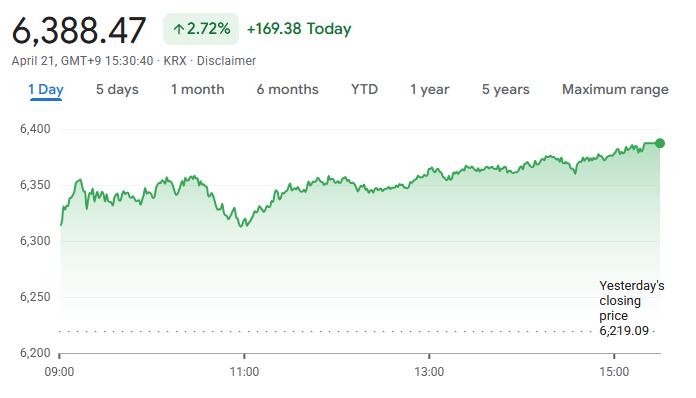
The strong performance of the South Korean stock market was primarily driven by chip giants. Shares of heavyweight Samsung Electronics rose more than 2%, while SK Hynix jumped nearly 5%, breaking through the 1.22 million won mark for the first time and hitting a record high.
In the preceding month, foreign investors sold a record 35 trillion won (approximately $23.8 billion) in South Korean equities, but capital has recently shown signs of flowing back.
Since the outbreak of the U.S.-Iran conflict, the KOSPI index has experienced extreme volatility, including a 12% single-day crash and a 9% surge. However, analysts noted that market sensitivity to geopolitical risks in the Middle East is declining, and overall volatility has moderated.
Morgan Stanley (MS)'s latest research report shows that Asian semiconductor export data continues to exceed market expectations, and AI hardware demand has yet to show signs of slowing. South Korea and Taiwan remain the most direct beneficiaries in the global AI supply chain. The firm believes that near-term focus should be on upcoming earnings from U.S. tech giants; if capex guidance is further revised upward, Asia-Pacific tech stocks could see another round of valuation rerating.
Market expectations for U.S.-Iran negotiations are a key factor driving this rally. U.S. President Trump stated on the 20th that Vice President Vance would travel to Pakistan later that day, with a new round of talks scheduled for the 21st. However, Iran has not yet confirmed its participation. As the host, Pakistan is actively mediating, and a senior government official expressed confidence in facilitating Iran's involvement.
This content was translated using AI and reviewed for clarity. It is for informational purposes only.
Recommended Articles








Comments (0)
Click the $ button, enter the symbol, and select to link a stock, ETF, or other ticker.