


U.S. Stocks Post Notable Weekly Gains; U.S.-Iran Talks and Inflation Data Stir Markets



AI Podcast


U.S. stocks closed mixed, with the S&P 500 down 0.12% and the Dow Jones Industrial Average down 0.56%, while the Nasdaq Composite rose 0.35%, driven by semiconductor gains. All major indices posted significant weekly gains. Inflation data showed a 3.3% YoY increase in CPI, driven by energy prices, aligning with expectations. WTI crude fell 2.40% to $95.62/barrel, while gold declined and silver rose. Market focus is on U.S.-Iran ceasefire talks, with both sides issuing warnings regarding potential military action if negotiations fail. Tensions over the Strait of Hormuz persist.

TradingKey - U.S. stocks closed mixed on Friday (April 10), with the S&P 500 edging down 0.12%, though its weekly gains remained substantial. The market's primary focus is currently centered on the follow-up developments regarding the two-week ceasefire agreement between the U.S. and Iran.
In terms of sector performance, the Nasdaq Composite bucked the trend to close 0.35% higher, as the strong performance of semiconductor stocks such as Nvidia ( NVDA) and Broadcom ( AVGO) provided major support. Meanwhile, the Dow Jones Industrial Average saw a significant pullback, dropping 269 points, or 0.56%, on the day.
Despite weakness late in the session, all three major indices posted impressive weekly gains. The S&P 500 rose more than 3% for the week, its best weekly performance since last November. The Nasdaq gained over 4%, also setting a new weekly record since last November, while the Dow recorded a gain of approximately 3% this week.
A major inflation report released the same day showed that U.S. consumer price growth accelerated in line with market expectations, driven by price pass-throughs resulting from the conflict with Iran.
The Consumer Price Index (CPI) released by the Labor Department is the first core inflation indicator to be published since the outbreak of the conflict. Data showed that, driven by an expected surge in energy prices, U.S. consumer prices recorded their largest monthly increase in nearly four years, with gasoline prices skyrocketing 21.2% in a single month.
The core CPI, which excludes volatile food and energy components, rose less than market analysts had previously expected. However, the ripple effects of surging crude oil prices are likely to manifest further in the coming months.
Read more: " US-Iran War Ignites Energy Inflation, US March CPI Rises 3.3% Year-on-Year, Fed Rate Cut Window Nearing Closure? "
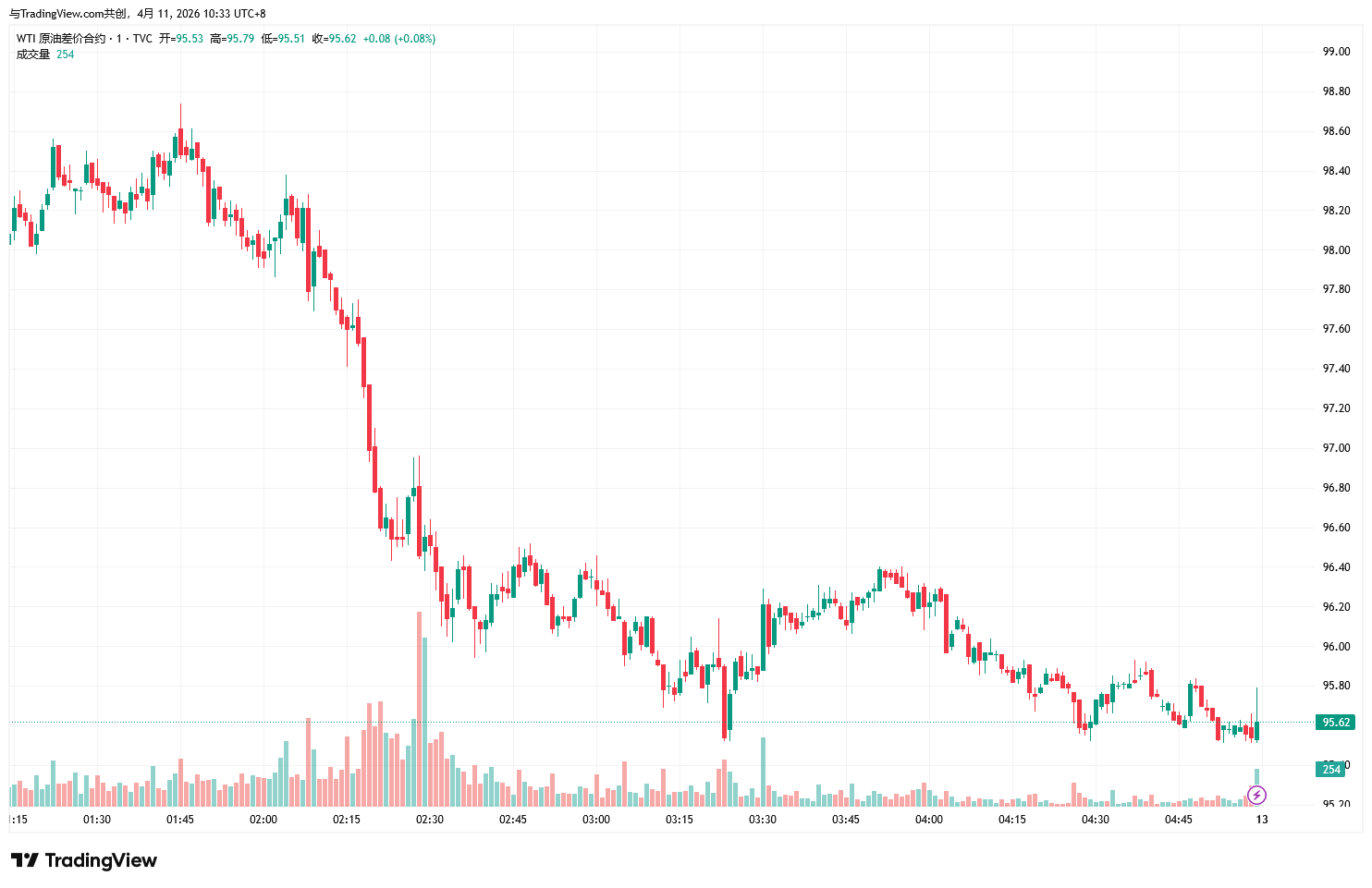
In commodity markets, international oil prices weakened in the short term, with WTI crude ( USOIL) falling 2.40% on the day to trade at $95.62 per barrel.
Precious metals were mixed, with spot gold ( XAUUSD) closing at $4,749.68 per ounce, down a slight 0.33% on the day, while spot silver ( XAGUSD) rose 0.85% to $75.93 per ounce.
Global investors are currently paying close attention to the critical consultations between the U.S. and Iran scheduled for Saturday, as the outcome will directly determine the future of the ceasefire in the Middle East.
In the early hours of April 11 local time, an Iranian negotiating delegation—comprising high-ranking officials such as Mohammad Bagher Ghalibaf, Speaker of the Iranian Parliament, and Foreign Minister Abbas Araghchi—arrived in Islamabad, Pakistan, to participate in the U.S.-Iran talks.
U.S. President Trump stated that the United States will intensify the resumption of military operations if a peace agreement with Iran cannot be reached. In an interview, he revealed that the U.S. is repositioning its forces and has equipped warships with state-of-the-art weapons, which would be "used very effectively" should negotiations fail.
Iran had previously agreed to a two-week temporary ceasefire but issued a clear warning that if the current negotiations fail to reach an agreement satisfactory to Iran and the "Axis of Resistance," it would once again plunge U.S. regional interests and Israel into "fire" should conflict resume.
Given that the U.S. and Israel have repeatedly reneged on their promises in the past, the Iranian Armed Forces remain on full combat alert. An Iranian statement also noted that control over the Strait of Hormuz will be advanced to a new stage to firmly maintain strategic initiative over the waterway, and that Iran will not relinquish any of its legal rights.
On April 10 local time, U.S. President Trump publicly declared that the Strait of Hormuz "will be reopened very soon, one way or another."
This content was translated using AI and reviewed for clarity. It is for informational purposes only.
Recommended Articles








Comments (0)
Click the $ button, enter the symbol, and select to link a stock, ETF, or other ticker.