


Should You Buy Berkshire Hathaway Post-Warren Buffett? What's Warren Buffett's Advice for 2026 Investment?



AI Podcast


Berkshire Hathaway accumulated nearly $400 billion in cash in 2025, investing in U.S. Treasuries and reducing its Apple stake while making a small Alphabet acquisition. This cautious approach, consistent with Buffett's past actions in frothy markets, prioritized safety over participating in AI-driven rallies. While Berkshire's shares climbed more steadily than the S&P 500, often underperforming during rallies but holding up better during downturns, its decentralized structure and significant cash reserves provide strategic flexibility for successors post-Buffett. Upside potential lies in its optionality to deploy cash strategically and the resilience of its diverse operating businesses.

TradingKey - Berkshire Hathaway (BRK.A) (BRK.B) is a diversified holding company that blends a large collection of operating businesses with a significant portfolio of publicly traded stocks and U.S. Treasuries. The operation is diverse and includes insurance, energy, rail, industrial, manufacturing, and consumer businesses. So that nest egg generates recurring cash, particularly from insurance float, which Berkshire can invest in shares of other companies, acquisitions, or buybacks. Because Berkshire holds so many different companies and securities, it is generally less volatile than the overall market, and often serves as a shock absorber when markets get choppy. That structure is also why the size of Berkshire is both a strength and a limit: it offers steadiness and liquidity, but it also restricts the range of opportunities that are sufficiently large to move the needle.
What Berkshire Did in 2025
Berkshire built up a hoard of cash through 2025, accumulating nearly $400 billion—more than it had ever held before. That was by design. Berkshire, instead of joining the artificial intelligence rally that led the headlines, put the cash into short-term U.S. Treasuries with about 3.6% yields. It also reduced its Apple (AAPL) position, a holding that was once worth around $200 billion but had become a smaller fraction of the equity portfolio by late 2025.There was also news of trims or exits on financial names like Bank of America (BAC). At the same time, Berkshire revealed some cautious receptivity for AI-adjacent plays, in the form of a small acquisition in Alphabet (GOOG) (GOOGL), but it did not make a broad move into the most crowded trades.
And the signals being sent with these moves are consistent with the way that Warren Buffett has acted at the edge of frothy markets previously. He stressed patience and price discipline in the late 1960s and the dot-com boom. Because headline inflation was elevated and the S&P 500 was being led by a thin handful of AI darlings, the fact that Berkshire’s cash was near a record high was a blunt indication that there just weren’t many bargains to be found and that it was best to keep capital safe until expected returns improved.
How Berkshire’s Stock Performed in 2025
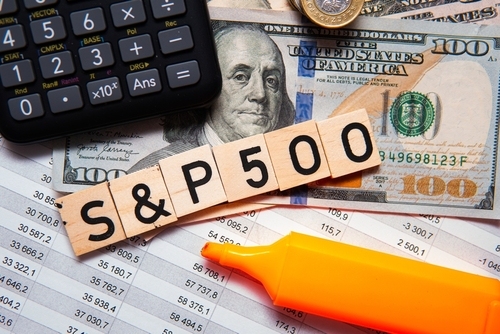
The S&P 500 spent most of 2025 in rally mode. In that light, Berkshire’s shares climbed more steadily, on account of their blend of operating earnings, conservative balance sheet, and increasing cash return. Berkshire often underperformed the index as it avoided the most speculative areas of the market during the strongest AI-driven rallies. The shares held up better when the market retreated. Historically, for the full year, the return on the stock was generally either a little better or a little worse than that of the S&P 500, though with much less reliance on speculative momentum.
To understand why this trade-off would be acceptable, it's helpful to zoom out.Berkshire has inched out the index in recent years despite its enormous size. A quick benchmark is that $500 in Berkshire’s Class B shares ten years ago would be worth about $1,868, or a total return of roughly 274%. In a market cycle dominated by a small group of mega-cap winners, to be able to do it with less risk concentration—that is a meaningful accomplishment.
Is Berkshire Still a Buy in 2026 After Buffett’s Retirement?
Leadership change is imminent, and this change will be more important as Buffett has been the face and voice of the company for as long as anyone can remember. For so long, Warren Buffett and Berkshire were the U.S. economist and legendary investor built for one person to rule them all. The company’s management structure and decentralized culture of decision-making, along with their deep bench of operating managers and investing personnel, are designed to enable compounding to continue in a manner that is not reliant on any one leader. The current war chest also gives the successors freedom to be free.And if valuations contract, they can acquire high-quality assets on more attractive terms; if markets maintain their lofty levels, they can receive a risk-free yield while waiting.
That’s not to say Berkshire will produce eye-popping returns every year. It becomes harder to beat when you’re that big, and holding so much cash does create a short-term drag if the market continues to zip upward. But that’s the point: Berkshire’s risk management is baked into its value. For investors seeking a core holding to hold through the ages with solid downside protection, and with the optionality to invest in dislocations, Berkshire continues to be that holding beyond 2026.
Does Berkshire Have Upside in 2026?
There are two major drivers to the upside. The first is optionality. That record cash in T-bills is simply dry powder. If the AI trade runs the gamut and better entry points emerge in the market, Berkshire will shift tactically from defense to offense. When Buffett moved historically to hold significant cash positions ahead of overheated markets, this allowed for outperformance as valuations reset and opportunities materialized. The same logic applies to his successors.
Resilience is the other source of strength. Berkshire’s operating subsidiaries generate consistent profits at all levels of the business cycle. They’re cash-flowing cyclical businesses of energy and insurance, plus manufacturing and consumer diversification. That base, combined with the ongoing share repurchases when the stock is relatively cheap, allows per-share growth even in the absence of headline-grabbing deals.In a benign (or whipsaw) 2026, however, that component mix might generate mid-single-digit to low-double-digit returns, with upside potential if the markets reset and the cash gets put to work at attractive yields.
In terms of downside risk, the biggest risk to the upside is a further market narrowing to expensive AI winners that would leave Berkshire’s cash-heavy stance looking too cautious for too long. To be sure, the cost of waiting is a known cost: a Treasury yield and less volatility, in return for future optionality.
Warren Buffett’s Advice for 2026 Investing
Buffett’s greatest enduring lesson is that time in the market is more important than trying to time the market. He has continued to remind investors that the stock market has provided handsome long-term returns through wars, recessions, and crises, and that the greatest errors of investing are made by buying when it feels like it’s safe to do so, or selling when headlines are frightening. That philosophy guides a workable 2026 playbook.
Remaining invested while making regular contributions helps you avoid the pitfalls of trying to time the market. Dollar-cost averaging is buying at the highs as well as the lows, so your purchase prices end up averaged out over the long haul. When markets look extended, you don’t always have to run to the other extreme; a little cash can both shield you from the downside and seduce you to buy on pullbacks. If a stock has become a disproportionately large part of your portfolio at a high valuation, it can be prudent to take some gains to reduce concentration risk, even if it triggers a tax bill, since diversification and reinvestment have the potential to smooth out long-term results. And when you find truly wunderkinds that you know inside and out with durable moat or predictable earnings power, holding them through volatility often is what separates an above average outcome from an outstanding one. Berkshire’s own lengthy stretches in American Express (AXP) and Coca-Cola (KO) illustrate how conviction may compound over decades.
Recommended Articles






Comments (0)
Click the $ button, enter the symbol, and select to link a stock, ETF, or other ticker.