


AI Chip Tariffs and TSMC’s Earnings Beat Fuel 2026’s Hardest-Hitting Semiconductor Rally



AI Podcast


Taiwan Semiconductor Manufacturing Co. (TSM) reported strong quarterly profits driven by AI hardware demand, exceeding expectations and boosting its stock price. This performance supports optimistic outlooks on the AI boom, even as the U.S. imposed tariffs on certain AI chips. U.S. chipmakers AMD and Intel are raising server CPU prices due to sold-out capacity, further fueling bullish sentiment. Despite AI bubble concerns, upstream semiconductor manufacturers like TSM, AMD, and Intel are deemed more resilient than downstream AI application companies due to secured order backlogs and visible capacity expansion, suggesting a structural divergence in AI investment.

TradingKey - Taiwan Semiconductor Manufacturing Co. (TSM) Latest quarterly financial results show that, driven by strong demand for AI hardware, the company's profit grew significantly, substantially exceeding market expectations and driving its share price up by over 4% in overnight trading.
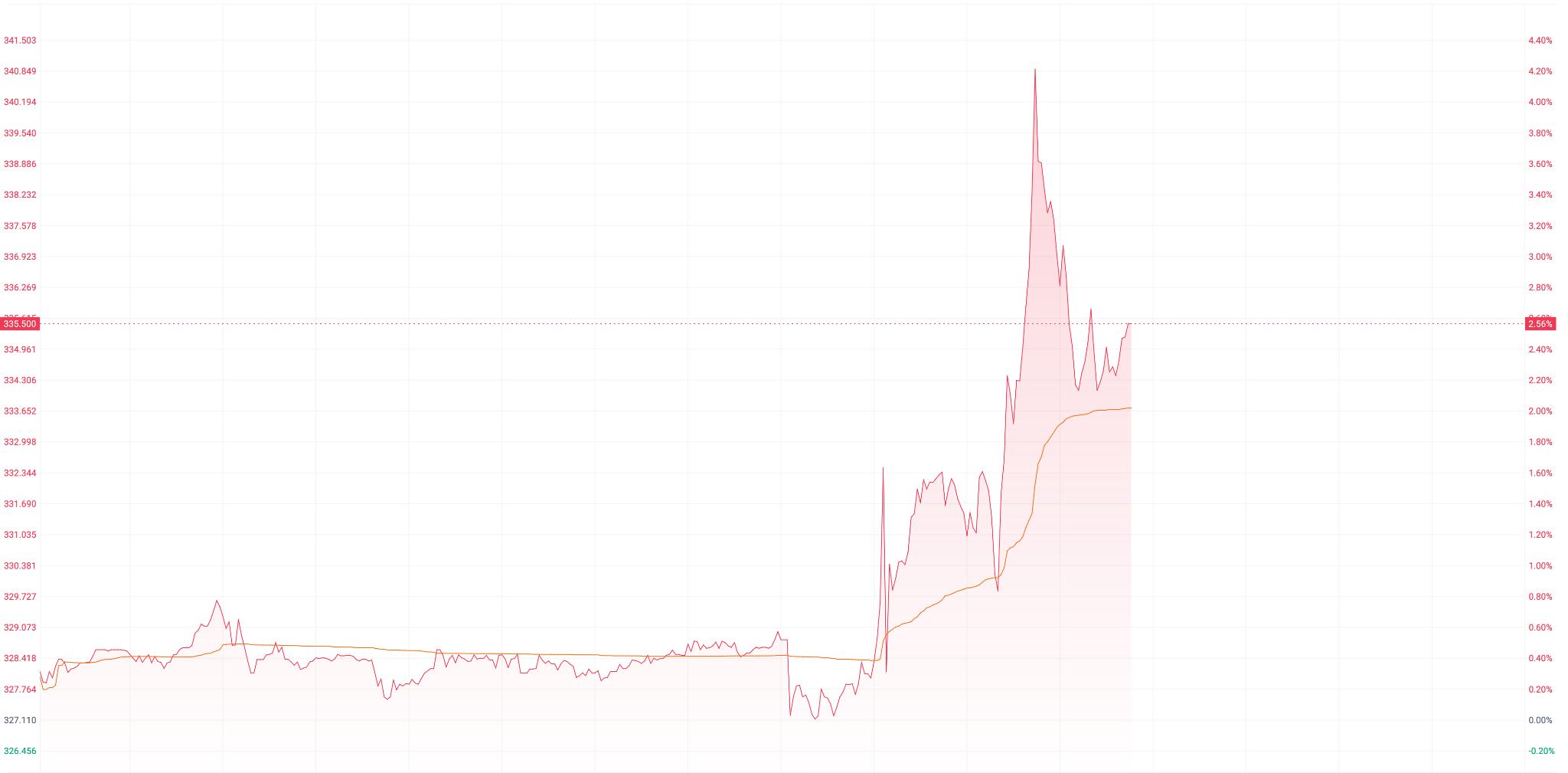
[TSM Overnight Stock Price Chart, Source: Futu]
This performance not only further solidifies TSMC's position as the world's leading foundry but also provides strong evidence for the optimistic judgment of U.S. chip design companies regarding the sustainability of the AI boom.
Meanwhile, U.S. President Trump on Wednesday local time, pursuant to a new national security order issued by the White House, imposed on certain AI chips a 25% tariff, a move that sent shares of domestic U.S. chipmakers soaring.
Additionally, according to KeyBanc, due to aggressive buying by hyperscale cloud service providers, chip giants AMD and Intel have essentially sold out of server CPU capacity for the entire year.
In response to the extreme supply-demand imbalance and to ensure stable subsequent supply, both companies plan to raise server CPU prices by 10-15%, news that may continue to drive bullish sentiment for their stock prices.
TSMC's better-than-expected earnings report simultaneously drove up the share prices of Intel (INTC) , Advanced Micro Devices (AMD) and other semiconductor concept stocks.
Since 2025, semiconductor concept stocks have surged after experiencing phased systemic risks. Intel, with government backing, naturally became the 'market darling' of the semiconductor sector; as the previously least favored, Intel seemed for a time to have become the sector's leading gainer, with its stock price rising as much as 140% year-to-date in early 2025.
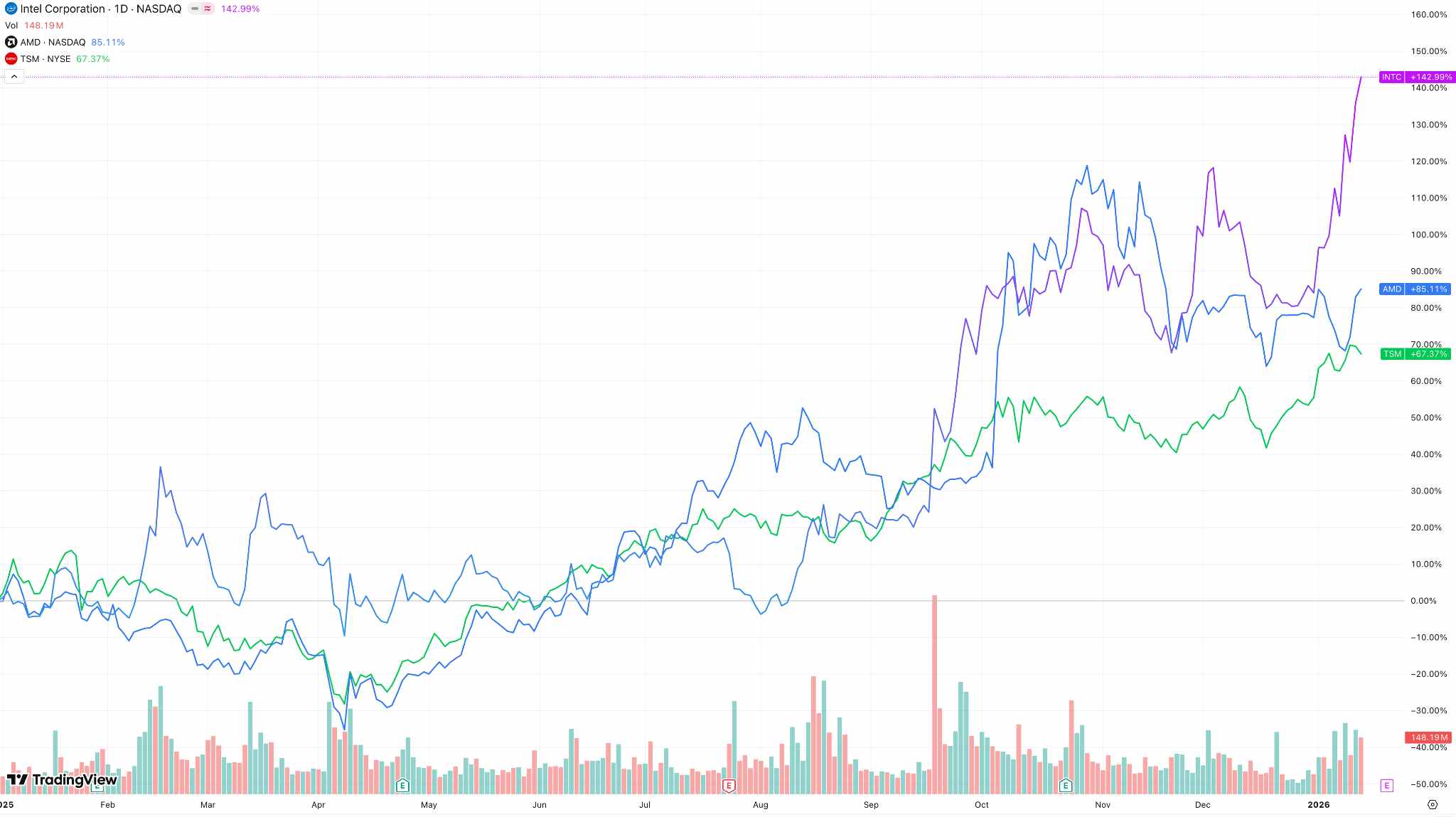
[AMD, TSM, INTC 2025 Stock Price Performance Chart, Source: TradingView]
Share prices of semiconductor giants continue to climb amid multiple positive developments. Although the market has recently been tested by the 'AI bubble' narrative, there is no apparent large-scale profit-taking sentiment, especially among upstream manufacturers in the AI supply chain.
Why are semiconductor companies more resilient to market divergence?
We believe that even if a bubble does exist in the AI field, the first to experience pressure and significant corrections should be the downstream segments of the industry chain, namely those directly facing AI applications, large model development or software services companies, such as Microsoft (MSFT) , Alphabet (GOOGL) , Meta , Amazon (AMZN) , Palantir (PLTR) , etc.
These companies often highly depend on market sentiment and future narratives to drive valuations. In the absence of stable profitability or clear commercialization paths, once the pace of AI implementation falls short of expectations or capital enthusiasm cools, their stock prices will bear the brunt.
In contrast, mid-to-upstream segments (such as chip manufacturing, advanced packaging, semiconductor equipment, and foundries), though also benefiting from the AI boom, typically have earnings growth supported by more solid order backlogs and visible capacity expansion plans. Their demand is essentially transmitted after being validated by downstream sectors; therefore, their reaction to a bubble bursting would be lagged and more moderate.
Even if downstream demand ultimately proves false, mid-to-upstream companies often have several quarters of order visibility and inventory buffers, allowing them to show stronger resilience during adjustments.
More importantly, in Under the 'trading time for space' logic, as long as investors take profits in a timely manner when upstream earnings are realized and market sentiment hits a peak, these positions can still achieve positive returns even if the broader AI sector subsequently corrects due to a bubble.
This is precisely the current cycle of artificial intelligence investment 's noteworthy structural divergence.
This content was translated using AI and reviewed for clarity. It is for informational purposes only.
Recommended Articles






Comments (0)
Click the $ button, enter the symbol, and select to link a stock, ETF, or other ticker.