


Why Sanae Takaichi Winning Japan’s Diet Election Led to a Surge in Japanese Stock Indices?



AI Podcast


Japanese Prime Minister Sanae Takaichi's coalition secured a single-party majority, boosting the Nikkei index to historic highs. Takaichi's support for accommodative policies, including maintaining the Bank of Japan's ultra-loose monetary policy, alleviates concerns about fiscal sustainability and corporate financing costs. Investors anticipate continued "Abenomics 2.0" driven by fiscal stimulus and industrial investment in strategic sectors. The yen softened due to expectations of persistent expansionary fiscal policies and potential increased government debt. Japanese debt's domestic holding and low-interest rate environment contrast with U.S. debt's external exposure and higher yields, mitigating immediate fiscal crisis risks in Japan.

TradingKey - Reports indicate that the ruling coalition led by Japanese Prime Minister Sanae Takaichi has secured a solid single-party majority in the parliamentary elections held on Sunday (February 8). Following the news, the yen softened slightly, while the Nikkei index surpassed the 57,000 mark for the first time in history. Gains in the Topix index expanded to 3%.
Why Did Sanae Takaichi's Election Victory Trigger a Surge in the Japanese Stock Market?
Takaichi has consistently advocated for accommodative policies, which encourage companies to seek financing for growth, helping to boost earnings expectations and capital expenditure in the long run. More importantly, Takaichi supports maintaining the Bank of Japan's ultra-loose monetary policy and explicitly opposes premature interest rate hikes, directly alleviating market concerns over the policy mix.
Against the backdrop of Japan's government debt-to-GDP ratio reaching 260%, any signal of tightening could trigger a fiscal sustainability crisis. Takaichi's victory implies that Japan will continue to "sustain high debt with low interest rates," which not only prevents corporate borrowing costs from skyrocketing but also stabilizes the valuation anchor for yen-denominated assets.
Furthermore, she supports proactive fiscal stimulus and industrial policies, planning to increase investment in strategic sectors such as semiconductors, AI, and defense, further strengthening the "Abenomics 2.0" narrative. Consequently, investors are betting that the Japanese stock market—particularly export-oriented and tech sectors—will continue its bull run, driven by loose monetary policy and industrial support.
Why Did Sanae Takaichi's Victory Fail to Bring About an Appreciation of the Yen?
The Liberal Democratic Party (LDP) securing an absolute majority in the House of Representatives cleared the path for Takaichi to implement more debt-driven fiscal stimulus. Market expectations that accommodative policies will persist have put pressure on the yen. However, given the significant decline, there is also a risk of verbal intervention by Japanese authorities.
Markets expect Takaichi to maintain expansionary fiscal policies, including her previously introduced $135 billion economic stimulus package aimed at mitigating the impact of inflation. Additionally, she has pledged to suspend the consumption tax on food.
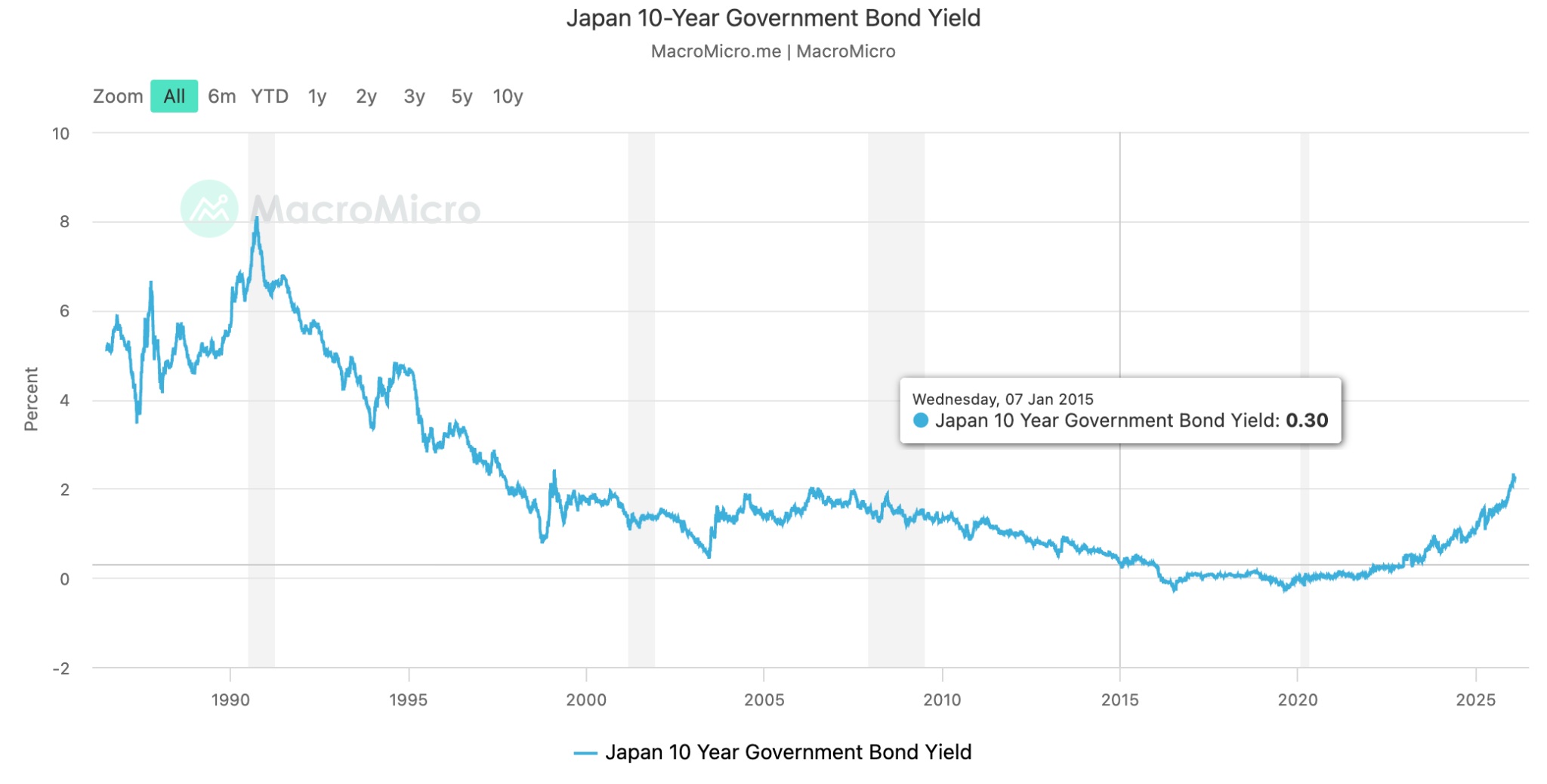
Japan's pace of interest rate hikes hit the pause button in January. Sustained loose fiscal policy will continue to increase fiscal pressure on the government, leading to the continuous expansion of Japan's debt scale. Particularly with Takaichi's victory, markets are increasingly trading on the possibility of a Japanese government fiscal insolvency, resulting in yen depreciation and a continuous rise in Japanese government bond (JGB) yields.
What Advantages Does Japanese Debt Have Compared to U.S. Debt?
Japanese debt is held almost entirely domestically, primarily by the Bank of Japan (BOJ), domestic banks, pension funds, and Japanese households, thereby avoiding an external debt crisis.
[Japan 10-Year Government Bond Yield, Source: MacroMicro]
[U.S. 10-Year Treasury Yield, Source: MacroMicro]
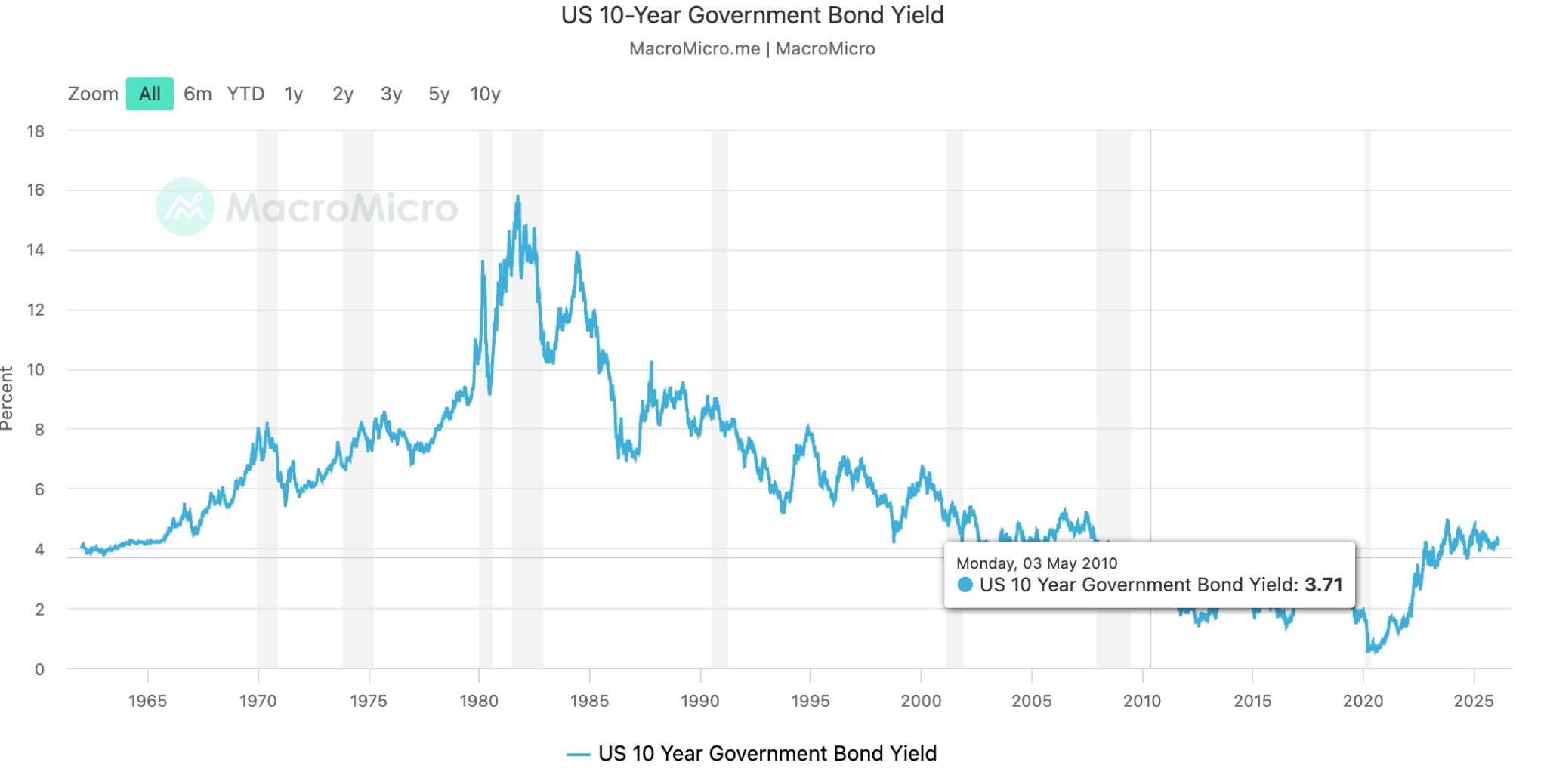
At the same time, Japan has been in an ultra-low interest rate environment for a long time. The 10-year JGB yield remained close to 0% for a sustained period previously (2015–2022) and currently stands at 2.24%, resulting in a light interest burden for the government. In contrast, the U.S. 10-year Treasury yield is currently 4.22%, with much of it being external debt. The U.S. government has long paid high costs for its debt, and with the U.S. currently in a high-interest-rate cycle, this adds further sustainability concerns to U.S. debt.
This content was translated using AI and reviewed for clarity. It is for informational purposes only.
Recommended Articles












Comments (0)
Click the $ button, enter the symbol, and select to link a stock, ETF, or other ticker.