


Bank Earnings Lead 2026 Market Charge, but Wall Street Eyes Guidance as Key



AI Podcast


Bank stocks commence the 2026 earnings season with high expectations driven by capital markets recovery and investment banking growth. Analysts anticipate S&P 500 banks' Q4 earnings to rise 8.1% year-on-year, with specific GSIBs, trust banks, and regional banks showing strong growth projections. However, future guidance and continued market recovery signals are crucial. Concerns exist that the recent rally may have priced in optimistic outcomes. A potential 10% credit card interest rate cap proposed by Trump poses a significant risk, evidenced by pre-market sell-offs in major bank stocks.
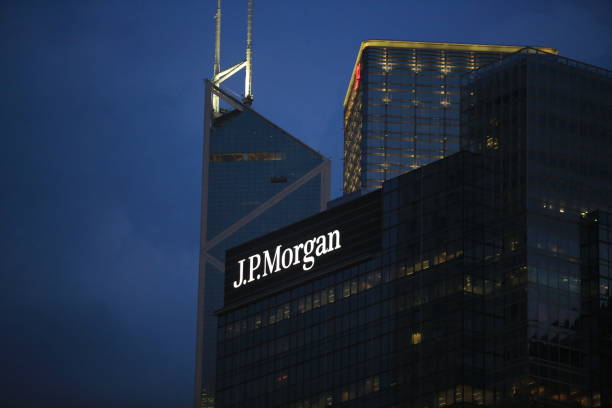
TradingKey - Bank stocks will release fourth-quarter earnings this week, kicking off the 2026 U.S. earnings season.
Tuesday will see JPMorgan Chase (JPM) reporting earnings, while Citigroup (C) , Wells Fargo (WFC) and Bank of America (BAC) are scheduled to announce results on Wednesday; Morgan Stanley (MS) and Goldman Sachs (GS) are expected to report on Thursday.
Driven by a recovery in capital markets and growth in investment banking revenue, expectations for bank stocks are high this quarter. However, Wall Street analysts noted that compared to current results, the upcoming earnings guidance and the confirmation of further recovery signals in capital markets are more critical.
By the end of 2025, Wall Street analysts widely anticipated the S&P 500 could hit 8,000 this year, making this week's bank earnings a key market bellwether.
Q4 Outlook: Investment Banking and Wealth Management to Drive 2026 Growth
According to Dealogic data, global investment banking revenue for the full year 2025 grew 15% year-on-year to $103 billion, while M&A transaction volume surged 42% year-on-year to $5.1 trillion. Driven by a surge in corporate M&A, strong trading revenue, and productivity gains and cost reductions from AI, the market expects bank stocks to deliver stellar performance. Bloomberg data shows that analysts expect Q4 earnings for bank stocks within the S&P 500 Index to increase by 8.1% year-on-year.
Based on Wall Street consensus estimates for Q4 U.S. stock earnings, Citigroup leads among Global Systemically Important Banks (GSIBs) with 21% year-on-year growth; among trust banks, BNY Mellon's growth expectation reached 15%; and among large regional banks, Citizens Financial Group is expected to grow by 30%. In terms of expected earnings per share (EPS) growth, Morgan Stanley, BNY Mellon, and U.S. Bancorp saw the largest increases across the three categories, respectively.
Goldman Sachs assessed market sentiment toward different types of bank stocks: Market sentiment toward large banks is optimistic, as they are poised to benefit from the recovery in capital markets, favorable ongoing regulatory reforms, and the pro-cyclical nature of bank stocks; positions in regional banks have remained net long since last autumn; investors believe that custody bank deposits will benefit from the Federal Reserve's balance sheet operations.
On a bank-by-bank basis, Morgan Stanley expects its Q4 investment banking fees to grow slightly below market consensus, but M&A advisory fees, markets revenue, and equity trading revenue are all expected to exceed growth expectations.
Bank of America (BofA) noted that due to a change in accounting treatment, its retained earnings as of September 30, 2025, decreased by $1.7 billion compared to previously reported amounts, though the impact on annualized net income is negligible.
Regarding the outlook for bank stocks in 2026, Evercore ISI analysts noted, amid expectations of continued interest rate cuts, growth in banks' net interest income (NII) will slow down, but trading, wealth management, and investment banking operations will continue to drive growth for bank stocks.
Market Risks: Is the Rally "Priced to Perfection"?
Although the market generally expects a "strong start" from the banking sector in Q4, opinions remain divided. The banking sector saw significant gains by the end of 2025 and maintained its upward trend in early 2026. Over the past year, the KBW Bank Index, which comprises 24 lending institutions, has risen by 34.17%.
The previous strong rally in bank stocks has sparked concerns among analysts: Has the market already priced in the optimistic expectations for Q4 earnings reports? If the positive factors of the Q4 reports are already fully reflected in current stock prices, then upon their release, the market's focus will shift from whether company performance is growing to whether stock valuations are excessive, which could potentially weigh on share prices.
Specifically, if management's guidance at that time indicates that net interest income expectations lack resilience, or that interest income will decline due to the ongoing rate-cutting cycle; or if it reveals that the thawing and recovery of capital markets is not helping the conversion of investment banking and trading revenue, or signals an increase in credit costs, the rally in bank stocks in 2026 could "stall midway."
Additionally, focus is needed on Trump's call for the implementation of a one-year, 10% cap on credit card interest rates. Last Friday, Trump posted on Truth Social that a one-year credit card interest rate cap of 10% would be implemented starting January 20. However, according to Reuters, the proposal mentioned no execution details and faces legislative hurdles, with significant resistance expected. But if implemented, compared to the current average annual credit card interest rate of approximately 19%-20% , a 10% rate cap would have a significant impact on the economic returns of revolving credit balances.
Following this news, bank stocks faced a sell-off in pre-market trading on Monday (January 12) , and by the close, Citigroup fell 2.98%, JPMorgan Chase dropped 1.43%, Bank of America slid 1.18%, and Wells Fargo declined 1.03%.
This content was translated using AI and reviewed for clarity. It is for informational purposes only.
Recommended Articles








Comments (0)
Click the $ button, enter the symbol, and select to link a stock, ETF, or other ticker.