


Aave TVL Cratered 60% to $15B: Is the Lending King’s Reign Finally Over?



AI Podcast


The Kelp DAO exploit on April 19th resulted in approximately $196 million in bad debt for Aave. This exploit, where an attacker used illicitly minted rsETH as collateral, has led to a significant decline in Aave's Total Value Locked (TVL) to $15 billion from a high of $42 billion, and triggered a 15% crash in the AAVE token price. While Aave's Safety Module can cover the immediate loss amount, market skepticism and panic withdrawals, including those by prominent figures, have exacerbated the situation. The clear resolution of the bad debt remains critical for restoring investor confidence and stabilizing capital flows.

TradingKey - The Kelp DAO exploit has resulted in nearly $200 million in losses for Aave, while triggering a plunge in TVL and token price; properly addressing the bad debt has become critical.
On April 23, capital outflows from the decentralized lending protocol Aave accelerated, with its total value locked (TVL) falling toward $15 billion. Compared to its all-time high of $42 billion, $27 billion has evaporated, a cumulative decline of 64%.
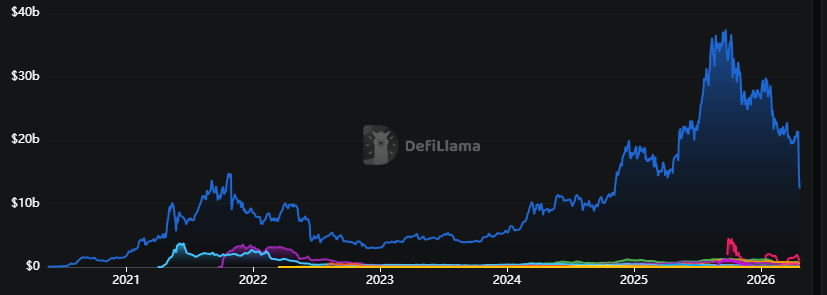 Aave TVL, Source: DefiLlama
The capital flight from Aave was primarily driven by the Kelp DAO exploit. On April 19, a security vulnerability occurred in the liquid restaking protocol Kelp DAO, where an attacker used illicitly minted rsETH as collateral on Aave to borrow a large amount of ETH, resulting in approximately $196 million in bad debt for the platform.
In terms of the loss amount alone, Aave's Safety Module can cover this portion of the losses. However, the incident has prompted market skepticism regarding its security, and panic has spread. Notably, Justin Sun executed an emergency withdrawal of over 53,000 ETH from Aave to deposit into Spark, triggering a wave of whale migrations and igniting a panicked flight of on-chain funds. Data shows that within just 48 hours of the incident, hundreds of millions of dollars in stablecoins were transferred from Aave V3 to competing protocols such as Spark or Morpho, directly leading to a plunge in TVL and triggering its token AAVE price crash.
Following the incident, whales engaged in aggressive selling of AAVE, causing the price to drop 15% that day. Data indicates that three whales (smaugvision, 0xFC5, and 0xA2E) each sold 20,000 AAVE that day, cashing out approximately $2 million each; meanwhile, a whale named "This Will Make You Love Again" sold nearly 30,000 AAVE at a loss.
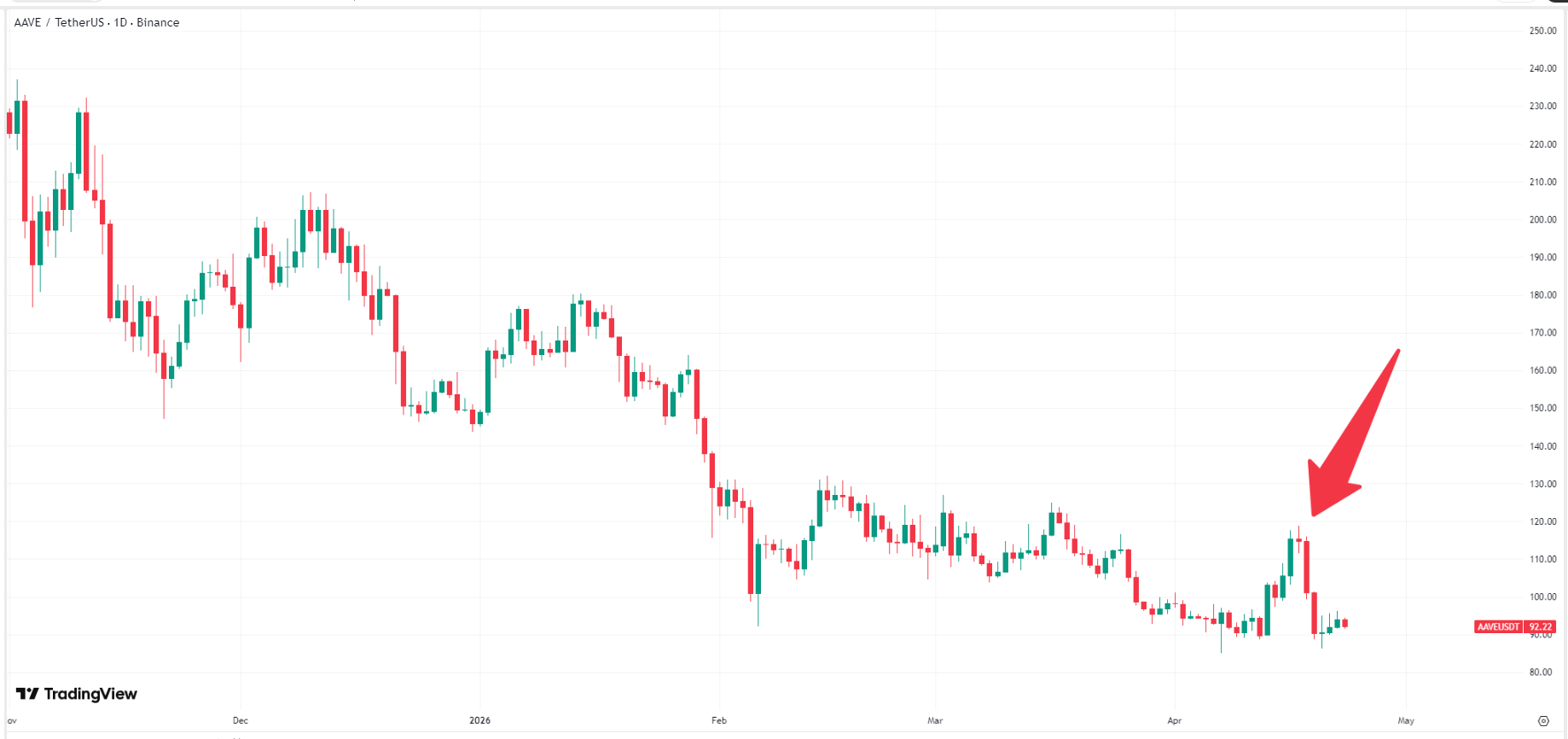 AAVE price chart, Source: TradingView
On April 22, Aave founder Stani Kulechov addressed the recent events, stating that $70 million worth of ETH has been recovered, while emphasizing that the team will continue to review the incident and optimize mechanisms. However, Stani Kulechov did not disclose how the bad debt would be covered, which is precisely what investors are concerned about.
Auctioning AAVE tokens from the treasury would not only directly suppress the token price but could also trigger panic selling. If external capital is introduced or future revenue is leveraged, short-term selling pressure might be avoided, and the AAVE price could stabilize. In short, whether Aave can effectively manage the bad debt will determine if capital flows back in.
This content was translated using AI and reviewed for clarity. It is for informational purposes only.
Recommended Articles









Comments (0)
Click the $ button, enter the symbol, and select to link a stock, ETF, or other ticker.