


SpaceX IPO Disclosure Reveals Bold Plan to Build In-House GPUs: Financial Black Hole or New Growth Engine?



AI Podcast


SpaceX plans in-house GPU manufacturing, linked to the Terafab project with Tesla and xAI, to address chip supply shortages and enable future growth in AI. This ambitious venture into a high-barrier industry, potentially leveraging Intel's future process technology, faces significant risks. Massive capital expenditure and technological challenges, including yield rates, could strain SpaceX's finances and impact its substantial pre-IPO valuation. The success of this "chip closed loop" strategy remains uncertain.
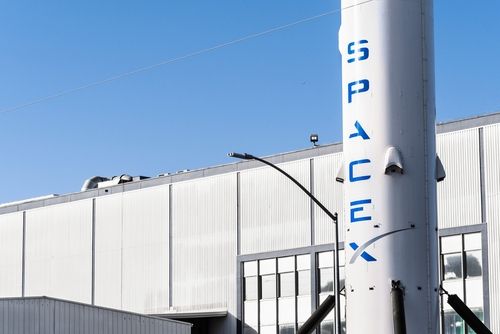
TradingKey - According to Reuters, excerpts from SpaceX's S-1 registration filing submitted to the U.S. Securities and Exchange Commission (SEC) show that the company plans to manufacture its own GPUs (graphics processing units).
In the filing, SpaceX listed "in-house GPU manufacturing" as one of its ongoing "major capital expenditure" projects, but the specific scale of spending was not disclosed. Meanwhile, the risk factors section cited chip supply shortages as a potential growth bottleneck.
Generally, GPU manufacturing is the segment with the highest barriers to entry in the chip industry; even industry giant Nvidia (NVDA) also outsources its production to specialized foundries such as TSMC (TSM) and other professional foundries. SpaceX is expected to complete its listing this summer at a valuation of $1.75 trillion. Does the announcement of its foray into this field ahead of the IPO bring higher risks to the listing, or a new growth point?
你说 Terafab: Musk’s Vision for a Vertical Silicon Loop
According to reports, SpaceX's GPU manufacturing plans are closely linked to the Terafab project. Terafab is being developed by SpaceX, its affiliate xAI, and Tesla (TSLA) jointly, with planning spearheaded by Musk and a site selected in Austin, Texas; the project is positioned as an advanced AI chip manufacturing complex. Musk has stated that the project will target automobiles, humanoid robots, and space data centers, but many key details, including chip types and manufacturing technologies, have not been clearly disclosed to date.
It is currently unclear when SpaceX plans to produce its own chips, or which party—SpaceX, the Terafab developers, or their partner Intel—will handle the technical manufacturing stage.
Musk stated during a Tesla analyst meeting this Wednesday that once Terafab's capacity expands, Intel's (INTC) next-generation 14A process technology may be quite mature or ready for mass production," he stated, "it seems like the right move."
The need for in-house GPUs, according to S-1 registration filings, arises because chip supply shortages have constrained SpaceX's potential growth. When Musk proposed the Terafab project in March, he indicated that the target annual power consumption would reach a staggering 1 TW—approximately 20 times the current global annual power consumption for AI computing; such a massive project will inevitably exacerbate the current AI chip supply gap.
In addition to addressing chip supply issues, Barclays (BCS) U.S. Autos and Mobility analyst Dan Levy highlighted another of Musk's intentions: chips will be the growth pillar of the next phase. Barclays believes that chips will directly determine whether Tesla's vehicle-side inference, robot-side inference, and data center training/validation chains can scale.
He believes the ambition of the Terafab project is not just to expand chip production capacity, but to achieve vertical integration within the chip industry, creating a domestic closed loop for logic chips, memory, and advanced packaging in the U.S.
SpaceX’s Biggest Risk: Capex vs. Capability
However, achieving autonomous GPU manufacturing is no easy feat. Currently, there are two mainstream paths in the market: NVIDIA's development of general-purpose GPUs and Google's (GOOG) (GOOGL) development of specialized TPUs. The former is known for its high versatility and suitability for large-scale data computing, while the latter is optimized for specific functions and is currently used to build AI models and run chatbots such as Anthropic's Claude.
Regardless of which path Terafab chooses, it faces a steep mountain to climb. Given that the chip R&D capabilities of these giants are already quite mature, will Musk's choice to develop chips in-house come at a higher cost than purchasing them externally? In particular, will the massive initial investment further deteriorate the financial performance of SpaceX, which is already in a loss-making phase?
From a process perspective, even if it can leverage Intel's 14A process in the future and avoid starting from scratch, it still faces unknown challenges in yield rates and production ramp-up speed. Currently, Intel's 18A process still suffers from poor yield consistency, and the company is working to reduce yield fluctuations between wafers. The 14A process, the successor to 18A, features finer precision and is transitioning toward pilot production; its yield rate cannot yet be determined.
For a company like Tesla, which possesses ample cash flow and cash reserves, the investment in in-house GPU projects may remain within an acceptable range; however, for SpaceX, which is still in a continuous loss-making stage, the risks are extremely high. In addition to massive capital expenditures potentially dampening investor confidence, analysts have pointed out that the current projected valuation of $1.75 trillion already includes a high premium, having priced in growth expectations through 2030. Should the project's progress fall short of expectations, SpaceX will face an even greater impact.
This content was translated using AI and reviewed for clarity. It is for informational purposes only.
Recommended Articles






Comments (0)
Click the $ button, enter the symbol, and select to link a stock, ETF, or other ticker.