


Two Major Crude Oil Prices Jump Over 5%. US Revokes Iran Oil Sale Licenses After Tanker Attacks



AI Podcast


On July 7, Eastern Time, the U.S. Treasury revoked general licenses for Iranian petroleum exports following attacks in the Strait of Hormuz, causing WTI and Brent crude prices to surge over 5%. This escalation threatens ongoing nuclear negotiations and creates significant risks for global energy logistics, as the strait facilitates one-fifth of worldwide oil trade. Analysts warn that persistent regional instability will likely sustain upward pressure on energy prices and inflation. For Iran, the potential collapse of diplomatic talks and tightened sanctions poses a severe threat to its primary source of fiscal revenue and economic stability.

TradingKey - On July 7, Eastern Time, following Iran's attacks on commercial vessels transiting the Strait of Hormuz, the U.S. Department of the Treasury's official website released a document revoking Iran-related general licenses. This will phase out authorizations for the production, delivery, and sale of Iranian crude oil, petrochemical products, and petroleum products issued on June 21, 2026.
The two major crude oil futures strengthened in the short term. As of press time, WTI crude rose 5.25% to $72.15, while Brent crude oil futures gained 5.7% to $76.14.
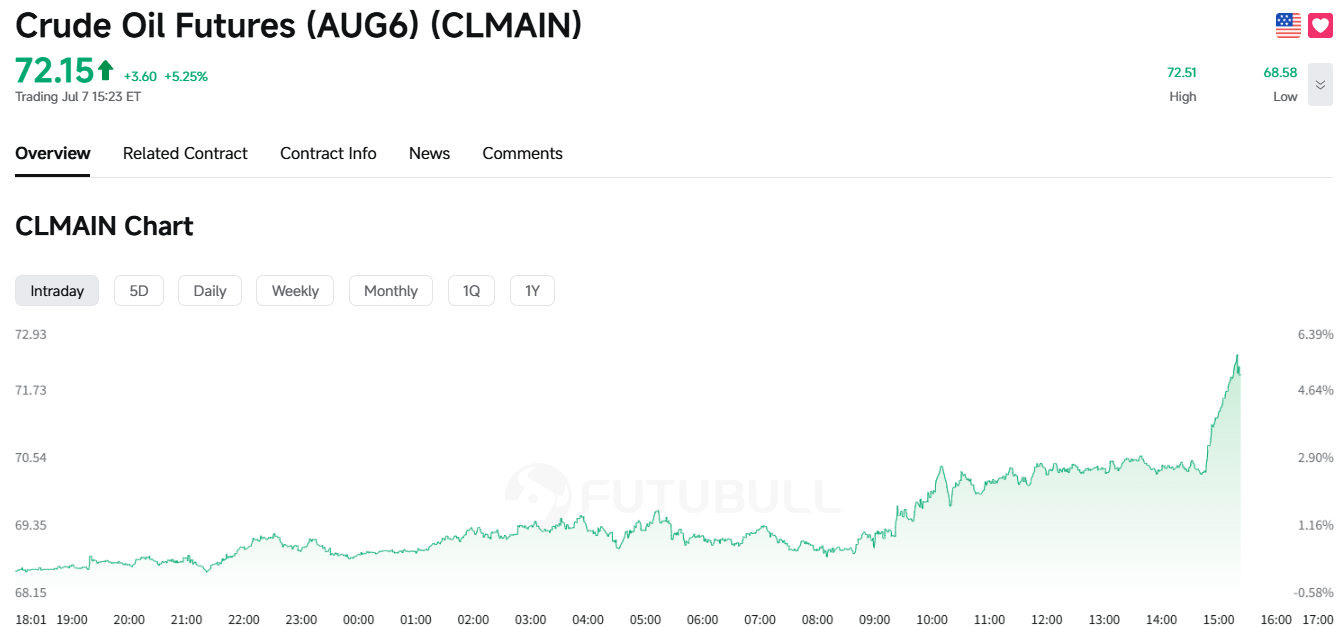
[Source: FutuBull]
This round of escalating tensions directly disrupts the already fragile diplomatic detente between the U.S. and Iran. The two sides had been advancing negotiations on a comprehensive agreement that included nuclear program limits and sanctions relief; the risk of retaliatory escalation could stall talks at any time.
The world's largest shipping industry association stated that vessel transit through the Strait of Hormuz may decline following the latest incidents, although some shipowners will still be willing to risk transiting the strait.
Warren Patterson, head of commodities strategy at ING in Singapore, noted that the recent attacks on vessels in the Persian Gulf show that we still have a long way to go before normalization.
As the core hub for global energy transportation, the Strait of Hormuz carries one-fifth of the world's oil trade volume alongside large-scale liquefied natural gas shipments. Any disruption to shipping would quickly transmit to global energy markets, driving up oil and gas prices and further intensifying inflation and livelihood pressures across nations.
For Iran, oil exports are its vital economic lifeline under the sanctions regime. In recent years, it has continuously expanded crude sales through exports to China, making them the core source of fiscal revenue and hard currency. If peace talks collapse and sanctions tighten again, compounded by disruptions to shipping in the strait, the Iranian economy will face a double blow, and regional uncertainty will continue to escalate.
This content was translated using AI and reviewed for clarity. It is for informational purposes only.
Recommended Articles











Comments (0)
Click the $ button, enter the symbol, and select to link a stock, ETF, or other ticker.