Total 106 articles
Tesla Q2: Demand Has Not Collapsed, But the Dream Starts Charging

Tesla’s Q2 2026 financial results show record deliveries and revenue, contrasted by a sharp decline in operating profit and negative free cash flow. This article breaks down profit fluctuations across the automotive, energy, and services segments, and analyzes the commercialization progress of FSD, Robotaxi, and Optimus, as well as capital expenditure pressures and valuation risks. It also identifies the key data points required for Tesla’s next round of revaluation.
Tue, Aug 4

Oracle Credit Downgrade In-Depth Analysis: Can $638 Billion RPO Convert to Cash Flow Per Share
A comprehensive analysis of the reasons behind S&P's downgrade of Oracle to BBB-, examining the $638 billion in RPO, $90 billion to $95 billion in capital expenditures, $260 billion in lease commitments, $19 billion in new purchase obligations, the return on investment for AI infrastructure, and the conditions for further downgrades.
Thu, Jul 16

Tesla's Q2 Deliveries Greatly Beat Expectations, Why Is the Market Still Not Buying It? Gross Margin, FSD and Robotaxi Are the Keys
Tesla delivered approximately 480,000 vehicles in Q2 2026, significantly beating sell-side consensus. However, whether its valuation can rerate still depends on automotive gross margin, FSD v14 Lite, Robotaxi operations, European FSD regulatory progress, and the quality of its July 22 earnings report.
Thu, Jul 9

AI CapEx, Token Costs, and Meta’s Compute Monetization: Revaluing the Three Cloud Giants — Microsoft, Amazon, and Google
This article analyzes the valuation logic of the three major cloud providers—Microsoft, Amazon, and Google—in light of AI capital expenditures, token cost control, Meta's rumored resale of computing power, and the risk comparisons with Oracle. It discusses whether the period of precise AI usage calc
Fri, Jul 3

Fed May Resume Rate Hikes in September: Full Analysis of Warsh’s Hawkish Debut, Are US Stocks a Risk or Opportunity in the Second Half
At the inaugural FOMC meeting chaired by the newly appointed Fed Chairman Kevin Warsh, the median dot plot shifted directly from rate-cut expectations to rate-hike expectations. Interest rate futures immediately priced in a roughly 70% probability of a rate hike in September, plunging the market into a rate-hike panic. This article argues that the market is highly likely overestimating the intensity of this rate-hike cycle. Even if rate hikes do resume in September, the move would fundamentally represent a robust tightening characterized by "withdrawing insurance rate cuts against the backdrop of a still-resilient economy," which is fundamentally different from the panic-driven tightening of 2022. For long-term investors in US equities, this shift presents opportunities that outweigh the risks. However, this assessment is conditional and must be dynamically adjusted using three indicators as anchors: core inflation, long-term inflation expectations, and the unemployment rate.
Thu, Jun 25

In-Depth Review of the CPO Delay Controversy: Why a Single SemiAnalysis Report Slammed US Optical Communications in a Single Day, and Should We Really Believe the 'Delay'?
On June 9, 2026, a client-only report from SemiAnalysis claiming that the large-scale commercialization of CPO (Co-Packaged Optics) would be delayed triggered a sharp, single-day collective sell-off in US optical communication stocks. This article deconstructs three timelines, the 19% yield rate formula, upstream laser orders, and other counter-evidence layer by layer. Applying the theory of reflexivity, it uncovers the truth behind the plunge and offers a two-tier interpretive framework for analyzing authoritative research reports.
Tue, Jun 16

Microsoft Build 2026 In-Depth Analysis: In-House Chip Maia 200, MAI Model and Azure’s Cost Counterattack, and Ackman’s Long-Term Logic for a Large Position in Microsoft
Software hasn't been killed by AI; instead, it is being fed to grow even stronger. This article deconstructs why Microsoft's FY2026 Q3 earnings were misinterpreted, the truth behind the panic over approximately $190 billion in capital expenditure, and how the Maia 200 in-house chip, seven proprietary MAI models, and the Foundry platform moat showcased at Build 2026 address market skepticism. It also analyzes why hedge fund titan Bill Ackman exited Google at its lows to take a heavy position in Microsoft, including a four-layer fundamental framework and key risks.
Thu, Jun 4

SpaceX 1.75 Trillion IPO Deep Dive: When the Largest Listing in History Is Automatically Stuffed Into Your Index Fund

SpaceX is set to list on Nasdaq at a $1.75 trillion valuation, making it the largest IPO in history, and will automatically be included in index funds such as the QQQ on its 15th trading day post-listing. This article deconstructs the details left unsaid in the prospectus: $41.3 billion in accumulated losses, the regulatory vacuum surrounding the xAI acquisition, circular related-party transactions between Elon Musk’s inner circle and Tesla, suspicious rule revisions by Nasdaq, a nearly $1 trillion compensation package, and why Starship—the pillar of the entire valuation—continues to explode.
Thu, May 28

SpaceX’s 2 Trillion IPO’s Potential Impact on Tesla Shareholders: Facts, Speculations and Three Verifiable Observation Signals
SpaceX filed a confidential draft S-1 with the U.S. Securities and Exchange Commission on April 1, 2026, targeting a $2 trillion valuation and $75 billion in proceeds. Scheduled for a June 12 listing, it is poised to become the largest IPO in the history of global capital markets. However, the critical question is not "why go public despite being well-capitalized," but "what the listing actually achieves." This article strictly separates fact from speculation, deconstructing Nasdaq's fast-track inclusion rules, Elon Musk's dual-class control disparity, and the $2 trillion trigger within Tesla’s 2025 compensation plan. Furthermore, it outlines three independently verifiable signals over the next 60 days to help Tesla shareholders maintain objective judgment amidst conspiracy theories and market "magnet effects."
Wed, May 20

When Market Concentration Surpasses Dotcom Peak: Why Choosing to ‘Shift Gears’ in Summer 2026 Amid AI Bull Market
In 2026, the top 10 gainers in the Nasdaq 100 rose by an average of 784%, exceeding the peak of the Dot-com bubble by 26%. However, the primary drivers are not Nvidia or Microsoft, but rather the AI "peripheral supply chain." This report provides an in-depth analysis of four major risks for the second half of the year: SpaceX’s $1.75 trillion IPO, a resurgence of inflation, the change in Fed leadership, and the midterm elections, as well as investment opportunities in software stocks unfairly penalized by the "SaaSpocalypse."
Thu, May 14

As SaaS Seat Model Collapses, Inference Surpasses Training: Decoding the Diverging Fates of Neocloud Giants CoreWeave, Nebius, and IREN
Anthropic's annualized revenue quintupled to $44 billion within five months, as inference compute surpassed training for the first time. A deep decoding of the differentiated positioning and diverging trajectories of the "Neocloud Big Three"—CoreWeave, Nebius, and IREN—and five key litmus test indicators for the earnings weeks of May 7 and May 13.
Thu, May 7

Deep Analysis 48 Hours Before Microsoft Earnings: OpenAI Agreement Restructuring Implemented, Three Variables of Azure, Copilot, and Capital Expenditure Determine MSFT Valuation Recovery Path
Microsoft released its FY26 Q3 earnings on April 29. This article provides an in-depth analysis of the impact of the OpenAI agreement restructuring, examining three key metrics—Azure growth, a 3.3% Copilot penetration rate, and $110 billion in capital expenditure—to determine whether MSFT’s forward P/E of 22x offers a long-term positioning opportunity.
Tue, Apr 28

Tesla Q1 2026 Earnings Preview: 50,000-Unit Inventory Overhang, Energy Storage Halved, 5 Core Metrics Long-Term Investors Should Really Watch
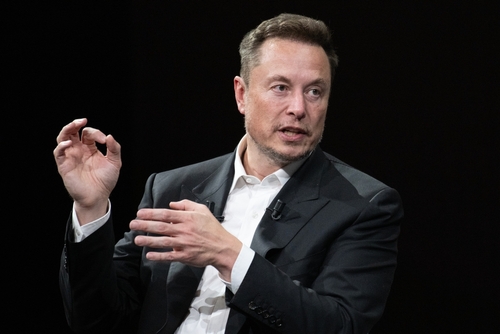
Tesla’s Q1 2026 earnings will be released on April 22. With Q1 deliveries at 358,023 units, inventory surging by 50,363 units, and energy storage nearly halved from 14.2 GWh to 8.8 GWh, analyst target prices show a five-fold discrepancy, ranging from $119 to $600. For long-term investors, this article deconstructs five core metrics that will determine the success of the company's transformation: the 17.9% automotive gross margin floor, management’s explanation for energy storage performance, the $20 billion CapEx guidance, the 1.1 million FSD subscription structure, and the inaugural disclosure of Robotaxi operational data.
Tue, Apr 21

2026 Global AI Industry Deep Observation: Technological Leadership Is Not the End Game, Analyzing the Commercialization Watershed of Anthropic and OpenAI
Deep Analysis of the 2026 AI Industry Watershed: How Anthropic achieved $30 billion in revenue through a precise B2B strategy and surpassed OpenAI in monetization efficiency. This article compares the valuation logic of Claude versus ChatGPT, analyzes the rise of disruptors such as Cursor, Perplexity, and Meta, and reveals the endgame truth of the AI industry's transition from a technological arms race to a battle for ecosystem positioning.
Wed, Apr 15

Unveiling U.S. Stock “Money Printing Machines” — Insights Into the Business Essence of Star Stocks From Net Profit Margins
Using net profit margin as the core metric, this article provides an in-depth analysis of the business fundamentals of star stocks such as NVIDIA, Tesla, Apple, and Visa. Against the backdrop of a neutral-to-tight monetary environment, it reveals the profitability reality behind the S&P 500’s 13.2% benchmark and accurately identifies U.S. "money-printing machines" possessing significant pricing power.
Thu, Apr 2

Tesla (TSLA) 2026 Deep Dive Report: Behind the 5x Pricing Divergence, a Sunset Automaker or AI Giant?
An in-depth analysis of Tesla’s 2026 investment outlook, exploring the transformation into an AI giant and Robotaxi mass production plans behind Wall Street’s five-fold valuation gap. Through a comprehensive deconstruction of gross margin data, the energy business, and macro interest rate risks, we reveal the key investment signals and valuation reality for Tesla in 2026.
Mon, Mar 30

Divergence Between Institutional Exit and Retail Frenzy: Dissecting the Earnings Truth Behind the ‘Magnificent Seven’ Split
An in-depth analysis of the extreme divergence between institutional exodus and retail frenzy in the 2026 US stock market, uncovering the truth behind AI profitability and ROI amid the slump of the "Magnificent Seven." This article deconstructs how capital is rotating from overvalued tech stocks into "HALO assets" such as energy and industrials, providing investors with a practical defensive guide to navigate structural rebalancing.
Thu, Mar 26

2026 Global AI Agent Industry In-Depth Analysis: Paradigm Shift From Productivity Tools to New Gateways of the Digital Economy
An in-depth analysis of the global digital economy paradigm shift triggered by AI Agents in 2026. From the technological leap of GPT-5.4 to the architectural unification of OpenClaw, this article reveals how AI agents are restructuring the business models of tech giants, triggering a "broken ladder" crisis in the workplace, and analyzing counter-intuitive underlying investment logic in sectors such as cybersecurity.
Thu, Mar 19

The $6.6 Trillion Battle for Interest: Rise of Stablecoins, US Treasury Hegemony and the Paradigm Shift of the Global Banking System
An in-depth analysis of the global "interest rate war" amid a $6.6 trillion deposit base, examining how stablecoins are deconstructing traditional bank net interest margin models via the GENIUS Act. This article explores the U.S. Treasury financing logic behind Trump’s alignment with the crypto industry, as well as the profound impact of Sino-U.S. digital currency competition on USD hegemony and the global financial system.
Thu, Mar 12

Anthropic: The Sharp Blade Piercing the Heart of Nvidia’s CUDA
In 2026, the AI industry is entering an industrialized harvest phase. This report provides an in-depth analysis of how Anthropic assists cloud giants in decoupling from the "Nvidia tax" via proprietary chips and achieving profit repatriation. Penetrating the anxiety surrounding trillion-dollar capit
Fri, Mar 6