


Japan and South Korea Stocks Diverge: Nikkei 225 Rises Slightly, Samsung Plunges Nearly 6% Dragging Down Kospi as SK Hynix and Kioxia Are Not Spared



TradingKey - Japanese and South Korean stock markets diverged, with the KOSPI index tumbling over 2% and the Nikkei 225 index edging slightly higher. Samsung Electronics plunged nearly 6%, while SK Hynix and Kioxia followed suit.
During the Asian trading session on June 30, Japanese and South Korean stock markets experienced a flash of false prosperity, briefly rising in early trading before steadily erasing gains. Among them, the KOSPI index fell 2.04% to close at 8,303.42 points. The Nikkei 225 index once surged over 2% during intraday trading, approaching the 72,000-point mark, but ultimately closed up just 0.59% at 70,474.91 points.
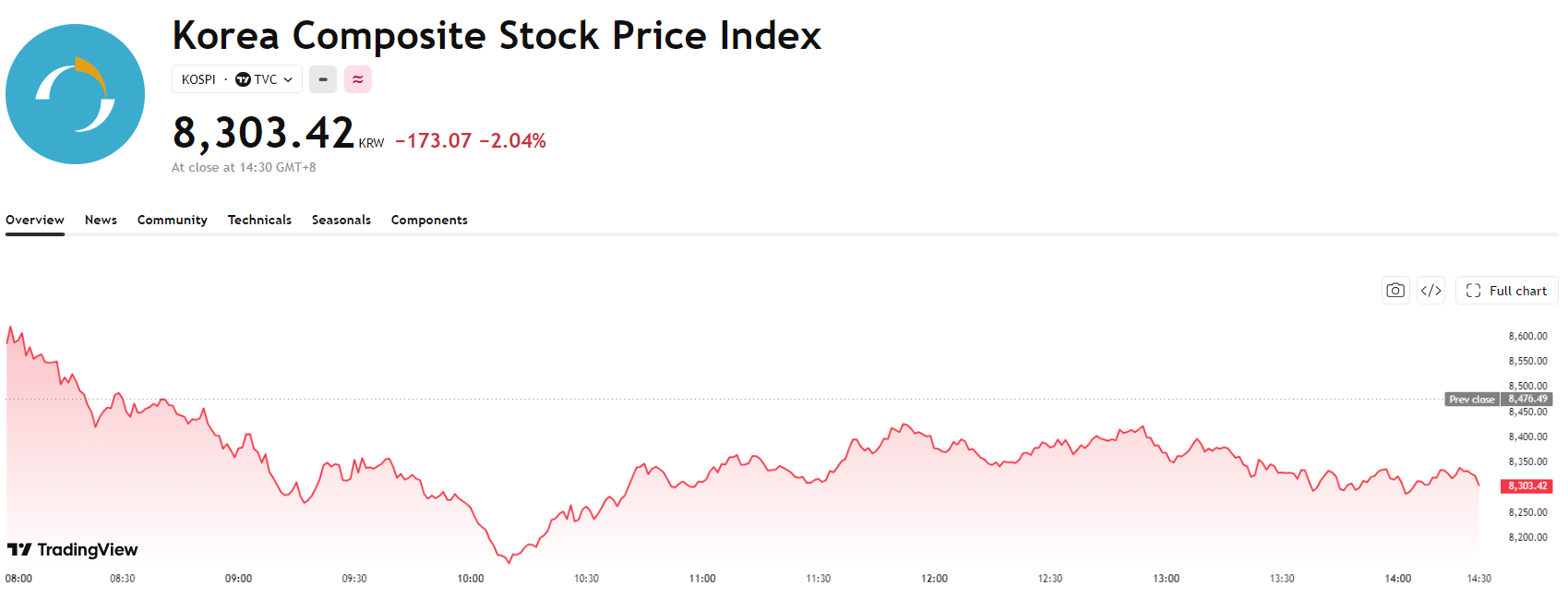 KOSPI Index Chart, Source: TradingView
In terms of individual stocks, heavyweight equities broadly declined. Among them, Samsung Electronics plummeted 5.84% to close at 314,500 KRW; SK Hynix fell 3.4% to 2,560,000 KRW; Kioxia shed 1.73%, losing the 90,000 JPY threshold to close at 88,130 JPY. SoftBank was the sole gainer, closing up 0.6% at 6,000 JPY.
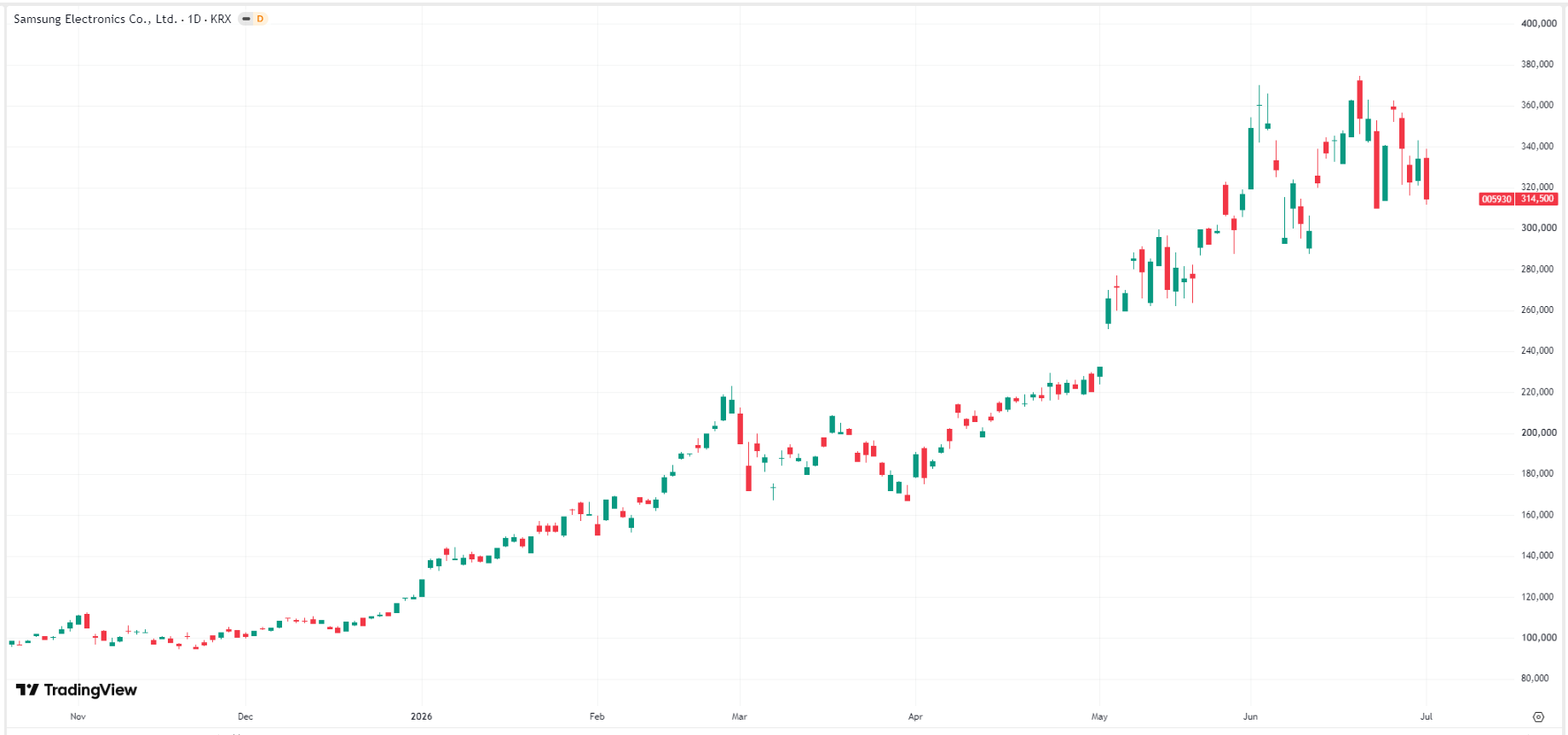 Samsung Electronics Stock Price Chart, Source: TradingView
Renewed geopolitical headwinds emerged in the Middle East as Iranian officials publicly refused to meet with senior US envoys in the region. Negotiations regarding the framework to reopen the Strait of Hormuz suffered a severe setback and entered a deadlock. This has reignited market concerns over potential disruptions to the global supply chain and energy prices in the second half of the year. Consequently, the initial market optimism that had dissipated safe-haven demand at the open quickly pivoted back to caution, dragging down risk assets.
Although a weak yen initially benefited Japanese multinational exporters like SoftBank and Kioxia in early trading, the yen's exchange rate continued its slide toward a 40-year historic low on July 1. However, Wall Street institutions remain broadly vigilant that Japan's Ministry of Finance and central bank could deploy historic currency interventions at any moment. This looming sword of Damocles forced a massive wave of foreign capital and short-term bulls to lock in profits as the Nikkei index approached the 72,000 peak, causing Japanese equities to surrender most of their intraday gains after the initial surge.
This content was translated using AI and reviewed for clarity. It is for informational purposes only.
Recommended Articles










Comments (0)
Click the $ button, enter the symbol, and select to link a stock, ETF, or other ticker.