


Advanced Micro Devices Inc Stock (AMD) Moved Down by 3.21% on Mar 12: What Signal Does It Send?



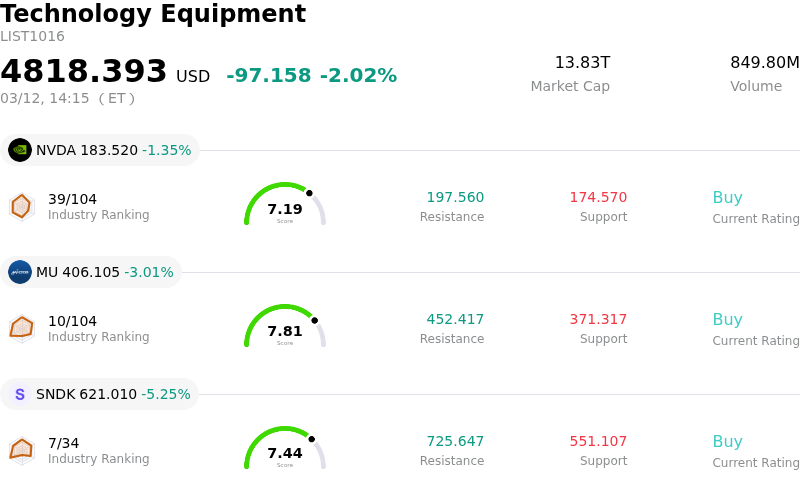
Advanced Micro Devices Inc (AMD) moved down by 3.21%. The Technology Equipment sector is down by 2.02%. The company underperformed the industry. Top 3 stocks by turnover in the sector: NVIDIA Corp (NVDA) down 1.35%; Micron Technology Inc (MU) down 3.01%; SanDisk Corporation (SNDK) down 5.25%.
What is driving Advanced Micro Devices Inc (AMD)’s stock price down today?
AMD's stock experienced a significant intraday decline, primarily influenced by a confluence of macroeconomic pressures, industry dynamics, and company-specific sentiment. The broader market is currently in a "risk-off" mode, with U.S. equities, especially growth and technology-dominated indices like semiconductors, facing downward pressure. This sentiment is fueled by ongoing geopolitical risks, including conflict in the Middle East and rising oil prices. Renewed inflation concerns and a hotter-than-expected Producer Price Index report have also led investors to reassess the timing of potential Federal Reserve rate cuts, contributing to market volatility. Concerns regarding AI-linked valuations running ahead of fundamentals are putting additional strain on the technology sector.
Several factors specific to Advanced Micro Devices are also weighing on its share price. Insider selling by the company's CEO, Lisa Su, and Executive Vice President Forrest Norrod in February could be interpreted negatively by the market, potentially signaling a lack of confidence despite positive fourth-quarter results. Analysts have also highlighted valuation concerns, suggesting that AMD's current stock price may already fully reflect expectations for strong AI and data center growth, making it vulnerable to any perceived slowdown or softer guidance. There are also industry-specific risks, such as Meta Platforms' plans to develop in-house AI chips by 2027, which could reduce its reliance on third-party GPU suppliers like AMD over time. Furthermore, persistent weakness in the traditional gaming hardware segment, including a forecasted decline in semi-custom revenue as the current console cycle matures, adds to the pressure. Macroeconomic concerns, such as potential U.S. export caps on high-end AI accelerators, have also prompted some analysts to recalibrate their price targets.
Despite these headwinds, there are positive long-term developments for AMD, including its participation as a founding member of the Optical Compute Interconnect Multi-Source Agreement aimed at establishing open specifications for AI infrastructure. The CEO's upcoming meetings in South Korea to secure high-bandwidth memory for AI GPUs also indicate proactive measures to address supply chain needs. Additionally, strong demand for AI GPUs and server CPUs, with BNP Paribas anticipating more "gigawatt deals," reflects underlying strength in the company's core AI and data center businesses. However, in the current environment of heightened market sensitivity and risk aversion, these positive factors are being overshadowed by the prevailing negative sentiment and immediate concerns.
Technical Analysis of Advanced Micro Devices Inc (AMD)
Technically, Advanced Micro Devices Inc (AMD) shows a MACD (12,26,9) value of [-5.89], indicating a neutral signal. The RSI at 48.38 suggests neutral condition and the Williams %R at -41.70 suggests oversold condition. Please monitor closely.
Media Coverage of Advanced Micro Devices Inc (AMD)
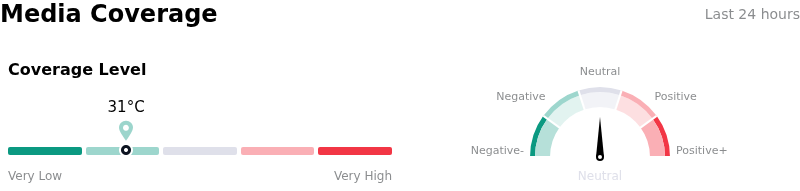
In terms of media coverage, Advanced Micro Devices Inc (AMD) shows a coverage score of 31, indicating a low level of media attention. The overall market sentiment index is currently in neutral zone.
Fundamental Analysis of Advanced Micro Devices Inc (AMD)
Advanced Micro Devices Inc (AMD) is in the Technology Equipment industry. Its latest annual revenue is $34.64B, ranking 8 in the industry. The net profit is $4.33B, ranking 10 in the industry. Company Profile
Over the past month, multiple analysts have rated the company as Buy, with an average price target of $280.14, a high of $365.00, and a low of $134.20.
More details about Advanced Micro Devices Inc (AMD)
Company Specific Risks:
- Advanced Micro Devices' operating margin has shown an average annual decline of 14.6% over the past five years, alongside a high P/E ratio of 74.59, indicating significant growth expectations that may be challenging to meet consistently.
- Increased competition from Nvidia and the growing trend of major hyperscalers developing proprietary AI chips threaten AMD's market position and potential for growth in the lucrative artificial intelligence semiconductor sector.
- The company's modest Q1 2026 revenue guidance, which forecasts a sequential decline of approximately 5%, is expected to create downward pressure on the share price.
- A recent 8-K filing disclosed the issuance of performance-based warrants to Meta Platforms for up to 160 million shares, presenting a risk of future share dilution.
This article may include AI-generated content that is human-reviewed, which is for reference and general information purposes only and does not constitute investment advice.
Recommended Articles








Comments (0)
Click the $ button, enter the symbol, and select to link a stock, ETF, or other ticker.