


Today’s Market Recap: Precious Metals Hammered as Warsh Nomination Fuels Dollar Rally



Track the Market Trend
TradingKey - On January 30, 2026, U.S. equities declined across the board amid weakness in growth stocks and renewed pressure on risk assets. The S&P 500 fell 0.43% to 6,939.03, while the Nasdaq Composite retreated 0.94% to 23,461.82. The Dow Jones Industrial Average lost 0.36%, ending at 48,892.47.
The U.S. dollar advanced alongside confirmation that President Trump will nominate Kevin Warsh as the next Federal Reserve Chair. Warsh, known for his comparatively hawkish policy stance, is expected to favor a less accommodative approach, which contributed to the surge in dollar strength and sharp pullbacks in precious metals.
Silver plunged more than 35% during intraday trade—its steepest single-day decline on record. Gold futures dropped as much as 11% before staging a late-session rebound to close off the lows. Despite the day’s correction, both metals remain in positive territory for the month, following a year marked by repeated record highs.
Bitcoin continued to struggle, slipping below the $80,000 mark over the weekend.
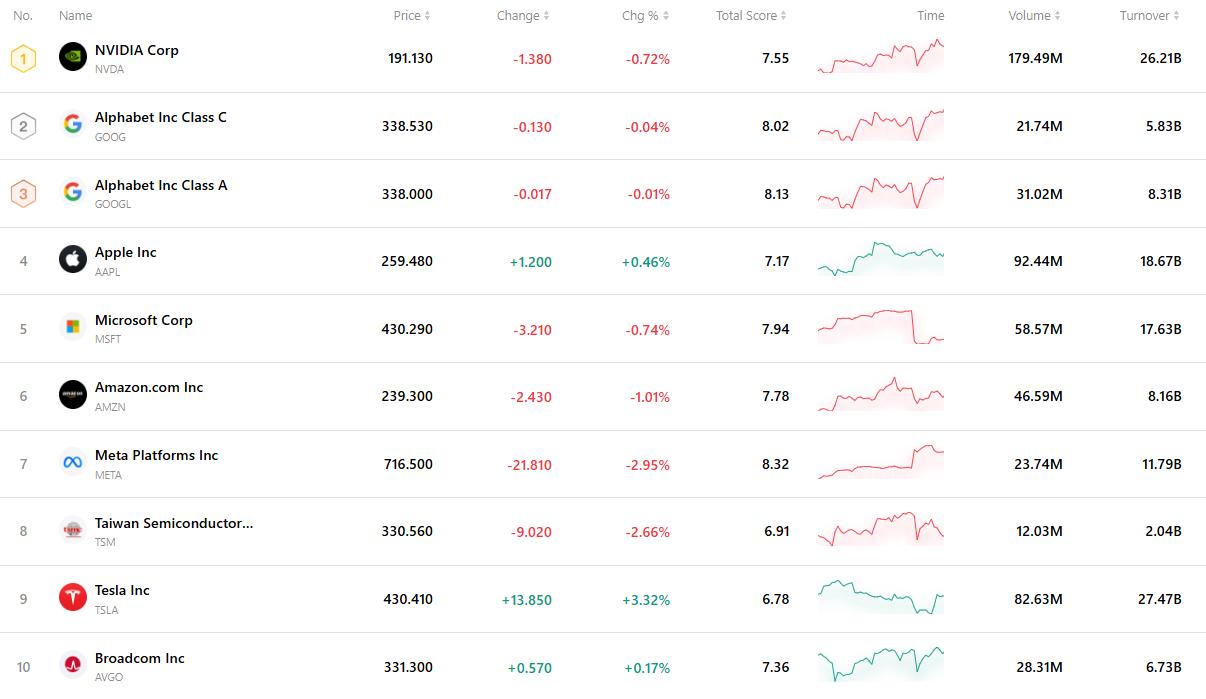
Among defensives, select retail and consumer staples stocks outperformed slightly, with modest gains from Walmart (WMT) and Coca-Cola (KO). Megacap techs showed signs of stabilizing: Microsoft (MSFT) slipped 0.74%, while Apple (AAPL) edged up 0.46% to $259.48, reflecting continued support after Tuesday’s earnings release.
Skepticism around AI-related investments persisted, weighing on the Nasdaq after a volatile week of megacap earnings. Healthcare stocks were also under pressure amid renewed policy concerns, as markets digest government proposals to reduce reimbursement increases in the Medicare Advantage program.
Verizon Communications (VZ) outperformed after reporting better-than-expected Q4 results and offering a solid 2026 forecast. The company posted adjusted earnings of $1.09 on revenue of approximately $36.4 billion. Net subscriber additions topped 1 million, helping to highlight steady cash generation and earnings stability in contrast to recent tech-driven volatility.
Market Headline
Trump taps Warsh for Fed chair, touting independence and pro-growth stance. Donald Trump announced his intent to nominate Kevin Warsh as the next Chair of the Federal Reserve, describing him as potentially “one of the greatest Fed chairs ever.” Trump emphasized that Warsh did not promise any specific policy actions but noted, “he of course wants to cut rates.” Markets continue to price in two rate cuts by year-end. Warsh, a former Fed governor, was historically hawkish during his tenure—frequently warning of rising inflation—but has in recent statements echoed Trump’s sentiment that rates should be "meaningfully lower."
Bitcoin extends weekend slump, hitting 10-month low as market reacts to Warsh nomination. Cryptocurrencies plunged over the weekend, with Bitcoin falling below $80,000 amid a broad selloff. The decline accelerated on Saturday following Friday’s sharp drop, pushing the price to a low of $75,709.88—the weakest level since April 2025. The selloff was accompanied by roughly $1.6 billion in liquidations. Warsh’s nomination intensified dollar strength and undermined expectations for a weaker U.S. currency, which had previously buoyed digital assets. Adding to negative sentiment were persistent ETF outflows, limited retail participation, and ongoing regulatory uncertainty, all of which continue to erode Bitcoin’s safe-haven narrative.
Global markets rocked by “Warsh shock” as precious metals tumble and dollar surges. A wave of risk repricing hit global markets last Friday following the Warsh announcement. Gold and silver posted their deepest one-day declines in decades, while the U.S. dollar rallied sharply. Once known as a staunch inflation hawk, Warsh has recently pivoted toward supporting rate cuts, though he remains committed to quantitative tightening. The apparent policy contradiction has drawn scrutiny. “Who is the real Kevin Warsh?” has become a frequent refrain on Wall Street, as investors weigh his market credibility against mounting liquidity concerns triggered by tightening rhetoric.
Nvidia (NVDA) distances itself from $100 billion OpenAI deal amid internal concerns. Nvidia CEO Jensen Huang said over the weekend that the company’s headline-making $100 billion investment proposal in OpenAI “was never a formal commitment,” clarifying that any capital deployment will be assessed progressively. Prior reports suggested the deal had stalled due to internal disagreements over structure and risk. Huang reportedly raised concerns about OpenAI’s lack of financial discipline and emphasized the company would not pursue binding terms under current conditions. Comments also reflect Nvidia’s rising discomfort about OpenAI's growing influence in the artificial intelligence ecosystem and competitive implications for its own business.
Top 10 Most Traded Stocks
The chart below highlights the ten most actively traded stocks in the current market. With their substantial trading volumes and high liquidity, these names serve as key benchmarks for tracking global market dynamics.
Recommended Articles





Comments (0)
Click the $ button, enter the symbol, and select to link a stock, ETF, or other ticker.