


Precious Metals Bloodbath: Silver’s Worst Day in History as Gold Plunges Most in 40 Years—Is the Bull Run Over?



AI Podcast


Gold and silver experienced sharp declines, with gold down over 12% and silver over 36%, following significant gains since 2026. The sell-off was triggered by the nomination of Kevin Warsh for Fed Chair, signaling a hawkish stance against inflation, which is viewed positively for the dollar and negatively for gold. Analysts suggest the correction was inevitable due to overbought conditions and parabolic gains, a phenomenon termed a "melt-up." While some speculate manipulation, most believe the precious metals bull market, driven by geopolitical risks and currency devaluation concerns, remains intact, with UBS raising 2026 gold price targets.
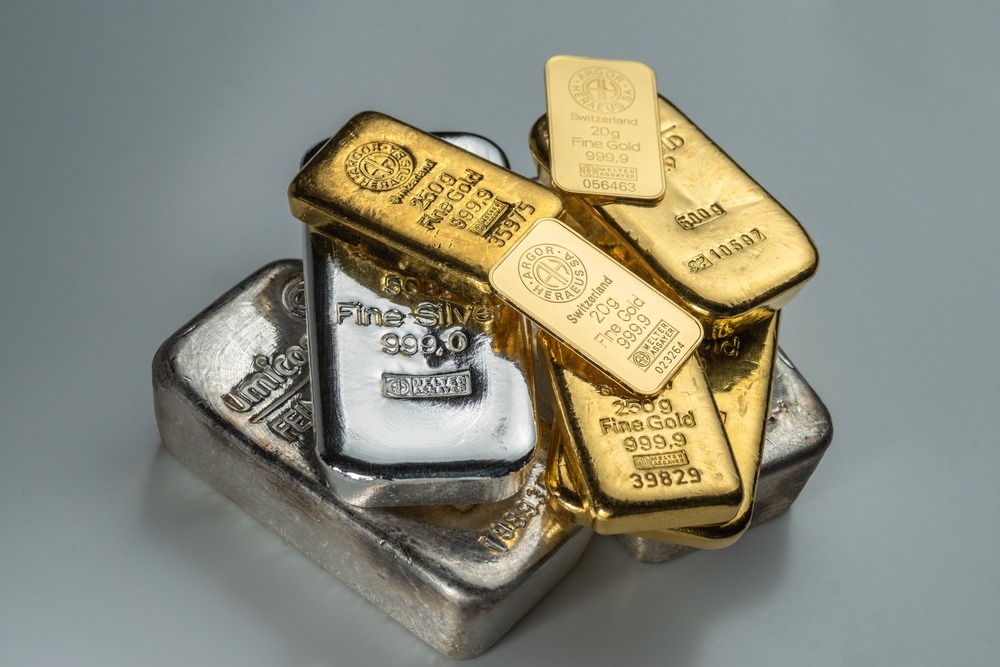
TradingKey - After several consecutive days of gains, gold and silver experienced their sharpest single-day declines on Friday, January 30: Gold recorded its largest one-day drop in nearly 40 years, plunging over 12% at its peak and falling below $4,900; silver hit its largest-ever intraday decline, plummeting more than 36% at one point and breaking below the $85 level.
Prior to this crash, gold and silver prices had been on a tear since 2026. Gold peaked at $5,595, just shy of the $5,600 milestone, with a maximum year-to-date gain of nearly 30%; silver reached a high of $121, with its peak gain hitting 70%.
Analysts believe the sell-off in precious metals was triggered by the nomination for Federal Reserve Chair. On Friday morning ET, Donald Trump officially nominated Kevin Warsh to lead the Fed, with news leaking even before the formal announcement. The nomination is viewed as a reinforcement of the Fed's anti-inflation stance.
However, OCBC strategist Christopher Wong stated that while news of Warsh's nomination was a trigger, a correction was already inevitable as the market had been searching for a reason to end the previous parabolic rally.
Is this downturn merely a short-term adjustment, or does it mark the beginning of a major correction for the precious metals bull market?
Warsh’s Fed Nod Supercharges Greenback, Dents Bullion Appeal
Although Warsh has pivoted to Trump in anticipation of his second presidential term, aligning with his positions by criticizing the Fed for being too slow to cut rates and defending tariff policies, Sean Callow, a senior market analyst at ITC Markets in Sydney, says the market finds it difficult to forget his long-standing hawkish history.
Warsh’s forecasting record during his time as a Fed Governor skewed hawkish with a near-zero tolerance for inflation; Deutsche Bank believes he is likely to employ a unique policy mix of simultaneous rate cuts and balance sheet reduction to support the dollar while countering inflation.
The tension between his political rhetoric and economic views points to a paradox: a Fed candidate can vocally support Trump prior to a nomination, yet ignore his pressure and assert independence once in the chairman’s seat. Current Fed Chair Jerome Powell serves as a precedent; when Trump nominated him in his first term, he expected Powell to be a compliant advocate for low interest rates.
Bloomberg strategist Brendan Fagan noted that Warsh’s nomination is a positive signal for U.S. markets facing rising risk premiums; in short, it reduces the risk premium across various asset classes.
He stated that while the nomination would not immediately alter the Fed’s monetary policy, it would soothe market concerns regarding central bank independence, as expectations that the Fed might bow to political pressure or abandon its inflation fight would diminish significantly, restoring confidence and supporting a dollar rally.
Based on his policy views, rate cuts are intended to stave off recession and would typically weaken the dollar; however, his advocacy for simultaneous balance sheet reduction would drain dollar liquidity, making the currency scarcer and providing a catalyst for the greenback’s appreciation.
Market expectations surrounding Warsh have not only bolstered the dollar but also reduced economic policy uncertainty, creating a bearish environment for dollar-denominated commodities like gold and silver that typically rally on uncertainty.
Was a Precious Metals Retrenchment Inevitable?
As OCBC strategist Christopher Wong stated, a correction in gold and silver was inevitable. Since 2026, gold has gained as much as approximately 30%, while silver has surged by 70%. Recently, as gold and silver prices repeatedly hit new highs, the Relative Strength Index (RSI) indicated they were overbought. Gold's RSI recently touched 90, and silver's RSI even reached 93.86, its highest level since 1980. Manpreet Gill, Chief Investment Officer for Europe, Africa, and the Middle East at Standard Chartered Bank, also noted that the gold-to-silver ratio recently approached an extreme low of around 31, a level last seen in 2011, which historically signals the onset of a consolidation period.
Furthermore, Ed Yardeni, president of Yardeni Research, pointed out that during gold's previous surge from $3,000 to $5,500, it experienced almost no significant correction. This is not the typical pace of a bull market but rather resembles a "melt-up." A melt-up refers to a parabolic rise over a very short period, driven more by market sentiment and speculation. Melt-ups also frequently signal that a peak is approaching. Yardeni stated that gold's correction back to $5,000 and subsequent consolidation around that level constitutes a normal market pattern.
However, Gregor Gregersen, founder of precious metals dealer Silver Bullion, questioned the recent downturn, noting that Friday's session saw a massive plunge in a very short time without any obvious public catalysts. He suggested this might not be simple profit-taking and could potentially involve market manipulation. He explained that if institutions intended to lock in profits, they would typically reduce their positions gradually.
Cyclical Peak or Secular Bull?
Analysts generally believe the bull market is far from over. Even amid significant volatility in gold prices, UBS (UBS) has significantly raised its 2026 gold price targets: the targets for March, June, and September were hiked to $6,200, a 24% increase from the previous target of $5,000 per ounce.
This is primarily because the structural drivers behind this rally remain robust: geopolitical risks, fiscal uncertainty, and currency devaluation concerns have not disappeared. Even though Warsh has been nominated, many matters remain far from settled. UBS even boldly predicted an extreme bull-case scenario for gold: if geopolitical tensions escalate sharply, prices could reach as high as $7,200.
However, some analyses suggest a different perspective: the core factors driving gold prices higher are not that complex; it is simply that investors, spurred by market trends, have fallen into a 'chase the rally' sentiment.
Chris Beauchamp, Chief Market Analyst at IG Group, stated that gold's recent stunning rally will inevitably ignite market investment interest, but its store-of-value capability is actually overestimated by the market, especially in the short term. Normally, gold acts as a safe-haven asset; however, when its monthly gain approaches 30%, it effectively becomes a risk asset and thus no longer functions as a store of value.
Furthermore, although the market is reducing holdings of US dollar assets in favor of traditional safe havens like gold due to policy directions and geopolitical factors, analysts generally believe the dollar will not lose its status as the global reserve currency in the short term.
Kenneth Lamont, Senior Fund Analyst at Morningstar, also concurs with this view: gold is not an ideal store of value, and its price is highly unpredictable, which also means the demise of fiat currency is far from imminent.
This content was translated using AI and reviewed for clarity. It is for informational purposes only.
Recommended Articles









Comments (0)
Click the $ button, enter the symbol, and select to link a stock, ETF, or other ticker.