


Natural Gas (NATGAS) Is down 2.05% on Jul 5: What Is Driving the Move?



Natural Gas (NATGAS) is down 2.05% at Jul 5 19:00(ET), now at $3.107, with a 7-day down of 4.19%.
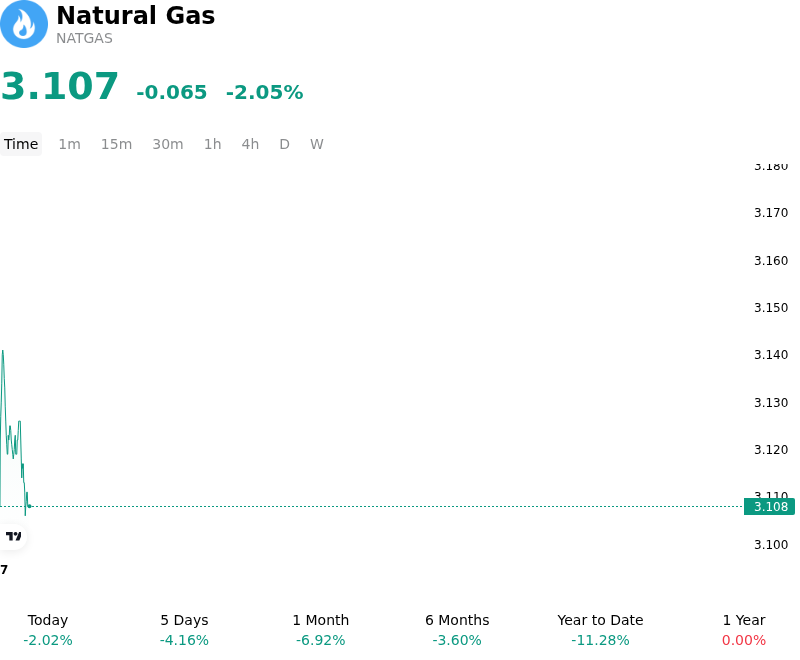
What is driving Natural Gas (NATGAS)’s stock price down today?
US natural gas futures faced downward pressure as the market reacted to a combination of bearish storage data, strong domestic production, and broader energy market dynamics that offset the impact of seasonal summer heat.
The primary catalyst driving the negative sentiment was the latest weekly inventory report from the Energy Information Administration. Energy firms injected a larger-than-expected 87 billion cubic feet of gas into underground storage. This bearish build surpassed consensus market expectations of approximately 80 billion cubic feet, as well as the five-year average seasonal injection of 64 billion cubic feet. The robust build pushed total domestic stockpiles to more than 6% above the historical five-year average, reassuring market participants of highly comfortable supply buffers and limiting the immediate upside potential for prices.
This inventory build was sustained by highly resilient domestic production. Lower 48 state output remained exceptionally strong, averaging near 110 billion cubic feet per day. High levels of associated gas production—driven by robust crude oil drilling activity in major basins like the Permian—kept the domestic market well-supplied.
Demand-side factors presented a mixed outlook. While seasonal cooling demand remained present due to expectations of warmer-than-normal summer temperatures across several regions, shifting near-term weather patterns and comfortable supply baselines kept panic buying at bay. Additionally, although liquefied natural gas export terminal nominations and pipeline exports to Mexico remained solid, they were insufficient to outpace the heavy domestic supply and inventory overhang.
Broader energy sector headwinds also weighed on natural gas prices. Global crude oil prices experienced a downward trend, driven in part by diplomatic progress regarding shipping lanes, which exerted a sympathetic downward drag across the wider energy and commodity complex. The combination of a looser near-term supply-demand balance and broader macroeconomic energy weakness ultimately prompted long liquidations and speculative selling by institutional investors, leading to a weaker close for the front-month contract.
Technical Analysis of Natural Gas (NATGAS)
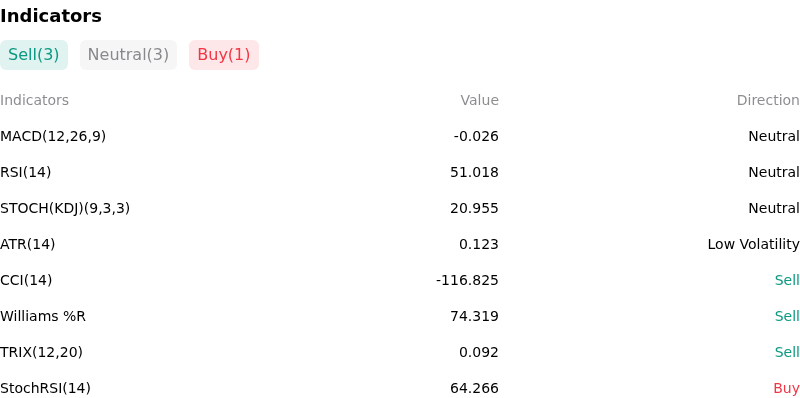
Technically, Natural Gas (NATGAS) shows a MACD (12,26,9) value of -0.026, indicating a neutral signal. The RSI at 51.018 suggests neutral condition and the Williams %R at 74.319 suggests sell condition. Please monitor closely.
More details about Natural Gas (NATGAS)
Recent Events and Risks:
- Larger-Than-Expected Weekly Inventory Injection: The Energy Information Administration (EIA) reported a working gas injection of 87 billion cubic feet (Bcf) for the week ending June 26, 2026, exceeding consensus expectations of an 81 to 83 Bcf build. This heavier-than-anticipated storage injection demonstrates that supply is outstripping peak-summer demand, keeping total stockpiles approximately 6.2% to 6.4% above historical averages.
- Moderating Short-Term Weather Forecasts: Meteorological models have adjusted near-term outlooks, showing cooling and moderating temperatures across the eastern two-thirds of the United States from July 7–16. This shift has lowered overall Cooling Degree Day (CDD) expectations, limiting near-term gas-fired power burn for air conditioning and removing the weather-driven demand premium from the market.
- Highly Resilient Dry Gas Production: Despite regional pipeline constraints and maintenance, dry natural gas production in the U.S. Lower 48 states remains exceptionally strong, averaging approximately 110 Bcf/d in June and touching summer highs of 111.7 Bcf/d. This robust associated gas output, largely fueled by Permian Basin drilling, ensures a persistent oversupply cushion that limits sustainable price rebounds.
- Spillover Pressure from Weak Crude Oil Prices: Diplomatic progress between the United States and Iran regarding transit through the Strait of Hormuz has eased broader geopolitical risk premiums. This development dragged global crude oil benchmarks down toward multi-month lows, generating negative macro-level and algorithmic selling pressure on the broader energy complex, including front-month natural gas futures.
This article may include AI-generated content that is human-reviewed, which is for reference and general information purposes only and does not constitute investment advice.
Recommended Articles









Comments (0)
Click the $ button, enter the symbol, and select to link a stock, ETF, or other ticker.