


What Is OKX’s 2026 Strategy? Bridging CEX Security and DEX Innovation



AI Podcast


OKX is expanding into the U.S. market, prioritizing decentralized exchange (DEX) security with "smart accounts" using TEE technology to mitigate private key risks. This aims to merge centralized exchange resilience with Web3 principles. The company released its 39th Proof of Reserves, exceeding $30 billion, with Bitcoin, Ethereum, and stablecoin reserves overcollateralized. The U.S. launch from San Jose, California, follows regulatory remediation, positioning the firm as compliant. OKX is enhancing its Web3 ecosystem and DEX aggregator, implementing advanced surveillance to combat illicit fund flows, while developing self-custodial solutions like "OKX Pay."
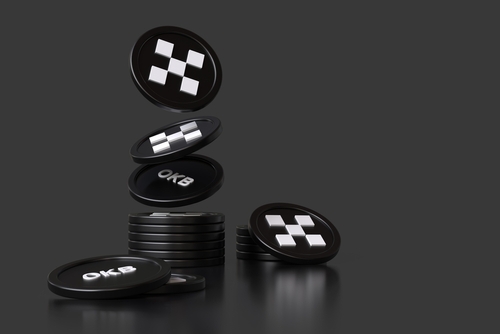
TradingKey - OKX (OKB), a leading global digital asset exchange, has officially announced its expansion into the U.S. market, designating the region as a top-tier global priority. Parallel to this move, the firm is leading a charge to redefine security standards for decentralized exchanges (DEX). By offering a strategic blend of institutional-grade security and decentralized utility, OKX is addressing one of the industry’s most intractable problems: the inherent fragility of decentralized protocols against sophisticated exploits.
The platform's current trajectory focuses on bridging centralized exchange (CEX) resilience with its expansive OKX Web3 ecosystem, creating a unified front against the systemic risks currently facing the digital asset environment.
The Security Paradox: OKX Proposes a Radical Overhaul for Self-Custody
A spate of high-profile, multi-million dollar exploits — impacting both execution layers and popular DEX trading bots — has galvanized a tactical reaction from OKX leadership. At the heart of the latest OKX news is a push for decentralized products to implement stringent, "exchange-level" security measures.
Forensic analyses of recent hacks, such as the $3.9 million theft from the Flow execution layer, reveal that a primary challenge for decentralized tools is the centralization of private keys. Many prominent DEX bots require users to upload private keys to centralized servers, where they are frequently stored in decryptable formats. From the OKX perspective, this creates a "centralized private key risk," exposing users to CEX-level vulnerabilities without the corresponding institutional safeguards or insurance.
To neutralize these threats, the OKX wallet is being upgraded to feature "smart accounts." Built on Trusted Execution Environment (TEE) technology, these accounts seek to provide an automated trading custody solution without compromising the sovereignty of the user. This transformation solidifies what is OKX in 2026: a centralized bridge for high-efficiency liquidity that simultaneously upholds the core tenets of Web3.
Transparency as the Benchmark: The 39th OKX Proof of Reserves
While the company continues to innovate its decentralized product suite, it is simultaneously raising the bar for transparency within centralized platforms. OKX has released its 39th consecutive OKX proof of reserves, confirming that total assets held exceed $30 billion. The report verifies that Bitcoin (BTC) , Ethereum (ETH) , and major stablecoin reserves remain over 100% collateralized.
The latest OKX crypto data indicates a trend toward robust asset diversification:
- Bitcoin: User assets stand at 126,770 BTC with a 105% reserve ratio. Notably, 123,527 BTC are held directly by the exchange, with 9,555 BTC secured in third-party custody.
- Ethereum: Balances total 1.6 million ETH, maintained at a 105% reserve ratio.
- Stablecoins: USDT holdings rose to 10.4 billion (106% ratio), while USDC carries a solid 100% backing at $1.45 billion.
US Expansion and Regulatory Rebirth
In a milestone development for its global strategy, OKX has officially launched its U.S. services from its new headquarters in San Jose, California. The platform is being rolled out in stages under the leadership of U.S. CEO Roshan Robert. The phased transition involves migrating the existing OKCoin user base to the more liquid and technically advanced OKX ecosystem.
This launch follows a period of intense regulatory remediation. After settling historical licensing issues with a $504 million payment, the company is positioning its U.S. arm as a global model for compliance. The U.S. infrastructure includes localized OKX wallet services and advanced trading tools designed to comply with strict federal regulations while delivering the same level of transparency as the global OKX proof of reserves.
Bridging the Gap: OKX Web3 and DEX Aggregator Enhancements
The company’s dedication to ecosystem integrity was recently highlighted during the fallout of a $1.4 billion security breach that impacted the broader market. OKX temporarily suspended its OKX DEX aggregator to deploy a proactive "detection system" designed to stem the flow of illicit funds.
The firm's strategic response included:
- Increased Surveillance: Integrating real-time data to trace and block transactions involving blacklisted wallet addresses.
- Explorer Accuracy: Collaborating with blockchain explorers to correctly flag processing trades on the DEX, ensuring the aggregator is not misidentified as the primary point of trade.
Despite these centralized interventions, the company stresses that OKX Web3 remains non-custodial by nature. Looking ahead, the platform is developing "OKX Pay," a self-custodial stablecoin payment solution. Constructed on X Layer (an Ethereum L2), OKX Pay aims to enable seamless P2P cross-border remittances with competitive yields and cashback, bringing stablecoins closer to becoming a mainstream alternative to traditional banking.
The Strategic Roadmap: Defining the Institutional Future
The dual-track approach of OKX is evident: it offers the institutional security of a tier-1 CEX, audited by the OKX proof of reserves, while simultaneously forging the future of decentralized finance through the OKX DEX and smart account technology. By opening regulated corridors in the U.S. and raising security standards for the entire industry, OKX is not just participating in the OKX crypto market — it is attempting to define its institutional future.
Recommended Articles


Comments (0)
Click the $ button, enter the symbol, and select to link a stock, ETF, or other ticker.