


WTI (USOIL) Drops on Jun 23: What Lie behind the Move?



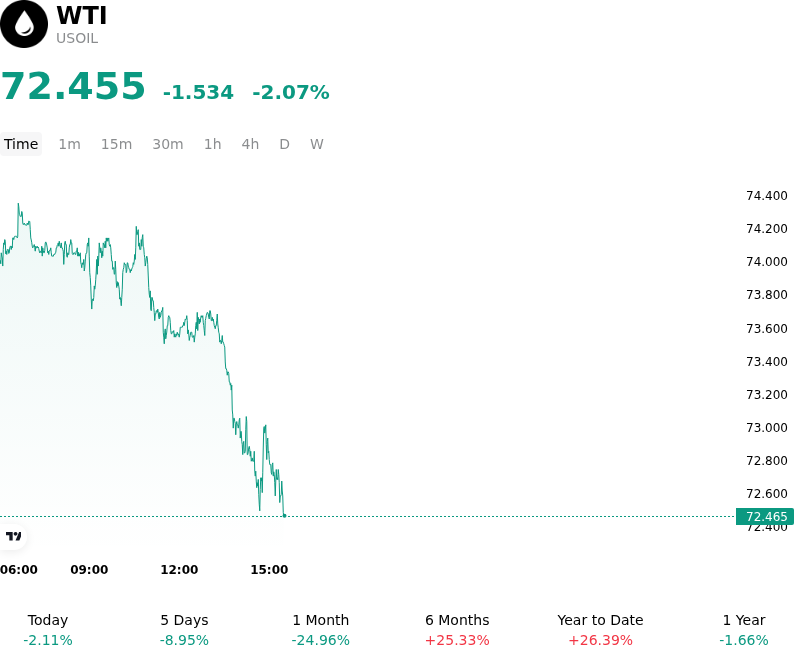
WTI (USOIL) is down 2.07% at Jun 23 03:30(ET), now at $72.455, with a 7-day down of 3.44%.
What is driving WTI (USOIL)’s stock price down today?
The significant decline in USOIL reflects a major repricing of global supply-demand expectations, primarily driven by a sharp unwinding of the geopolitical risk premium. The primary catalyst for this downward momentum was the progress in diplomatic negotiations between the United States and Iran, which culminated in the U.S. Treasury granting a 60-day sanctions waiver. This waiver, authorizing transactions involving Iranian-origin crude oil and petroleum products, significantly eased fears of a prolonged conflict and potential supply blockades in the vital Strait of Hormuz waterway. As the market factored in the potential return of Iranian barrels, the "war premium" that had previously supported crude prices quickly dissipated.
Compounding this geopolitical de-escalation are mounting supply pressures from major global producers. OPEC+ has continued to gradually return barrels to the market, with several core members steadily expanding output through the spring and planning additional increases. This physical supply availability was further evidenced by key Middle Eastern producers, including Saudi Arabia and Kuwait, significantly cutting their July Official Selling Price premiums to Asian buyers. This aggressive pricing adjustment signals a highly competitive physical market and an effort to secure market share, confirming to market participants that near-term physical tightness is easing.
On the demand side, macroeconomic headwinds continue to dampen consumption expectations. Recent purchasing managers' index data from Europe indicated stagnant industrial activity, hovering near the contractionary threshold. Meanwhile, Chinese refinery operating rates have shown little acceleration, raising concerns that import demand from the world’s largest crude importer may fall short of previous projections. This sluggish demand outlook makes the market highly sensitive to any incoming supply increases.
Macroeconomic and monetary factors have further exacerbated the downward pressure on crude. Persistently tight monetary policy expectations, with the Federal Reserve anticipated to keep interest rates elevated, have lent structural support to the U.S. dollar. A stronger greenback traditionally acts as a headwind for dollar-denominated commodities, reducing purchasing power for international buyers and curbing investment flows into energy contracts.
While the ongoing drawdown of the U.S. Strategic Petroleum Reserve to multi-decade lows serves as a potential long-term structural floor, it has done little to offset the immediate bearish sentiment. Institutional positioning is adjusting to this transition from a geopolitical supply-deficit narrative to a more balanced, if not oversupplied, market environment. Consequently, the path of least resistance for oil prices remains skewed to the downside as traders continue to monitor the durability of the U.S.-Iran peace roadmap and physical supply flows.
Technical Analysis of WTI (USOIL)
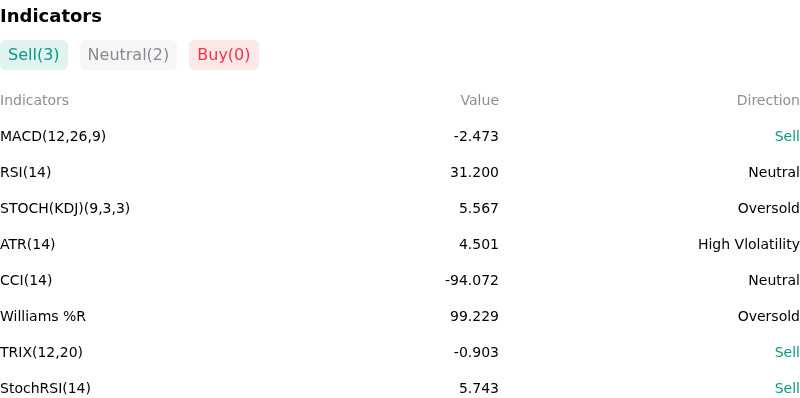
Technically, WTI (USOIL) shows a MACD (12,26,9) value of -2.473, indicating a sell signal. The RSI at 31.200 suggests neutral condition and the Williams %R at 99.229 suggests oversold condition. Please monitor closely.
More details about WTI (USOIL)
Recent Events and Risks:
- Resumed Iranian Supply via U.S. Sanctions Waiver: The U.S. Treasury issued a temporary 60-day general license waiving sanctions to permit the extraction, transport, and international sale of Iranian-origin crude oil. This diplomatic breakthrough in Switzerland has raised immediate expectations of a massive supply influx, pulling WTI futures down more than 2% in recent sessions.
- Dismantling of the Geopolitical Risk Premium in the Strait of Hormuz: Ship-tracking data over the last 48 hours indicates that crude tankers have begun successfully transiting the Strait of Hormuz as U.S.-Iran peace talks progress. The easing of physical shipping disruptions is rapidly deflating the conflict-driven risk premium that previously buoyed energy markets.
- Massive Unwinding of Speculative Long Positions and Technical Sell-offs: Investor net-long positioning in crude has collapsed up to 80% from its recent multi-year highs as the threat of an extended Middle East blockade recedes. This rapid capitulation of bullish bets has pushed WTI below critical psychological support levels around $74 per barrel, triggering momentum-based liquidations.
- Slowing Global Demand and Hawkish Monetary Policy Headwinds: Institutional analyses from Goldman Sachs and the EIA point to compounding global demand destruction, particularly due to soft consumption in China and Western Europe. Concurrently, rising inflation expectations are fueling speculation that the Federal Reserve will maintain high interest rates, keeping the U.S. dollar strong and further dampening dollar-denominated crude demand.
This article may include AI-generated content that is human-reviewed, which is for reference and general information purposes only and does not constitute investment advice.
Recommended Articles









Comments (0)
Click the $ button, enter the symbol, and select to link a stock, ETF, or other ticker.