


SPCX Shares Fall for Third Straight Day. SpaceX Issues Debt Right After Financing, Debut Bond Sparks Market Panic



AI Podcast


SpaceX shares fell 5.01% to $175.73 during pre-market trading on June 22, Eastern Time, marking a 20% decline from its June 16 peak. The drop follows reports of a planned $20 billion bond issuance to refinance bridge loans. Investors fear this move indicates severe cash flow strain despite the company’s recent IPO. Furthermore, concerns regarding Musk’s aggressive expansion, including the $60 billion acquisition of Cursor, have intensified anxieties over long-term capital expenditures, which analysts project could exceed $1 trillion by 2031. This elevated debt outlook signals significant potential volatility for the stock.
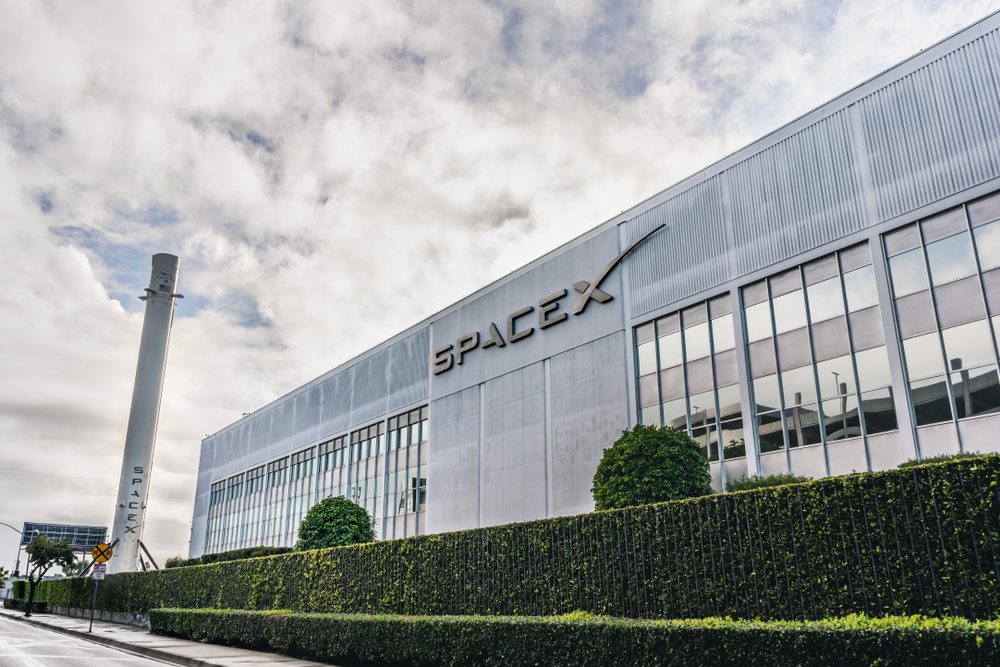
TradingKey - SpaceX plans to raise $20 billion in its first bond issuance; market concerns over its cash burn rate trigger a three-session stock decline.
During pre-market trading on June 22, Eastern Time, impacted by the bond issuance news, Elon Musk's space company SpaceX (SPCX) shares continued to fall by 5.01%, dropping below the $180 threshold to trade at $175.73.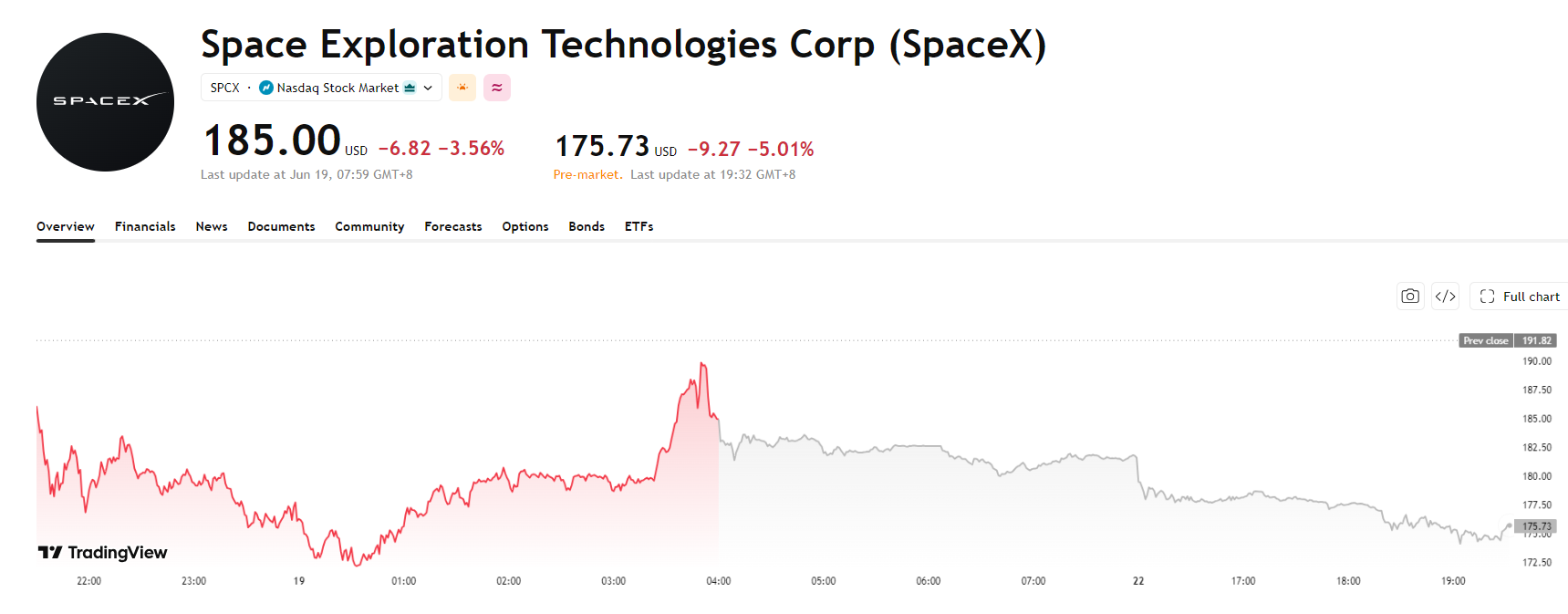 SpaceX stock chart, Source: TradingView
After listing at an IPO price of $135 on June 12, 2026, SPCX's stock price once surged to an all-time high of $225.64 on June 16, with its total market capitalization briefly surpassing the $2.7 trillion mark. However, the good times did not last, and the stock subsequently suffered a three-day losing streak. As of pre-market on June 22, SpaceX's stock price had corrected by more than 20% from its peak.
The direct trigger for this sudden plunge was rumors on Wall Street that SpaceX, having just completed a massive IPO fundraising, is urgently preparing to issue its first investment-grade bonds of at least $20 billion. This back-to-back fundraising and debt-issuance move by SpaceX instantly triggered intense panic in the secondary market regarding the cash flow quality and cash burn rate of this space and AI giant.
In February this year, SpaceX completed its strategic merger with Musk's xAI. At the time, to fund the massive acquisition and restructuring costs, SpaceX borrowed huge bridge loans from a Wall Street banking syndicate. The planned issuance of $20 billion in investment-grade bonds is likely intended to address the bridge loans maturing in 2027, aiming to replace short-term bank loans with long-term, low-interest fixed-income instruments. While this is a routine structural optimization in corporate finance that can help companies save money, SpaceX proposing it at the sensitive time right after its IPO was interpreted by the market as being "extremely short of cash," and its future massive capital expenditures could increase its debt burden.
Last week, SpaceX announced the acquisition of Cursor (Anysphere), a popular AI coding assistant, in a staggering $60 billion all-stock transaction. Although this demonstrates Musk's ambition to build an "orbital AI supercomputing and Grok ecosystem," the series of massive expansions suddenly woke investors up to the fact that the $75 billion raised from the IPO might not last long in the face of Musk's massive AI ambitions.
According to analysts at Goldman Sachs and Evercore ISI, SpaceX's capital expenditures are projected to exceed $1 trillion by 2031, with most of it directed toward its AI business and space data centers. Oppenheimer & Co. predicted in a research report that SpaceX's net debt will rise to $400 billion by 2031, far exceeding the current $13 billion, and potentially surpassing all publicly listed companies in the United States.
So, what do massive capital expenditures and debt actually mean for a company? During after-hours trading on June 10, Oracle ( ORCL) released earnings that beat expectations across the board, but the capital expenditure guidance and debt plans announced by the company triggered panic selling by investors, causing its stock price to plunge, which may also be the kind of severe volatility SpaceX will face in the future.
This content was translated using AI and reviewed for clarity. It is for informational purposes only.
Recommended Articles











Comments (0)
Click the $ button, enter the symbol, and select to link a stock, ETF, or other ticker.