


NZD/USD (NZDUSD) Drops on Jun 17: Was It the Dollar, Rates, or Data?



NZD/USD (NZDUSD) is down 0.61% at Jun 17 14:05(ET), now at $0.57929, with a 7-day down of 0.03%.
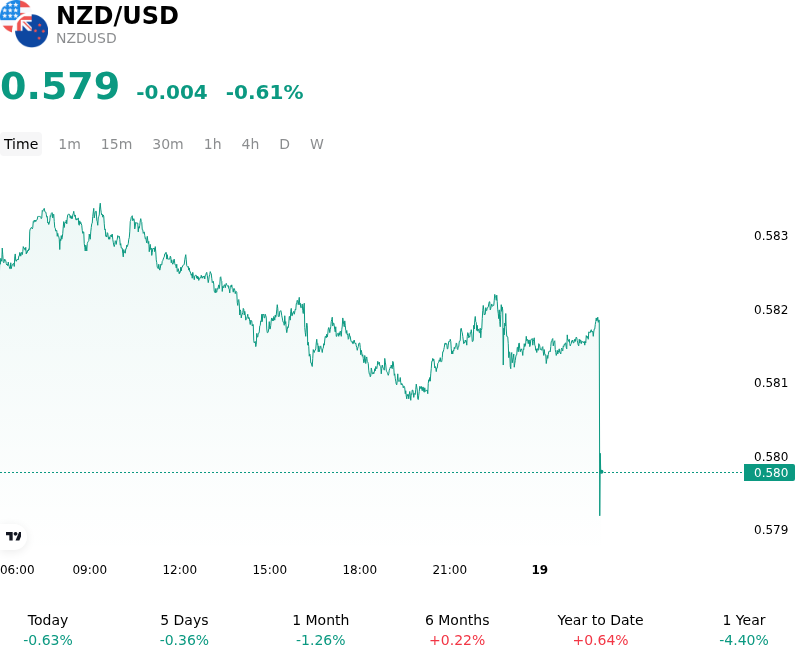
What is driving NZD/USD (NZDUSD)’s stock price down today?
The decline in the NZD/USD currency pair was primarily driven by a shift in domestic monetary policy expectations and a broader strengthening of the US Dollar ahead of a highly anticipated Federal Reserve decision. A key catalyst for the New Zealand Dollar's underperformance was the release of softer-than-expected inflation data from May's Selected Price Indexes, which showed an unexpected monthly decline in overall prices led by substantial drops in fuel costs, rents, and airfares. This cooling inflation print prompted major domestic financial institutions to revise their inflation forecasts below the Reserve Bank of New Zealand's official projections. Consequently, market expectations for aggressive interest-rate hikes at the upcoming July policy meeting were dialed back, eroding the yield support that had previously bolstered the Kiwi.
Adding to the downward pressure on the New Zealand Dollar was a deterioration in local economic sentiment and weak commodity signals. New Zealand's consumer confidence tumbled to its lowest level since 2023, reflecting the ongoing toll of high living expenses on households. At the same time, a sharp decline in global dairy prices in mid-June directly weighed on the country’s export outlook. Market participants also adopted a highly cautious stance ahead of the scheduled release of New Zealand's first-quarter gross domestic product data. Although headline growth was expected to show short-term resilience due to technical seasonal distortions, investors remained highly sensitive to underlying signs of economic stagnation, particularly as severe geopolitical and oil price shocks were anticipated to impact subsequent quarters.
On the other side of the pair, the US Dollar benefited from strong defensive positioning ahead of the Federal Reserve's interest-rate decision later in the global session. Investors sought the safety of the greenback as they braced for the possibility of a more hawkish tone from Fed policymakers, who were widely expected to keep the benchmark interest rate steady in the 3.50% to 3.75% range. The combination of falling domestic interest-rate expectations in New Zealand and pre-Fed risk aversion in global markets created a highly unfavorable backdrop for the risk-sensitive New Zealand Dollar, leading to its marked intraday depreciation against the US Dollar.
Technical Analysis of NZD/USD (NZDUSD)
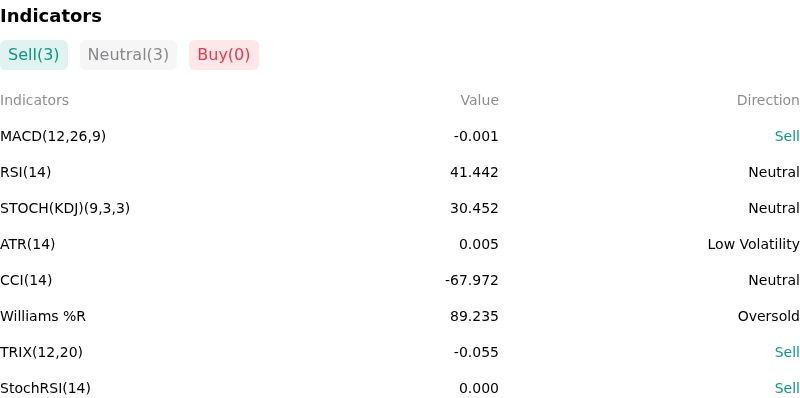
Technically, NZD/USD (NZDUSD) shows a MACD (12,26,9) value of -0.001, indicating a sell signal. The RSI at 41.442 suggests neutral condition and the Williams %R at 89.235 suggests oversold condition. Please monitor closely.
More details about NZD/USD (NZDUSD)
Recent Events and Risks:
- Severe Decline in New Zealand Domestic Data: Consumer confidence in New Zealand has collapsed to its lowest level since 2023, falling to 80.4 in June due to rising living and energy costs. This domestic fragility is further compounded by a widening Q1 current account deficit of NZD 1.01 billion, highlighting deep-seated structural vulnerabilities.
- Asymmetric GDP Downside Risks: Although the Reserve Bank of New Zealand (RBNZ) has signaled a hawkish stance with markets pricing in a 90% probability of a July rate hike, the upcoming Q1 GDP print presents highly asymmetric downside risk. Any disappointment in the growth data will likely force a rapid dovish unwinding of these hike expectations, causing sharp downward pressure on the Kiwi.
- Fragile Commodity Markets and China Proxy Headwinds: As a highly sensitive liquid proxy for the Chinese economy, the NZD is reeling from disappointing Chinese macro data, including an unexpected 0.6% YoY contraction in May retail sales and a -4.1% plunge in fixed-asset investment. This is exacerbated by a sharp mid-June drop in global dairy prices, which harms New Zealand's primary export revenue.
- Hawkish Fed Pivot Risk Under Kevin Warsh: Intraday trading in NZDUSD is severely capped by defensive US Dollar positioning ahead of the FOMC decision. With newly appointed Fed Chair Kevin Warsh presiding over his first policy meeting, investors are highly sensitive to the risk of a hawkish shift in the updated "dot plot" and economic projections, which threatens to drive US yields higher and punish risk-sensitive currencies.
This article may include AI-generated content that is human-reviewed, which is for reference and general information purposes only and does not constitute investment advice.
Recommended Articles









Comments (0)
Click the $ button, enter the symbol, and select to link a stock, ETF, or other ticker.