


Alibaba Group Holding Ltd Stock (BABA) Moved Up by 3.08% on Apr 24: What Investors Need To Know



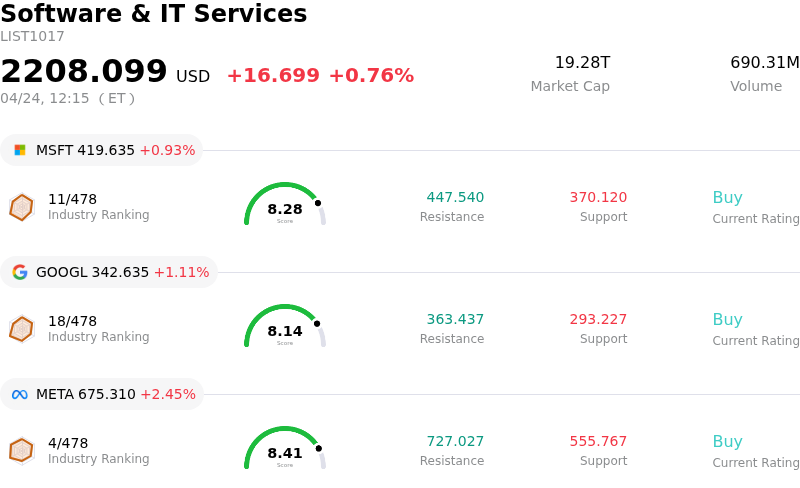
Alibaba Group Holding Ltd (BABA) moved up by 3.08%. The Software & IT Services sector is up by 0.76%. The company outperformed the industry. Top 3 stocks by turnover in the sector: Microsoft Corp (MSFT) up 0.93%; Alphabet Inc Class A (GOOGL) up 1.11%; Meta Platforms Inc (META) up 2.45%.
What is driving Alibaba Group Holding Ltd (BABA)’s stock price up today?
Alibaba (BABA) shares experienced positive movement today, accompanied by notable intraday volatility. The upward trajectory appears largely driven by ongoing positive developments within its artificial intelligence (AI) and cloud computing segments, coupled with optimistic long-term outlooks from some analysts and significant institutional investment activity.
The company's cloud division, Alibaba Cloud, is projected to accelerate its revenue growth, with forecasts indicating a 40% year-over-year increase in 4QFY26F, fueled by strong AI demand and monetization efforts. Alibaba has demonstrated a deep commitment to AI, substantially increasing its investments in the sector and launching new AI models, such as DeepSeek V4-Pro and V4-Flash, which leading cloud vendors including Alibaba are expected to benefit from. Furthermore, Alibaba Cloud has been recognized as the leading Infrastructure as a Service (IaaS) provider in the Asia-Pacific region, underscoring its strategic focus on AI-native cloud solutions. Recent price adjustments on AI chip services are also anticipated to bolster long-term cloud margins.
Investor sentiment has also been buoyed by the potential for Ant Group's International IPO. Alibaba holds a substantial stake in Ant Group, and a successful public offering could unlock significant value that the market may currently be underestimating. Additionally, institutional investors have shown confidence in Alibaba, with several major firms significantly increasing their holdings in recent quarters, suggesting a belief in the company's future prospects. Alibaba's strategic moves, such as backing the IPO of autonomous delivery firm Zelos Technology through its Cainiao logistics platform, also highlight its efforts to expand and automate its logistics ecosystem.
However, the detected intraday volatility likely stems from a mix of conflicting analyst perspectives and persistent broader market concerns. While some analysts maintain "Buy" ratings and high price targets, indicating a belief that the stock is undervalued, others have recently downgraded the stock or lowered their price objectives. Regulatory scrutiny in China and efforts by U.S. lawmakers to restrict Chinese firms' access to U.S. capital markets continue to introduce uncertainty. Moreover, Alibaba's core e-commerce business faces intense competition, leading to pressure on profitability and contributing to modest earnings expectations for the recent quarter. These varied short-term pressures, juxtaposed with the positive long-term catalysts, contribute to the observed intraday fluctuations.
Technical Analysis of Alibaba Group Holding Ltd (BABA)
Technically, Alibaba Group Holding Ltd (BABA) shows a MACD (12,26,9) value of [-0.92], indicating a neutral signal. The RSI at 48.44 suggests neutral condition and the Williams %R at -46.73 suggests oversold condition. Please monitor closely.
Fundamental Analysis of Alibaba Group Holding Ltd (BABA)
Alibaba Group Holding Ltd (BABA) is in the Software & IT Services industry. Its latest annual revenue is $138.07B, ranking 5 in the industry. The net profit is $17.94B, ranking 6 in the industry. Company Profile
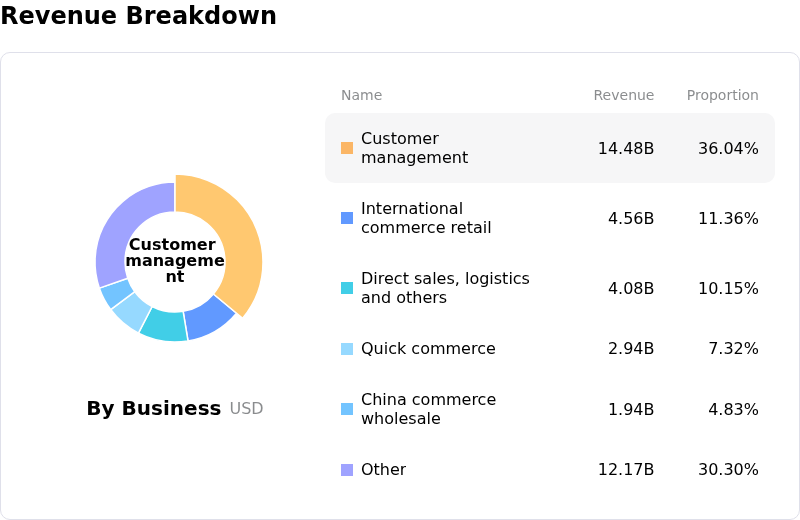
Over the past month, multiple analysts have rated the company as Buy, with an average price target of $184.43, a high of $256.87, and a low of $112.00.
More details about Alibaba Group Holding Ltd (BABA)
Company Specific Risks:
- Recent significant fines imposed by Chinese regulators for issues related to merchant oversight and "ghost deliveries" highlight ongoing regulatory scrutiny and potential for increased compliance costs.
- Intense competitive pressure and price wars within China's quick commerce and delivery sectors are compressing operating margins and negatively impacting overall profitability.
- Aggressive investments in AI infrastructure and quick-commerce initiatives have led to a significant decline in net income and a 71% decrease in free cash flow for Q3 FY26, indicating continued pressure on near-term financial performance and potential for future fluctuations in adjusted EBITA.
This article may include AI-generated content that is human-reviewed, which is for reference and general information purposes only and does not constitute investment advice.
Recommended Articles







Comments (0)
Click the $ button, enter the symbol, and select to link a stock, ETF, or other ticker.