


SpaceX IPO: Musk Weighs $60 Billion Cursor Deal, and Can It Save xAI?



AI Podcast


SpaceX is reportedly considering acquiring AI startup Cursor for $60 billion, aiming to bolster xAI's capabilities. Cursor, a developer-focused AI company with significant revenue and enterprise adoption, offers expertise in programming data and software-hardware integration, addressing xAI's limitations in reasoning and coding. This move could inject top AI talent into xAI, which has faced staffing challenges. While the acquisition cost is substantial, it potentially offers a strategic advantage by acquiring a high-margin business and preventing competitors from securing Cursor's advanced AI tools, aligning with SpaceX's broader tech ambitions.

TradingKey - On Tuesday, SpaceX announced that it has reached an agreement with AI startup Cursor, granting it the right to acquire the company for $60 billion later this year, or pay $10 billion to advance their collaboration. SpaceX stated on the social media platform X that the two companies will jointly build the world's most powerful AI for programming and knowledge work.
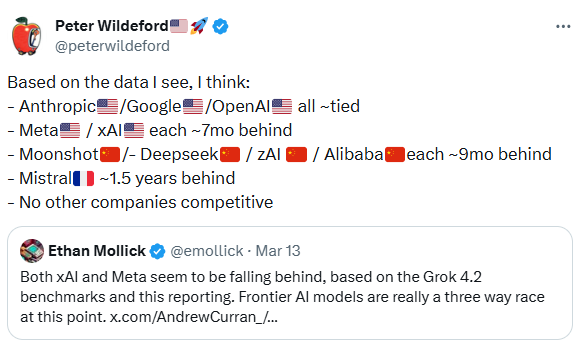
Previously, xAI was sharply criticized for lagging behind its peers. In March this year, a report by forecaster Peter Wildeford showed that among the world's major AI developers, Anthropic, Google (GOOG) (GOOGL) and OpenAI are in the first tier, while xAI and Meta (META) lag behind the first tier by about seven months. Musk frankly acknowledged this gap and responded that they would catch up and close the gap by the end of 2026. In February this year, after xAI was acquired by SpaceX, Musk announced a complete restructuring of xAI, rebuilding it from the ground up.
As the SpaceX IPO is set to kick off, why is Musk still considering the acquisition of Cursor given that he has already acquired xAI this year? Does the decision to spend heavily on Cursor offer more benefits than drawbacks? Will investors buy into this?
What is Cursor?
Cursor is an AI company founded in 2022 by four individuals born after 2000. According to Bloomberg News, the company plans to raise approximately $2 billion in a new funding round, which would value it at over $50 billion. If this round is completed as expected, Cursor will become one of the world's most valuable developer tool companies.
Despite its modest size, Cursor has launched several popular products. In 2023, Cursor released its first AI coding assistant, which quickly went viral and drove the rise of "vibe coding." Earlier this month, Cursor released Cursor 3, defining it as a unified workspace for building software assisted by AI agents. Recently, the company also launched Composer 2, claiming it features frontier-level programming intelligence.
Nvidia (NVDA) CEO Jensen Huang has publicly stated that his favorite enterprise-grade AI service is Cursor, adding that Nvidia's engineers now work with the assistance of this AI coding tool, resulting in a remarkable boost in productivity.
Cursor stated that its annualized revenue has exceeded $1 billion, and its products are used by more than half of the Fortune 500 companies, including Uber (UBER) and Adobe (ADBE) ; Google and Nvidia are both investors and partners of Cursor.
Why Cursor is Vital to Musk’s AI Strategy
SpaceX is considering acquiring Cursor, with the primary objective being to address xAI's technical shortcomings.
xAI relies excessively on social media data from X. While useful for training the Grok chatbot, it offers limited benefits for enhancing reasoning capabilities, coding efficiency, and multimodal processing. As a developer tool, Cursor has amassed a vast repository of data on programming processes—such as how elite developers debug and refactor architectures—which could compensate for xAI's data deficiencies.
The acquisition of Cursor would also help Musk resolve software-hardware integration issues. Cursor has deep expertise in understanding and indexing massive monolithic codebases, enabling more efficient system-wide architecture and excelling at translating physical-world formulas and concepts into code.
Musk implemented sweeping layoffs at xAI earlier this year. Of the 12 original co-founders, only Musk, Manuel Kroiss, and Ross Nordeen remain, leaving the company severely understaffed. Musk has even transferred executives from Tesla (TSLA) and SpaceX to assist in restructuring xAI's internal operations and auditing employees. Meanwhile, Cursor's founding team is regarded as some of the top talent in Silicon Valley's "AI + compiler" field, which would inject fresh blood into xAI's engineering team.
Furthermore, from a financial perspective, Cursor is in a phase of rapid growth, with annualized revenue projected to surpass $6 billion by the end of 2026—a five-fold increase from the $1 billion expected by late 2025. Following the launch of the Composer model in November 2025 and cost structure optimizations, the company recently turned gross margin positive, with its enterprise business—which accounts for approximately 60% of revenue—already achieving positive gross margins.
Is Cursor the Key to a $2 Trillion SpaceX Valuation?
Earlier this year, SpaceX's acquisition of xAI drew criticism, with investors' primary concern being the continuous and massive investment required by xAI. Will Cursor, also an AI startup, present the same issue?
From a valuation perspective, acquiring xAI or other AI firms helps SpaceX transition its narrative from a commercial aerospace company to a tech empire encompassing "computing power + data + large language models + aerospace," thereby boosting its valuation. However, compared to xAI, which requires ongoing investment, Cursor—which has already achieved a positive gross margin—will provide SpaceX with a high-margin valuation anchor. In the long run, the resulting expansion in valuation multiples will far outweigh the $60 billion acquisition cost.
From a technical standpoint, the acquisition of Cursor will not only fill technical gaps but also create a "1+1>2" synergy when combined with SpaceX's massive computing power. SpaceX stated on Tuesday that Cursor's leading products and its reach among expert software engineers, coupled with SpaceX's Colossus training supercomputer—equivalent to one million H100 GPUs—will enable SpaceX to build the world's most useful models. xAI's Colossus is hailed as the world's largest supercomputer cluster.
Nevertheless, some investors may view the $60 billion acquisition as an overly aggressive splurge, especially as the AI industry continues to ramp up investment. Given that Cursor's valuation jumped from $29.3 billion to $60 billion within six months, SpaceX's acquisition cost likely includes a substantial premium. However, considering Cursor's outstanding performance in AI tools for developers, if SpaceX does not secure Cursor now, it risks letting Google or other AI giants seize the initiative, thereby losing the opportunity to close the gap in AI progress.
This content was translated using AI and reviewed for clarity. It is for informational purposes only.
Recommended Articles






Comments (0)
Click the $ button, enter the symbol, and select to link a stock, ETF, or other ticker.