


Gold Price Rebounds Strongly to $4,700 Mark. But March Still Records Significant Pullback



TradingKey - During Wednesday's Asian trading session, international gold prices surged, briefly breaking above the $4,700 mark and hitting a new high in the current rebound phase. This followed signals from both the U.S. and Iran of a willingness to end their conflict. Consequently, capital flowed back into risk assets, while gold, which had slumped in March, also benefited.
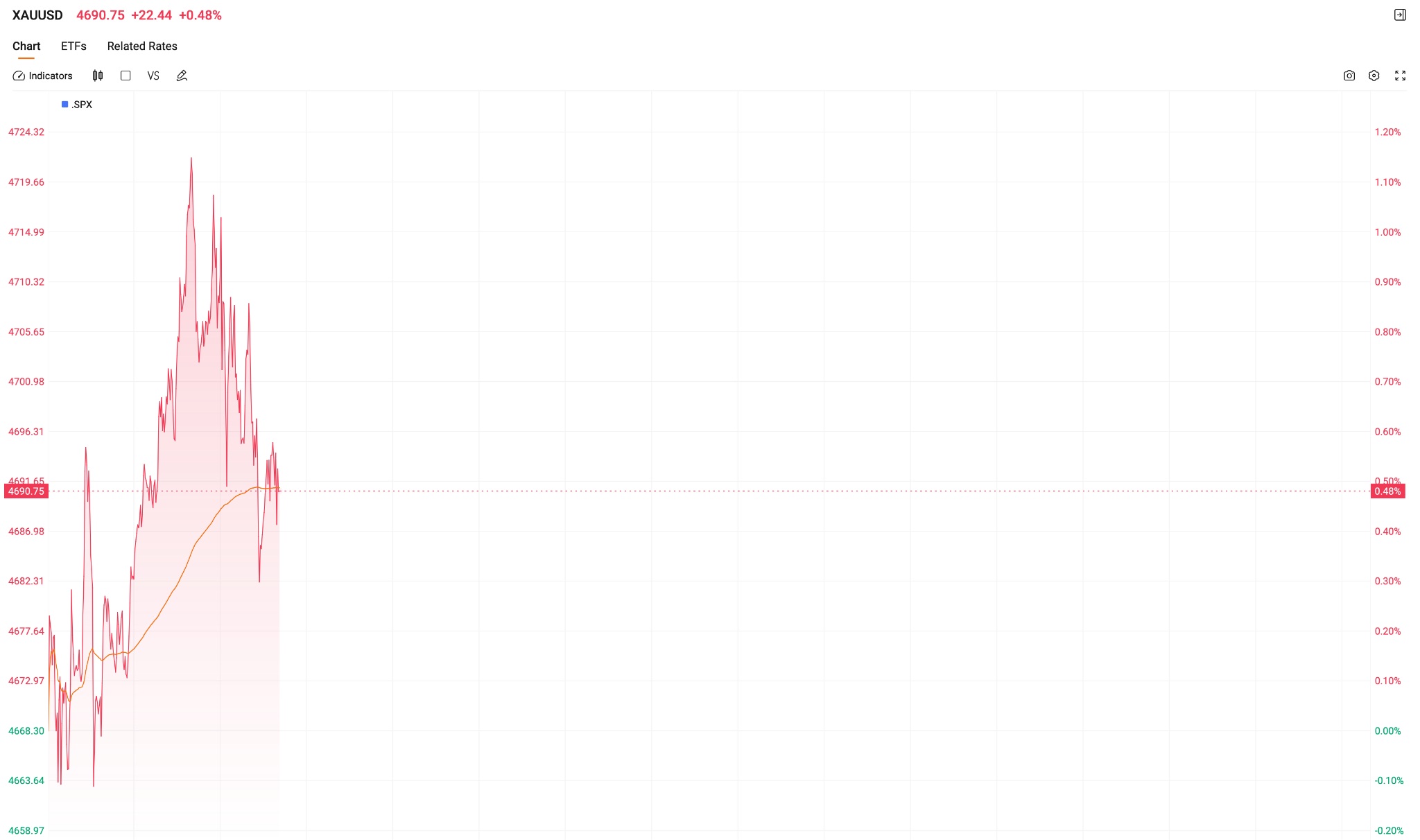
From a monthly performance perspective, gold remains in an overall correction cycle. Despite the recent rebound, its cumulative decline in March still exceeded 11%, making it one of the weaker-performing assets recently. Previously, against a backdrop of a strengthening U.S. dollar and rising U.S. Treasury yields, gold faced significant pressure as capital shifted toward asset classes with more attractive yields, causing gold prices to trend lower throughout the month.
The gold market is currently caught in a tug-of-war between multiple forces. On one hand, uncertainty from the Middle East conflict has not fully dissipated, leaving the market highly sensitive to potential risk events. On the other hand, the Federal Reserve's policy path has yet to show a clear pivot signal; with real interest rates remaining high, gold—a non-yielding asset—continues to face persistent downward pressure.
Furthermore, the movement of the U.S. dollar has become a key variable. Following a continuous rise in the dollar, global liquidity tightened, exerting pressure on dollar-denominated gold. As the U.S. Dollar Index pulled back yesterday following signals of a potential truce, gold prices found some breathing room, strengthening short-term rebound momentum. However, looking at the overall trend, gold may still face renewed volatility pressure if the dollar strengthens again or if U.S. Treasury yields rise further.
Market analysis suggests that the current sharp fluctuations in gold prices reflect a growing divergence among investors regarding the macroeconomic outlook. One segment of capital is betting on persistent geopolitical risks, viewing gold as a critical safe-haven tool; meanwhile, another segment is more focused on the interest rate and liquidity environment, maintaining a cautious stance on gold's medium-term trajectory.
Although most institutions remain bullish on gold prices, the short-term rebound appears more like a sentiment-driven technical recovery rather than a structural trend reversal. Against a backdrop of high macroeconomic uncertainty and an unclear policy path, gold prices are likely to remain in a volatile range. Future movements will require close monitoring of developments in the Middle East, Federal Reserve policy signals, and the direction of the U.S. dollar and real interest rates.
This content was translated using AI and reviewed for clarity. It is for informational purposes only.
Recommended Articles








Comments (0)
Click the $ button, enter the symbol, and select to link a stock, ETF, or other ticker.