


Snowflake Inc Stock (SNOW) Moved Down by 11.82% on Apr 9: Key Drivers Unveiled



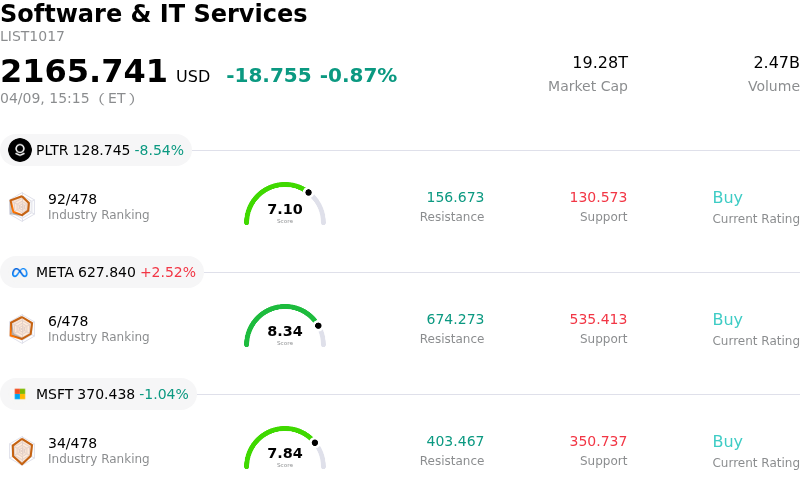
Snowflake Inc (SNOW) moved down by 11.82%. The Software & IT Services sector is down by 0.87%. The company underperformed the industry. Top 3 stocks by turnover in the sector: Palantir Technologies Inc (PLTR) down 8.54%; Meta Platforms Inc (META) up 2.52%; Microsoft Corp (MSFT) down 1.04%.
What is driving Snowflake Inc (SNOW)’s stock price down today?
Snowflake's share price experienced a notable decline, driven by a convergence of industry-specific headwinds, macroeconomic concerns, and shifting market sentiment. A primary factor is the intensified fear of disruption within the enterprise software sector. The emergence of advanced artificial intelligence models, particularly those featuring agentic workflows like Anthropic's Managed Agents, is raising concerns that these innovations could reduce the pricing power of traditional Software-as-a-Service (SaaS) platforms and threaten business models reliant on seat-based licensing and data warehousing. This perception is leading to a re-evaluation and repricing across the entire sector.
Adding to the pressure, broader macroeconomic indicators suggest a stalling U.S. economy. Recent data revealed a significant slowdown in annualized GDP growth for the fourth quarter of 2025, coupled with persistent inflation, which is dampening overall market enthusiasm for growth-oriented stocks. This challenging economic backdrop contributes to a risk-off sentiment among investors.
The company's stock was already under significant pressure leading up to this downturn, having struggled year-to-date and hitting a new 52-week low. This suggests a pre-existing bearish trend exacerbated by the latest developments. While some analysts maintain positive outlooks, there have been downward revisions to earnings forecasts and a general expectation of further analyst downgrades, further weighing on investor confidence.
Furthermore, the general market has seen a rotation out of tech stocks into other sectors, as rising bond yields and diminished expectations for near-term interest rate cuts make growth stocks less attractive. This sector-specific movement, rather than a broad market panic, indicates that enterprise software companies like Snowflake are facing targeted investor scrutiny regarding their long-term growth prospects in an evolving technological and economic landscape. The change in the company's Chief Revenue Officer also introduces an element of uncertainty regarding its go-to-market strategy.
Technical Analysis of Snowflake Inc (SNOW)
Technically, Snowflake Inc (SNOW) shows a MACD (12,26,9) value of [-6.56], indicating a sell signal. The RSI at 34.95 suggests neutral condition and the Williams %R at -84.46 suggests oversold condition. Please monitor closely.
Fundamental Analysis of Snowflake Inc (SNOW)
Snowflake Inc (SNOW) is in the Software & IT Services industry. Its latest annual revenue is $4.68B, ranking 69 in the industry. The net profit is $-1.33B, ranking 586 in the industry. Company Profile
Over the past month, multiple analysts have rated the company as Buy, with an average price target of $237.70, a high of $500.00, and a low of $170.00.
More details about Snowflake Inc (SNOW)
Company Specific Risks:
- Multiple class action lawsuits have been initiated against Snowflake, alleging that the company failed to disclose material revenue headwinds related to product efficiency gains, tiered storage pricing, and Iceberg Tables, and withdrew its $10 billion product revenue target for 2029, resulting in significant stock declines.
- The market is repricing the enterprise software sector, including Snowflake, due to fears that advanced AI agents from companies like Anthropic and OpenAI could disrupt the fundamental business model by performing data orchestration natively, thereby threatening Snowflake's data warehousing moat and premium pricing.
- Analysts have revised earnings forecasts downwards for Snowflake for the upcoming period, and the company has experienced recent price target cuts from firms such as Barclays and Stifel, reflecting concerns about future growth and valuation.
- Recent insider stock sales, including Form 144 filings by executives, indicate a potential lack of internal confidence and have contributed to negative market sentiment and a significant stock decline.
This article may include AI-generated content that is human-reviewed, which is for reference and general information purposes only and does not constitute investment advice.
Recommended Articles










Comments (0)
Click the $ button, enter the symbol, and select to link a stock, ETF, or other ticker.