Trump Stages TACO Operation Again, Triggering Sharp Volatility in Major Markets

TradingKey - On Monday (March 23), Trump stated that recent communications between the U.S. and Iran have been "very good and very productive," and he postponed the planned military strikes on Iranian energy facilities by five days. Upon the news, global markets immediately shifted from risk-off mode to a resurgence in risk appetite: the three major U.S. stock indices rebounded collectively, with the Dow closing up 631 points, or 1.38%, the S&P 500 rising 1.15%, and the Nasdaq gaining 1.38%, indicating a rapid flow of capital back into riskier assets.
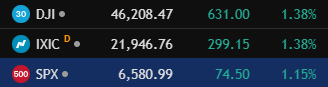
Source: TradingView
Volatility in the commodities market was even more extreme. Brent crude plummeted by more than 10% intraday, ultimately closing down 10.27% at $96.77, while U.S. WTI crude dropped as low as $84.37 intraday and closed down 9.42% at $88.86 per barrel. The sharp pullback in oil prices was mainly because markets had previously feared further escalation in the Middle East and disruptions to crude supply; now, as news of the "strike suspension" emerged, part of the risk premium was quickly wiped out.
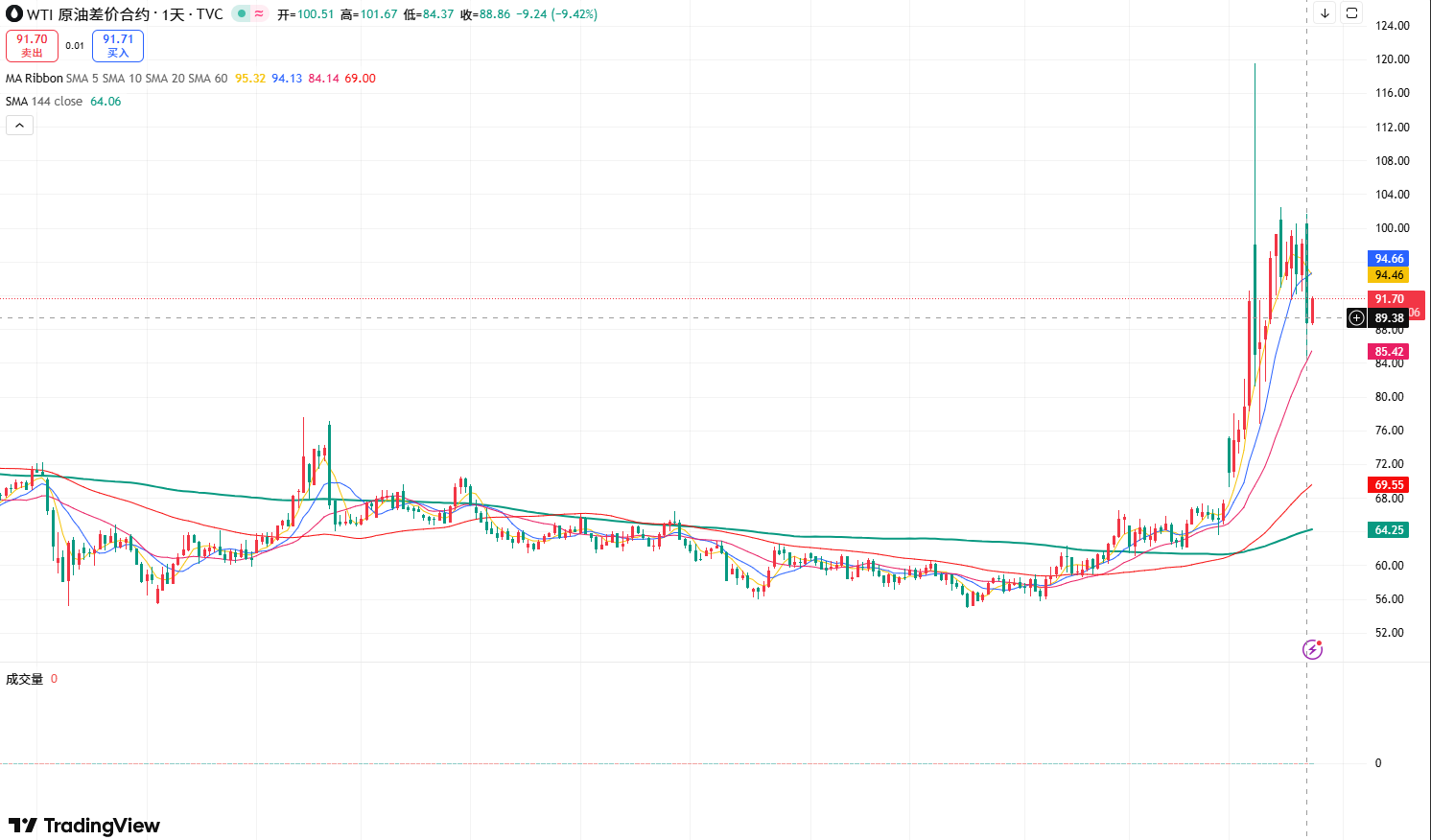
Source: TradingView
Gold also experienced significant volatility at the same time. Influenced by expectations of easing geopolitical tensions, spot gold plunged by more than 8% intraday before narrowing its decline to close at $4,407.06 per ounce, down 1.8% on the day. Although gold prices briefly rebounded, the market soon realized that this round of volatility was not just a simple change in safe-haven buying; the linkage between interest rate expectations, the dollar's trajectory, and energy prices continues to dictate gold pricing, causing gold prices to remain on a downward trend today.
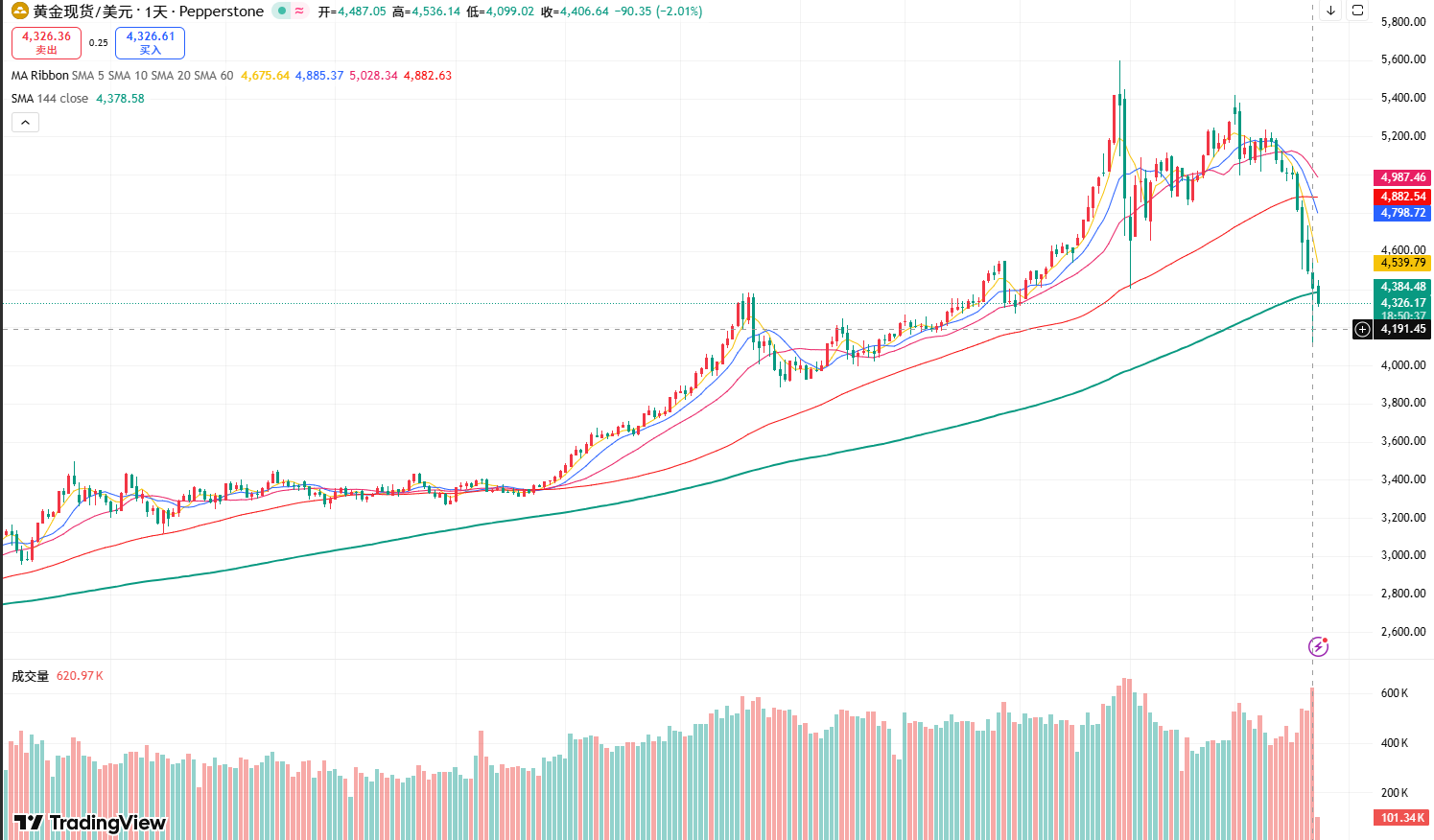
Source: TradingView
However, this market reaction was not entirely built on certainty. Iran denied any direct or indirect contact, stating that such claims were untrue, which led traders to remain cautious regarding the sustainability of the de-escalation.
In other words, the current situation is more of a rapid, news-driven repricing: oil prices fell sharply, stocks quickly rebounded, and gold fluctuated significantly. However, as long as the situation in the Middle East does not truly stabilize, the market will continue to be pulled back and forth by negotiations, retaliation risks, and supply shocks.