


エヌビディア株価見通し:決算が全面的に市場予想を上回る、株価は300ドルに達する可能性



AIポッドキャスト


エヌビディアの2027年度第2四半期決算は売上高・EPSともに市場予想を上回った。AIチップの旺盛な需要を背景にデータセンター部門が急拡大し、次世代「Vera Rubin」の出荷開始も好材料視されている。一方、部品コスト上昇により調整後粗利益率は低下傾向にあり、第4四半期には71%〜72%へ押し下げられる懸念から一時株価は時間外で下落した。しかし、経営陣が示した次年度約70%増収という力強い長期見通しが好感され、株価は上昇に転じた。テクニカル面では228〜230ドルの抵抗線突破が今後の焦点となる。
TradingKey - エヌビディア(NVDA)の最新の2027年度第2四半期決算は、再びウォール街の予想を上回りました。同社の四半期売上高は前年同期比106%増の962億2,000万ドルに達し、調整後EPSは2.22ドルと、市場予想の2.10ドル前後を上回りました。データセンター部門の売上高は前年同期比117%増の890億ドルに達し、こちらも市場予想を上回りました。予想を上回る決算であったにもかかわらず、株価はなぜ時間外取引で一時下落した後に上昇へと転じたのでしょうか。
エヌビディア決算が予想を上回る、70%の将来成長見通しが株価の主なカタリストに
Based on this earnings report, demand for Nvidia's AI chips continues to maintain high-speed growth. Second-quarter Data Center revenue reached $89 billion, up 117% year-over-year and exceeding the $85.08 billion expected by analysts surveyed by LSEG. The company also expects third-quarter revenue to reach $108 billion ± 2%, significantly higher than the market's previous expectation of around $104.2 billion. In other words, computing power demand from big tech companies, AI labs, and cloud service providers has yet to show any noticeable slowdown.
Vera Rubin has become a key variable for the next phase of growth. Nvidia confirmed that Rubin has begun shipping to customers and expects it to contribute approximately 20% of Data Center revenue in the third quarter. This means the next-generation product cycle following Blackwell has already begun generating actual revenue. For NVDA's stock price, Rubin's smooth ramp-up has eased market concerns about a potential product cycle gap after the end of Blackwell's high-growth period.
However, the earnings report also highlighted a clear pressure point: gross margin may decline. Adjusted gross margin for the second quarter was 75%, but the company expects it to drop to around 74% in the third quarter and potentially fall further to 71%–72% in the fourth quarter, primarily driven by rising memory chip prices and increased costs for other components. This projected decline in gross margin was a key reason why the company's stock price came under pressure in after-hours trading following the release of the earnings report.
What reversed the trajectory of the after-hours stock price, however, was the longer-term growth forecast provided by management, turning an initial after-hours drop into a gain of nearly 5%. Nvidia expects fiscal year 2028 revenue to grow by approximately 70% year-over-year, far above Wall Street's pre-earnings expectation of about 44%. CEO Jensen Huang further stated that if not for supply constraints, the company's revenue next year could even come close to doubling again.
エヌビディア株価テクニカル分析
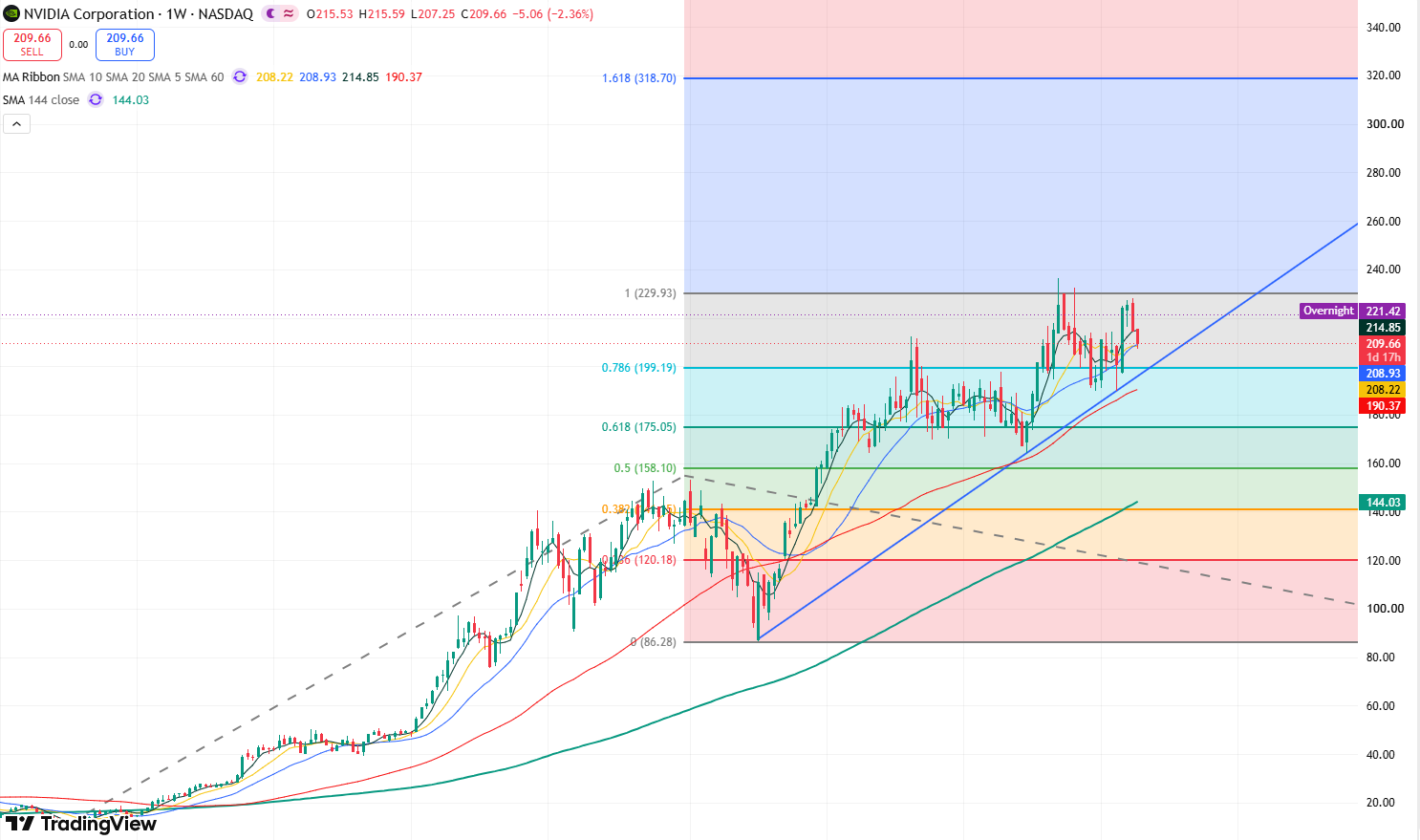
エヌビディアの週足株価チャート、出所:TradingView
エヌビディアの週足株価チャートを見ると、全体的なトレンドは明確な上昇軌道を示している。直近の上昇局面で、株価は230ドル付近の抵抗線を再び試す際に上値圧力を受けて軟化し、短期的な強気モーメンタムが和らいだものの、エヌビディアが市場予想を上回る決算と堅調な将来の成長見通しを発表したことで、市場の強気心理は回復した。
上値としては、まず注目すべき主要な抵抗線は228〜230ドルであり、続いて過去最高値の236.54ドルとなる。この水準を上抜ければ、300ドルの節目に向けた上値余地が広がる。
下値としては、まず注目すべき主要な支持線は207ドルとなる。この水準を下回った場合、株価は200ドルの節目を試す可能性があり、ここを維持できなければ、190ドルに向けてさらに下落する可能性がある。
このコンテンツはAIを使用して翻訳され、明確さを確認しました。情報提供のみを目的としています。










コメント (0)
$ボタンをクリックし、シンボルを入力して、株式、ETF、またはその他のティッカーシンボルをリンクします。