


Amazon Bets on Alexa Shopping Assistant, Accelerating Formation of AI E-Commerce Closed Loop



AI Podcast


Amazon launched Alexa for Shopping on May 13 ET, integrating its Rufus bot to directly assist in ordering, reshaping e-commerce dynamics. This system embeds into Amazon.com, the App, and Echo Show, enabling price comparisons, shopping lists, and automatic replenishment without Prime or Echo devices. It consolidates fragmented actions, reducing reliance on external search engines. The AI enhances repurchase efficiency for high-frequency items and benefits advertising by improving purchase intent identification. While AI-driven shopping could impact billions in e-commerce spending by 2030, user trust regarding personalized recommendations versus platform interests remains a key consideration.
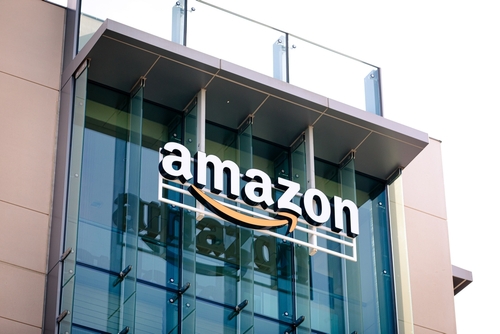
TradingKey - On May 13, ET, Amazon ( AMZN) launched Alexa for Shopping, signaling that AI has progressed from assisting searches to directly participating in ordering. This could potentially reshape the traffic distribution, conversion efficiency, and repurchase logic of Amazon's e-commerce business.
Amazon has integrated its original Rufus shopping bot into the Alexa+ system, directly embedding it into the shopping workflows of Amazon.com, the Amazon App, and Echo Show. Users do not need a Prime membership or an Echo device to ask questions, compare prices, view price history, create shopping lists, or even set price alerts and automatic replenishment rules in the main search bar.
Amazon stated that with the launch of Alexa for Shopping, users no longer need to manually perform actions like "searching, filtering, price comparison, remembering, and repurchasing." Alexa for Shopping can provide AI overviews in search results and on product pages, generate personalized shopping guides, support side-by-side product comparisons, display up to one year of price history, and automatically find deals, build carts, and complete repeat purchases based on user shopping history and conversation records.
From an operating model perspective, Alexa for Shopping is expected to further strengthen Amazon's retail closed-loop ecosystem. It consolidates previously fragmented actions—searching, filtering, price comparison, remembering, and ordering—back into the Amazon ecosystem, reducing the likelihood of users jumping to external search engines or third-party AI assistants.
Amazon management stated that the goal of this experience is to ensure seamless shopping conversations across different devices; needs discussed on an Echo device do not need to be re-explained when returning to the App. This design essentially locks shopping intent within the Amazon ecosystem.
Meanwhile, Amazon claims that Alexa for Shopping can enhance the efficiency of high-frequency repurchase items. The company noted that Alexa for Shopping can automatically replenish everyday items, quickly add frequently bought products to the cart, and even identify "frequently purchased" categories based on shopping history. For high-frequency categories such as paper towels, pet food, toiletries, and kitchen supplies, the more the AI assistant understands user habits, the easier it becomes for the platform to convert one-off transactions into periodic repurchases, which directly benefits Amazon's strengths in consumer packaged goods (CPG) and subscription-based consumption scenarios.
In addition, Alexa for Shopping may further benefit the advertising and seller ecosystem. Amazon's latest quarterly earnings report showed that Q1 advertising revenue reached $17.2 billion, with management explicitly mentioning that advertising growth was driven by new AI tools and expansion across streaming and shopping scenarios; at the same time, unit sales growth for Amazon Stores reached 15%, the highest level since the end of the pandemic lockdowns.
If AI shopping assistants truly improve search efficiency and the ability to identify purchase intent, it means that the commercialization potential for ad placements, product rankings, and seller recommendations will also expand accordingly.
However, a practical issue must be noted: for users, the more proactive the AI is, the more the platform needs to prove that recommendations are the best choice rather than forced suggestions.
According to Axios, Alexa for Shopping relies on user shopping history, conversation logs, and preferences to enhance personalization; however, this experience is highly dependent on Amazon's ability to maintain shopping and conversational context across devices.
For Amazon, a data closed-loop is beneficial for improving user experience, but if users worry that recommendation results are overly influenced by advertising, inventory, or platform interests, the cost of trust will rise—especially in high-frequency scenarios like automatic replenishment and automatic purchasing.
A Morgan Stanley report indicates that by 2030, shopping driven by AI assistants could influence or contribute $190 billion to $385 billion in U.S. e-commerce spending, representing approximately 10% of total online retail sales in a base case scenario and up to 20% in an optimistic scenario. This suggests that "AI + E-commerce" is not a marginal innovation but a structural theme capable of reshaping the distribution of hundreds of billions of dollars in consumer traffic.
This content was translated using AI and reviewed for clarity. It is for informational purposes only.
Recommended Articles









Comments (0)
Click the $ button, enter the symbol, and select to link a stock, ETF, or other ticker.