


AMD Q1 Earnings Preview: Record Revenue Fails to Mask Gross Margin Headwinds, OpenAI Partnership in Focus



AI Podcast


AMD's Q1 2026 results are projected to show significant year-over-year growth in revenue and EPS, driven by strong data center and client segment performance. However, investor sentiment is tempered by OpenAI's reported growth concerns and AMD's anticipated gross margin decline due to the absence of one-time inventory benefits. While AMD's CPU market share is at a record high, its gross margin lags behind competitors like Nvidia. The company's AI GPU strategy, focused on market share gains via a value approach, faces scrutiny regarding long-term profitability and competition. Investors will watch for updates on AI order fulfillment, MI450 capacity, and customer diversification.
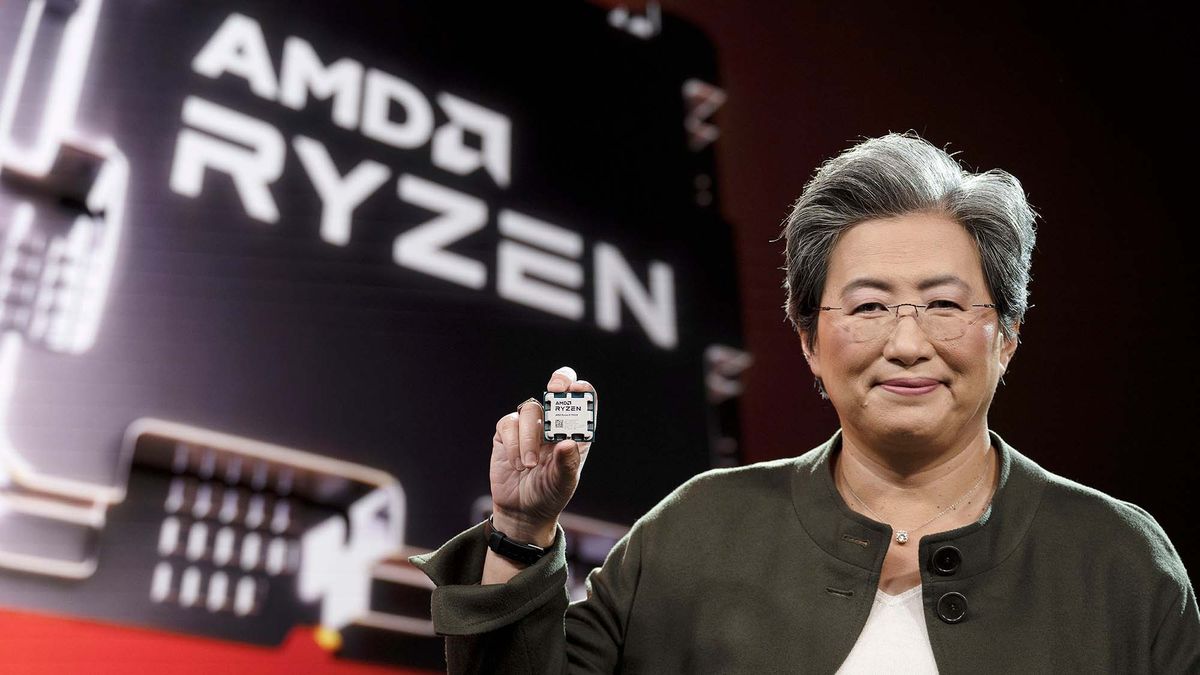
TradingKey - Advanced Micro Devices ( AMD) will report its first-quarter 2026 financial results after the U.S. market close on May 5. According to Bloomberg's consensus analyst estimates, AMD's Q1 2026 revenue is expected to be approximately $9.84 billion to $9.87 billion, up about 32% year-over-year; earnings per share (EPS) are projected to be around $1.27 to $1.28, a year-over-year increase of roughly 33%.
However, these high growth expectations have not fully alleviated investor concerns. On the eve of the earnings release, AMD's stock price came under pressure as OpenAI's performance fell short of internal targets; coupled with warnings of declining gross margins, the validation role of this report is particularly prominent.
Earnings Review: Record Q4, CPU Market Share Hits New High
In the fourth quarter of 2025, AMD delivered record results with quarterly revenue of $10.3 billion, up 34% year-over-year. Data center revenue reached a record $5.4 billion, a 39% increase year-over-year, as fifth-generation EPYC processors now account for more than 50% of total server CPU revenue, becoming the primary driver of growth.
Client segment revenue reached $3.1 billion, up 34% year-over-year, as Ryzen processor market share continued to climb. During the quarter, AMD's revenue share in the desktop CPU market hit a record high of 42.6%, while its total unit share across the CPU product line—including desktop, notebook, and server—reached 29.2%, also setting a new historical record.
Heading into the first quarter of 2026, analysts predict this growth trend will persist. Bernstein raised its Q1 revenue estimate for AMD from $9.8 billion to $9.9 billion and increased its EPS forecast from $1.25 to $1.27. Citi upwardly revised its fiscal year 2026 EPS projection, citing robust growth in the server business while maintaining a Neutral rating on AMD.
Gross Margin: Reversion After One-Off Tailwinds Fade
On the flip side of revenue growth is a counter-trend contraction in gross margin. AMD expects its first-quarter gross margin to be approximately 55%, down 2% quarter-over-quarter. In the fourth quarter of last year, a $360 million inventory reserve reversal related to MI308 sales in China boosted gross margin by a one-time 2.9 percentage points. This factor has dissipated this quarter, while MI308 sales in China have plummeted from approximately $390 million in Q4 to around $100 million.
A gross margin level of 55% is actually closer to AMD's historical median; during the first three quarters of 2025, this figure fluctuated between 53% and 54%. However, compared to Nvidia ( NVDA )'s estimate of 74.9% to 75% for the same period, a gap of approximately 20 percentage points still exists between the two.
Nvidia has achieved a higher product premium in the AI accelerator market by leveraging its CUDA ecosystem and the pricing power of the Blackwell architecture, which is the primary driver of the gross margin gap. In contrast, AMD continues to pursue market share via a value-oriented strategy, while securing long-term orders by issuing performance-based warrants to companies such as Meta and OpenAI.
Looking back at Nvidia's trajectory, when its data center business was in its infancy between 2016 and 2018, its gross margin remained below 60% for an extended period, with the fiscal year 2017 margin at approximately 55%—similar to AMD's current level. Chipmakers often sacrifice short-term profitability in the early stages of capturing market share. For AMD, whether gross margins can stabilize or even recover over the next two quarters will be a critical metric in assessing its product competitiveness and pricing power.
Performance Concerns for a Key Ally: Impact and Refutation of OpenAI Rumors
On April 28, Eastern Time, The Wall Street Journal reported that OpenAI’s first-quarter revenue and user growth fell short of expectations. The report also mentioned that OpenAI CFO Sarah Friar informed senior management she believes revenue growth is too slow to potentially cover future data center contract costs. As one of OpenAI’s core GPU suppliers, AMD’s stock fell over 6% in pre-market trading on April 28, eventually closing down approximately 3.8%. Nvidia and Microsoft ( MSFT) shares also traded lower.
However, OpenAI strongly refuted the report. In a statement, OpenAI claimed that both its consumer and enterprise businesses are "firing on all cylinders," with demand from enterprise customers continuing to grow and its early-stage advertising business also expanding, calling the report "typical clickbait."
CEO Sam Altman and CFO Sarah Friar called the doubts "absurd" in a joint statement, emphasizing that they are "completely aligned" on their computing power investment strategy, stating, "Together, we are working every day to buy as much compute as possible." The company also stated it still views expanding compute capacity as a "key driver" that will allow it to "provide a better product experience for customers."
The incident reflects systemic anxiety regarding the ROI cycle of AI infrastructure—specifically, the uncertainty surrounding the commercialization pace of leading large-model developers. The 6GW Instinct GPU supply agreement between AMD and OpenAI remains a multi-year framework, with the first deployments scheduled for the second half of 2026; the market’s pricing in of this deal carries inherent two-way risks.
During the earnings call, how management addresses questions about the pace of OpenAI order fulfillment, MI450 capacity planning for the second half of the year, and customer diversification will be critical for the market to digest short-term noise and reassess the sustainability of AMD’s AI business growth.
Analyst Divergence: Target Prices Range from $248 to $406
 [Source: Refinitiv, TradingKey]
According to TradingKey, as of April 30 ET, the consensus average price target among the 55 analysts covering AMD was approximately $292.44. Expectations vary significantly across institutions: Stifel set a high price target of $320, Bernstein maintained its $265 valuation, and Citi provided a conservative estimate of $248. Meanwhile, an independent analyst from Seeking Alpha issued an optimistic valuation of $406, based on a forward P/E ratio of 35x.
AMD's current forward P/E ratio stands at approximately 50x, compared to just 30-35x for NVIDIA. Although AMD's projected revenue growth exceeds 30%—surpassing NVIDIA's 15%-20%—the market has already assigned a higher valuation premium to this superior growth forecast. Moving forward, the core question for investors is whether AMD can accelerate its market share gains in the AI GPU space during the second half of this year to support its current high valuation.
At this stage, AI infrastructure investment is primarily concentrated on the training phase; however, as more AI models are deployed, computing demand for inference is expected to see explosive growth. NVIDIA does not hold an absolute monopoly in the inference chip segment. If AMD can achieve breakthroughs in energy efficiency ratios and software ecosystems for inference chips, it could unlock a second growth curve—a key factor supporting AMD's long-term high valuation.
For investors, AMD's earnings call will provide three critical validation signals: the specific ramp-up schedule and confirmed customer orders for the MI350 series in the second half of the year; whether the gross margin guidance of 55% will be revised; and whether demand on the AI application side—particularly in inference—is beginning to meet growth expectations.
This content was translated using AI and reviewed for clarity. It is for informational purposes only.
Recommended Articles










Comments (0)
Click the $ button, enter the symbol, and select to link a stock, ETF, or other ticker.