


Memory Crashes. Memory Stocks Suffer Collective Unexpected Pullback, Is Memory Bull Cycle Ending or a Buying Opportunity?



AI Podcast


Memory chip stocks experienced a significant pullback, led by SanDisk and Micron, following Google's announcement of its TurboQuant AI memory compression technology. This innovation enhances memory efficiency during AI inference, raising concerns about future storage demand and contributing to price cuts on DDR5 memory. While some analysts view this as a traditional cycle peak, others, including HSBC, believe AI-driven demand will sustain the market, with current declines presenting buying opportunities. The overall memory uptrend is expected to continue, supported by robust AI spending through 2026.
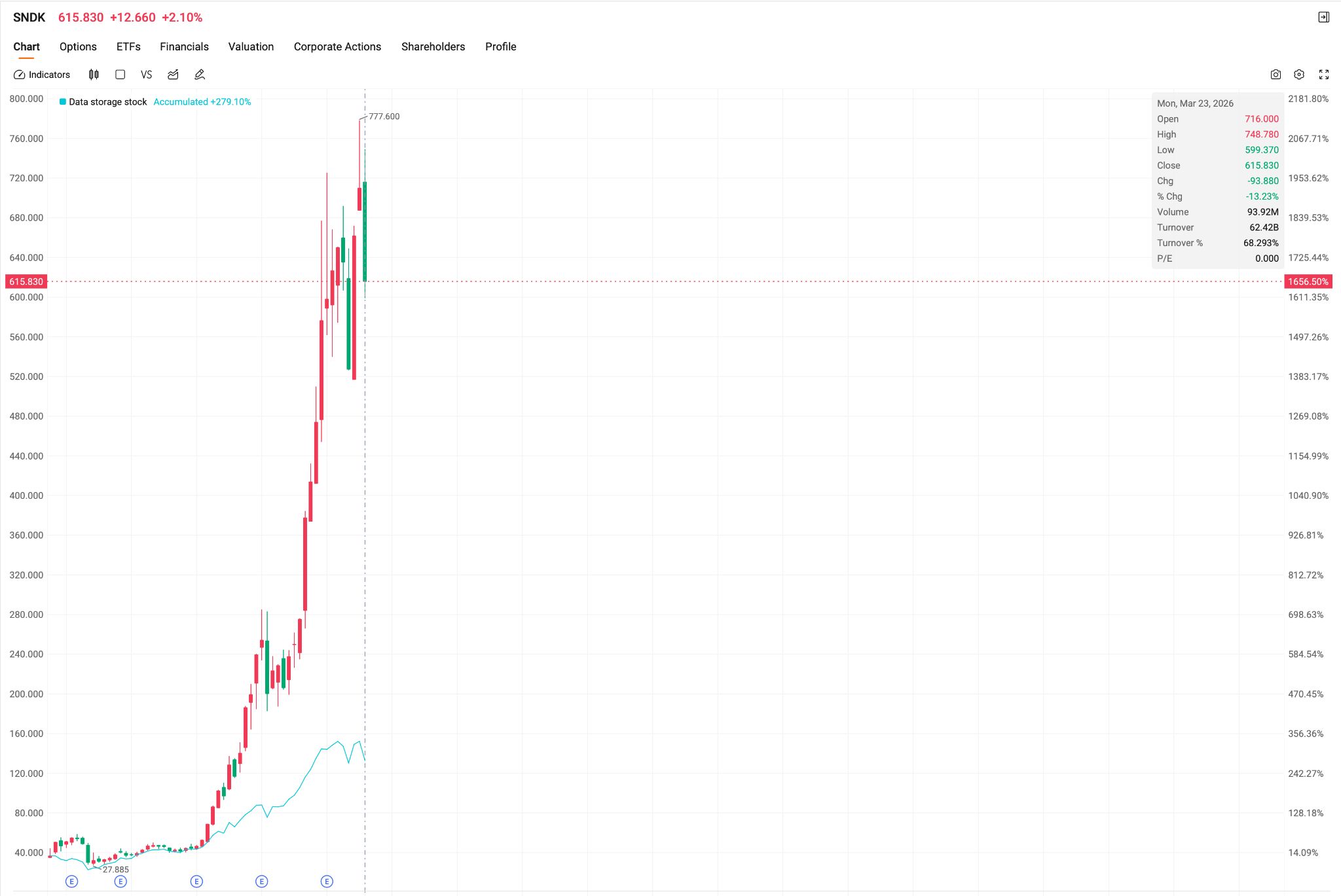
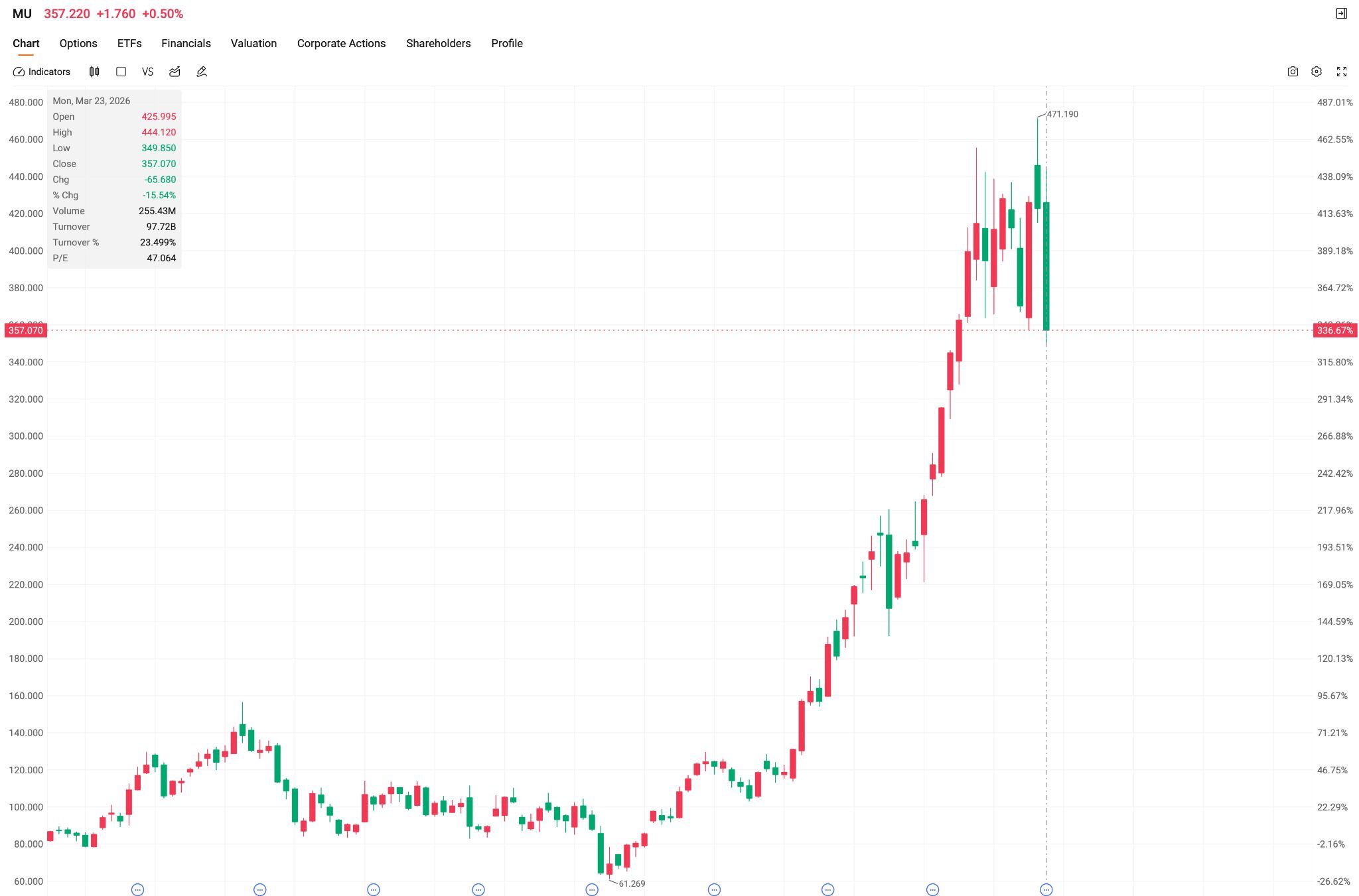
TradingKey - Since mid-March, memory prices have reversed course, triggering market concerns that the memory cycle has peaked. As of Friday Eastern Time, U.S. memory chip stocks saw a sharp correction during the week. Previously the top gainers with the greatest price elasticity, SanDisk (SNDK) , fell more than 13% from its high during the week; Micron (MU) dropped over 15% from its high, as the sector underwent a collective pullback during the week, leading the decline in the Nasdaq Index.
What caused the plunge in memory stocks?
Last week, Google (GOOGL) released a new AI memory compression technology, TurboQuant, sparking market concerns over the outlook for storage demand. Coupled with the gradual slowdown in the growth of storage demand, memory stocks experienced a sharp pullback that day.
In the article "What is Google's TurboQuant Compression Algorithm? How Will It Impact the AI Memory Chip Industry?," we elaborated on the impact TurboQuant has brought to the storage industry.
This new vector compression algorithm is specifically optimized for memory usage efficiency during the AI inference stage, particularly excelling in addressing high Key-Value (KV) Cache occupancy. This means AI models can process more data with lower memory consumption, but it also presents new challenges to the industry.
Furthermore, in the aforementioned article, we detailed how TurboQuant affects memory chips, specifically examining the impact on server DRAM (DDR5), HBM (High Bandwidth Memory), NAND Flash (enterprise SSDs), and HDDs.
Has the memory bull cycle come to an end?
Data indicates that several U.S. retailers have implemented broad price cuts on DDR5 memory, with maximum reductions reaching $100 per kit.
Taking Corsair's VENGEANCE series as an example, its 32GB model with speeds up to 6400MHz is currently priced at approximately $379.99, a significant drop from the recent peak of $490, representing a per-kit decline of over $110.
Analyst Dan Nystedt believes this signals the peak of a traditional cycle, as smartphone manufacturers refuse to accept high DDR4 prices.
The market in Greater China has also cooled, with wholesalers telling the China Business Journal that mainstream 16GB memory module prices "fell by over 100 yuan in a single day," and large-scale hoarders are now selling off aggressively.
In fact, prices for traditional memory products have surged several times over, with gains overextending consumer expectations; for rational consumers, the incentive to buy is weak unless there is an immediate need.
Different analysts hold opposing views: Jukan believes price resistance is confined to legacy memory, while demand for DDR5 and HBM remains robust, suggesting memory companies are no longer "cyclical stocks." HSBC contends that current market concerns are overblown, the AI-driven memory supercycle is only at its midpoint, and shortages may persist for one to two years.
Market analysis suggests this decline is largely attributable to the impact of Google's (GOOGL) new AI memory compression technology, TurboQuant, which accelerated expectations of a future downcycle, leading to profit-taking and, combined with external uncertainties, resulting in a partial correction within an overall uptrend.
At this stage, it may be premature to say the storage bull cycle is over; AI spending remains a primary theme through 2026, and large-scale expenditures will inevitably continue to provide strong support for storage demand.
Regarding the recent sharp decline, an HSBC research report also noted: "Any pullback provides an additional buying opportunity."
This content was translated using AI and reviewed for clarity. It is for informational purposes only.
Recommended Articles










Comments (0)
Click the $ button, enter the symbol, and select to link a stock, ETF, or other ticker.