


Meta Single-Day Market Value Evaporated $119 Billion, What Happened?



AI Podcast


Meta Platforms' stock fell 8% on Thursday due to recent lawsuit losses concerning platform safety and addictive features, resulting in a $119 billion market value decrease. While fines are minimal, investor concerns regarding regulatory implications and potential operational changes impacting advertising revenue were triggered. Separately, substantial AI investments are pressuring free cash flow, with significant capital expenditure planned for data centers, despite Meta lacking a flagship AI model comparable to competitors. The company is also continuing layoffs to reallocate resources towards AI. Additionally, Meta's $2 billion acquisition of AI startup Manus faces regulatory scrutiny in China.
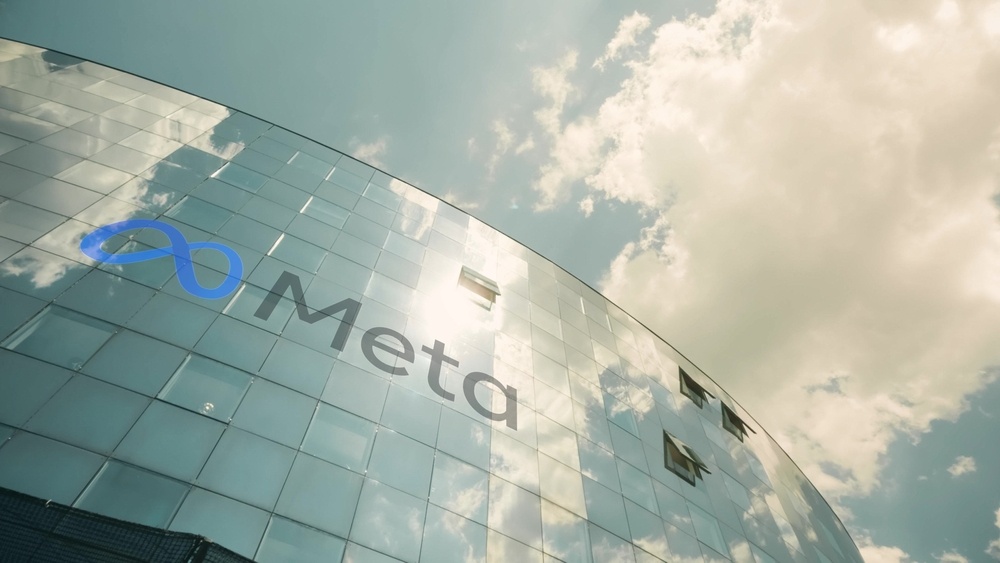
TradingKey - On Thursday, social media giant Meta Platforms ( META) suffered its most aggressive sell-off of the year, with its stock price plunging 8% to close at $545.75, its lowest level since April 2025, wiping out $119 billion in market value in a single day.
By this point, Meta's stock price has plummeted 30% from its peak of $790 in August, and its ranking among U.S.-listed companies by market capitalization has dropped to eighth, trailing Tesla ( TSLA ), its lowest market cap ranking since September 2023.
The immediate catalyst for this plunge in Meta's stock price was a series of recent losses in lawsuits in New Mexico and California. This week, two separate juries found Meta liable on multiple counts, including failing to protect minors from harmful content on its platforms and operating addictive social media platforms.
Specifically, the New Mexico verdict requires Meta to pay $375 million in damages, while in the California ruling, Meta and Google ( GOOGL) ( GOOG) were ordered to pay a combined total of $6 million.
While the fines are relatively small compared to Meta's massive market capitalization, this series of legal defeats has sparked investor concerns over the regulatory outlook for the social media industry—if similar rulings become the norm, Meta could face more lawsuits and higher fines, and may even be forced to alter its platform's operating model, which would significantly impact the core profitability of its advertising business.
A Wall Street analyst noted: "This series of rulings sets a dangerous precedent, implying that Meta could face more similar lawsuits in the future. If other states follow the lead of New Mexico and California, Meta's compliance costs will grow exponentially, and it may even be forced to change its core algorithms and operating models." This uncertainty directly dented investor confidence, becoming the core trigger for the plunge.
However, Evercore ISI analyst Mark Mahaney noted in a report that while the legal rulings do pose risks, the current market panic is somewhat overblown. He wrote in the report: "Is Meta's stock now uninvestable? While that possibility exists, we believe the probability is remote."
Analyzing from a valuation perspective, Mahaney believes Meta's current stock price is significantly undervalued. Meta's forward P/E ratio currently stands at just 16x, within its low range for the past three years. Based on this, he maintains an 'Outperform' rating on the stock and has set a price target of $900, implying a 65% upside from current levels.
Meta's AI Investment Concerns
In addition to litigation risks, investors also harbor concerns regarding Meta's massive investments in the artificial intelligence sector.
FactSet data shows that due to surging capital expenditures for AI infrastructure development, Meta's free cash flow for 2026 is projected to plummet from $43.8 billion in 2025 to $6.25 billion—a year-on-year contraction of 85.7%, significantly exceeding market expectations.
In fact, tech giants ramping up AI investment is not unique to Meta—Amazon ( AMZN) has similarly established a $200 billion capital expenditure plan for 2026, and its free cash flow is expected to turn negative by approximately $11 billion this year; however, Amazon can offset a portion of its AI infrastructure costs by renting out computing power through AWS cloud services. Lacking such a "buffer" as a cloud business, Meta must rely entirely on advertising revenue to support its AI investments, making its financial pressure even more pronounced.
Nevertheless, Meta shows no signs of slowing its AI expansion. On Thursday evening, Meta announced it is significantly increasing its investment in the El Paso, Texas, data center from an original $1.5 billion to over $10 billion, with the goal of achieving 1 gigawatt of computing capacity by 2028.
This data center is just one of 31 U.S. data center projects planned by Meta, which, upon completion, will form one of the world's largest AI computing clusters.
In a statement, Meta said: "We are increasing our investment in the El Paso data center to over $10 billion; once operational, the center is expected to provide more than 300 jobs." The statement added: "Our construction requirements will increase accordingly, with more than 4,000 workers expected on-site during peak construction."
However, despite Meta's deep expertise in AI research and development, it has yet to launch a flagship AI model that can rival OpenAI's ChatGPT, Google's Gemini, or Anthropic's Claude.
Meta's latest AI model (internally codenamed "Avocado") reportedly fell short of expectations, and its release date has been postponed until after May this year. Meta has not announced a specific timeline but stated the model will "deliver exceptional performance" and that subsequent models released later this year will "push the boundaries of technology."
Meta Continues Layoffs
To support its AI expansion and optimize its cost structure, Meta is pushing forward with ongoing organizational adjustments and layoffs. On March 25, Meta launched its second round of layoffs for 2026, affecting hundreds of employees across various teams, including sales, recruiting, and the Reality Labs hardware division. Some employees may be offered internal transfers or relocation opportunities.
In January this year, Meta initiated cuts of over 1,000 positions in the Reality Labs department and closed three VR game studios, with the core objective of shifting resources from the metaverse to AI. This latest round of layoffs spans five divisions—Facebook, Global Operations, Recruiting, Sales, and Reality Labs—with most affected employees receiving notice on March 26.
A Meta spokesperson stated: "Teams periodically undergo reorganization or adjustments to ensure they are in the best position to achieve their objectives. We will do our best to find other internal opportunities for affected employees."
In fact, Meta has eliminated more than 25,000 positions in total since 2022. Following its first mass layoff of 11,000 people in November 2022, it cut another 10,000 in 2023, and 3,600 and 600 people respectively in 2025. This current move is a continuation of its ongoing 'slimming down' process. Zuckerberg admitted in 2022 that the company over-hired during the pandemic; the current layoffs are aimed at focusing on its AI strategy and optimizing the cost structure.
Manus Acquisition Blocked
Meanwhile, Meta’s $2 billion deal to acquire Singaporean AI startup Manus is running into trouble. According to the Financial Times, Manus’s two Chinese co-founders have been barred from leaving the country as Chinese regulators review whether the deal involves technology export violations, casting a cloud of uncertainty over a merger once seen as an AI milestone.
While no formal investigation has been launched and no charges have been filed, the exit bans on the founders have undoubtedly complicated the transaction. Manus is actively seeking help from law firms and consultancies to resolve the issue, but breaking the deadlock remains difficult in the short term.
When Meta announced the acquisition in late 2025, it drew widespread industry attention as a rare instance of a U.S. tech giant directly acquiring a frontier AI company with a Chinese background. The transaction has already closed, and Meta has even begun integrating Manus’s AI agent software into its own platforms.
However, if regulators ultimately determine that the deal violates technology export control regulations, it could be rescinded in an extreme scenario. In that case, Meta would not only incur massive financial losses but also face a significant setback in its strategic AI roadmap.
This content was translated using AI and reviewed for clarity. It is for informational purposes only.
Recommended Articles








Comments (0)
Click the $ button, enter the symbol, and select to link a stock, ETF, or other ticker.