


Beyond the AI Hype: Top 5 Undervalued Stocks for 2026 Featuring Micron and Berkshire



AI Podcast


Investing in undervalued stocks can offer long-term capital gains and defensive stability. Identifying them involves combining profitability analysis, management efficiency (ROE, ROA), and valuation ratios (P/E, EV/EBITDA, P/B) against peers and historical data. Stocks become undervalued due to industry cyclicality, turnaround potential, or short-term headwinds, often masking long-term cash flow value. Examples like Micron Technology, NextEra Energy, Berkshire Hathaway, Lululemon, and Caterpillar are currently undervalued due to temporary market concerns outweighing their fundamental value. Buying undervalued stocks provides a margin of safety but requires patience for market recognition of improvements.
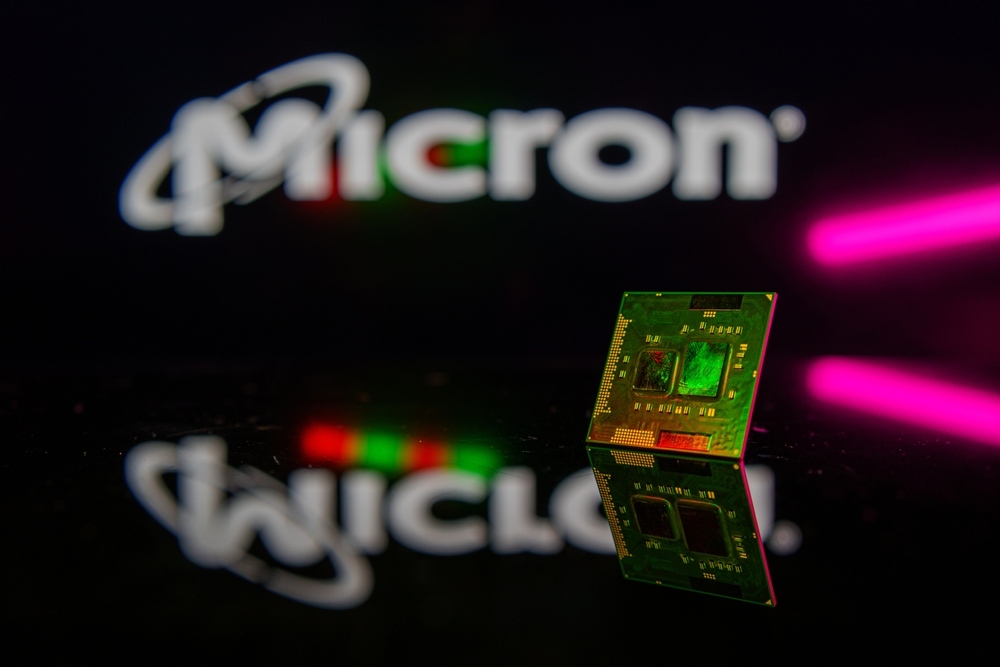
TradingKey - Warren Buffett once mentioned that the first rule of investment is to not lose money. Buying worthy undervalued stocks is a way of putting Buffett's advice into practice. The best undervalued stocks bring long-term capital gains, but they have one other benefit. These depressed stocks include some good defensive stances.
With the global oil supply uncertain, and the U.S. economy facing near-term headwinds, it is perhaps time to lean into stocks that provide some resilience along with long-term growth potential. For investors who can see through to the other side of the overhang and hold until normalization, 2026 promises to be a particularly opportune year to build positions in quality companies at sensible prices.
A Guide to Identify Undervalued Stocks
It is impossible to identify a specific metric which defines a share as undervalued. A better strategy will be to combine quantitative testing with qualitative context.
The first step is to look at the profitability of the firm and compare its operational and net margins against those of its peers. The consistent outperformance of the firm's operational and net margins indicates ongoing competitive advantages.
The second step is to assess the efficiency of management in converting its resources into profit. You can quantify this by reviewing the firm's Return on Equity (ROE) and the Return on Assets (ROA) relative to its competition. A higher ROE and ROA relative to their competitors usually represent a quality company.
Next, review valuation ratios to put everything into context, as valuations typically work best when viewed in context. For example, look at price-to-earnings ratios or EV/EBITDA ratios as they compare to the firm's historical values and industry averages versus to one another. When one company trades at a significant discount compared to its peer group, but has similar or greater growth rates, it clearly presents a mispricing opportunity.
In addition, Price-to-Book ratios can be useful when reviewing capital-intensive firms. However, any firm with a very low Price-to-Book ratio should be investigated further to identify any potential structural issues.
Earnings growth, both historical and projected, should help identify whether an inexpensive valuation is due to temporary headwinds or a long-term slowdown in the company's growth.
Finally, look at the company's balance sheet, Free Cash Flow, and capital allocation. Companies that self-fund growth opportunities, do not carry above-average amounts of leverage, and return capital through share repurchases or dividends often deserve to trade at a higher valuation multiple than their peers.
Different Kinds of Undervalued Stocks
Stocks which are sold for less than they are worth are often priced poorly in different ways. The first group of stocks that fall into this category arise from the cyclicality or intensive capital requirements of the industry as a whole. In particular, stock prices in the housing market, automotive sector, and in some finance markets have a tendency to trade at reasonable multiples to earnings on a recurring basis. As a second group of stocks, turnaround stories have companies that have obvious challenges, but that have a clear path to being repaired through execution and time. The third category of stock getting poorly priced arises from short-term pullbacks due to either a one-time weak quarter or an irrelevant headline that has no bearing on the long-term outlook of the stock. The common thread amongst all three types of stocks is that the market's focus is on present uncertainty rather than undervaluing the long-term cash flows from the stock.
5 Undervalued Stocks for 2026
Micron Technology (MU)
Investors could miss out on profits because many people will assign a very low multiple to the earnings of Micron Technology. This is due in part to the cyclical nature of memory and also the fact that when a downturn occurs in the memory business, investors will often project that downturn too far into the future.
As AI adoption accelerates and data centers are upgraded to accommodate High Bandwidth Memory (HBM), revenues and margins for Micron will fluctuate dramatically as the DRAM and NAND markets move from a downturn to an upcycle. Investors will sometimes discount these fluctuations and value Micron based on its peak earnings or penalize the company for past volatility.
In addition, the market's pessimism around Micron can lead to significant undervaluation of the company's multiyear demand drivers and industry-wide supply discipline. Key risks to Micron are the inherent cyclicality of DRAM and NAND products, the capital intensity to remain competitive, and changes in customer ordering patterns as AI server demand ultimately returns to normal levels.
NextEra Energy (NEE)
In North America, one of the largest developers of renewable energy projects, NextEra Energy, also has a significant regulated utility within its portfolio.
Like many other rate-sensitive businesses, utilities have faced difficult conditions due to higher interest rates pushing down valuations despite stable and largely contracted underlying cash flows. In addition, worries about project financing costs or timing delays for renewable builds have negatively impacted investor sentiment.
Nevertheless, the long-term investment case remains dependent upon steady utility earnings, an expansive development pipeline of wind, solar, and storage projects, and the ongoing requirement for increased grid investment. If interest rates stabilize or decrease, as well as if project execution continues to progress as expected, the valuation of the stock can revert back to historical averages. The key risks facing NextEra are elevated financing costs for prolonged periods, delays in permitting or interconnection processes, and regulatory changes.
Berkshire Hathaway (BRK.B)
Berkshire Hathaway usually has its stock price lower than the actual total of what it would be worth if all parts of the company were sold individually due to investors applying an overall valuation reduction on conglomerates. The fact that it has a decentralized structure makes it more difficult to figure out how to value Berkshire Hathaway as an investor.
Because it has low-cost floating insurance, multiple types of operating businesses in multiple industries (railroads, energy), and a significant amount of publicly traded stocks that have been compounding for years, every opportunity that it has taken advantage of regarding stock buybacks gives indications from management that they believe intrinsic value is higher than current market prices.
Concerns over succession, the lack of a regular dividend payment, and the fact that the majority of the stock held by Berkshire Hathaway is in three or four companies (each representing more than 10% of the total value of its entire portfolio) may create negative sentiment, and thus help contribute to the undervaluation of the stock.
Key risks to consider with Berkshire Hathaway stock include possible catastrophic losses from its insurance division, the cyclical nature of many of the industrial operations it has, and its large equity positions, especially in Apple (AAPL), which will have a significant impact on Berkshire’s future performance.
Lululemon Athletica (LULU)
Lululemon Athletica has transitioned away from a narrative of premium growth and exciting potential to a turnaround opportunity following a significant drop in its share price due to soft comparable sales within the Americas and an executive change.
The stock's recent drop has lowered its valuation to levels of more typical stocks, despite Lululemon's historical performance relative to brand equity, product innovation, and international growth, as well as its successful establishment in China.
Should merchandising return to its core focus on demand, store and digital productivity stabilize at current levels, and international growth continues, both earnings and the valuation multiple could have upside potential to return to their historical levels.
There are risks of brand fatigue if product refreshes do not drive customer enthusiasm, continuing slow consumer demand in North America, and increased competition in the growing athleisure category.
Caterpillar (CAT)
Caterpillar stock price can be less than fair value relative to other industrials when the market fears that demand or order backlogs will consolidate. Recently this has been compounded by concerns about margin collapse in light of slow macro growth.
Yet Caterpillar's upper business unit segments remain resistant to cyclical pressures, providing strong secondary drivers of earnings stability in all four major business lines. Caterpillar believes its flexible cost structure, along with increased returns, has made it more resilient than before to changing market conditions. If the underlying level of end-market demand is better than expected, Caterpillar's ability to generate cash flow will be stronger than current market expectations.
Major risks to Caterpillar include commodity and construction cycles, dealer inventory levels, and economic slowdowns which delay capital spending on equipment.
Why These Stocks Can Be Undervalued
The above company stocks are undervalued for the same reason: a significant difference exists between their short-term view and long-term value.
For example, while Micron has reported fluctuating earnings each quarter, demand for memory chips used in artificial intelligence and cloud computing continues to be strong.
NextEra Energy's share price has been negatively affected by rising interest rates, but approximately two-thirds of its revenue is regulated and/or under long-term contracts.
The complexity of Berkshire Hathaway's investment portfolio and the dividend option make it difficult for investors to assess how much cash flow is generated by its various subsidiaries.
Although Lululemon has received negative attention recently, it has a large international market potential, and its brand image will continue to improve with better merchandise assortments in the future.
Investors are concerned about Caterpillar's ability to generate profits as they move closer to the end of a cyclical recovery; however, many of the assets that make it successful are based on recurring service revenues from existing customers and/or benefit from favorable conditions in the construction industry.
Therefore, all of these stocks appear undervalued based on temporary conditions causing the gap between their actual and perceived value, rather than a permanent lowering of their value.
Benefits and Risks of Buying Undervalued Stocks
If purchased below fair value (i.e., based on estimated intrinsic value), then investors have the benefit of a margin of safety or a cushion that can minimize any downside if things get worse and maximize any upside if things play out as expected.
Additionally, many undervalued companies return capital through dividends or share buybacks, providing a means for investors to benefit from their investments while waiting for improved sentiment regarding the company.
There are examples of stocks that appear to be undervalued due to fixed or transient reasons (i.e., the underlying business is structurally declining), making it difficult to know if a stock is truly undervalued and whether its price will eventually adjust to the underlying fundamentals.
Therefore, while the fundamental thesis for an undervalued stock may be sound and reasonable, patience will be an important factor during the time period required for the market to recognize the improvement. The recognition of changes can take much longer than expected and due to macroeconomic factors (i.e., interest rates increasing and/or slower overall GDP growth), the market may not recognize the company's improvements and may apply meaningless pressure to its current valuation.
Recommended Articles











Comments (0)
Click the $ button, enter the symbol, and select to link a stock, ETF, or other ticker.