


Safe-Haven Rotation? Bitcoin Recovers $70,000 Mark as Gold’s Nine-Day Decline Eyes $4,100



AI Podcast


1. Gold prices have fallen 24%, erasing year-to-date gains and triggering a technical head-and-shoulders top formation, potentially signaling the end of its six-year bull run.
2. Bitcoin shows resilience, trading above $70,000 and demonstrating a bullish ascending channel pattern, with potential to break $80,000 as a risk asset benefiting from capital flight.
3. Geopolitical escalations initially boosted gold as a safe haven, but its decline contrasts with Bitcoin's upward trend.
4. A worsening Middle East situation and rising oil prices could invalidate gold's bearish signals and limit Bitcoin's gains, leading to wide fluctuations.

TradingKey - Gold prices weaken, erasing year-to-date gains; Bitcoin shows resilience, eyeing the $80,000 mark.
On March 24 (GMT+8), Bitcoin ( BTC) has fluctuated above $70,000, with its current price at $70,894. Yesterday, global financial markets plummeted as the situation in the Middle East escalated; Bitcoin prices briefly hit a half-month low of $67,000 before quickly rebounding to $72,000 on the same day, demonstrating strong bullish engulfing price action.
Since the U.S.-Iran war on February 28, Bitcoin has maintained an overall volatile upward trend. On March 4, the price rebounded to $74,000, and on March 17, it reached near $76,000. It is clear that Bitcoin's rebound highs are continuously rising, forming a classic ascending channel.
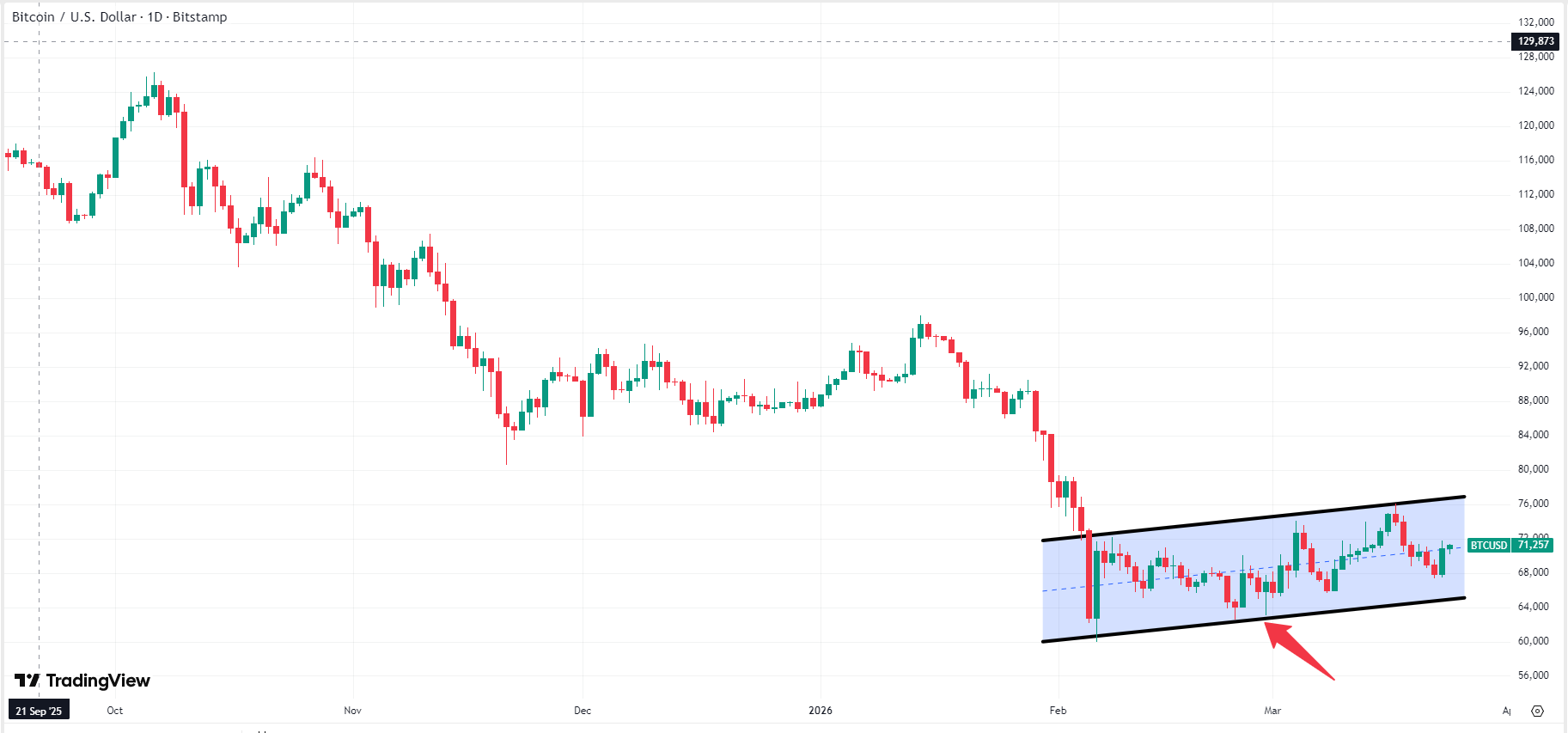 Bitcoin price chart, source: TradingView
In contrast, gold prices have continued to decline, with bears maintaining a dominant advantage. On the first day of the U.S.-Israeli strikes on Iran, spot gold ( XAUUSD) prices jumped to $5,400/oz but have since trended downward, falling to a low of $4,100/oz yesterday. The cumulative drop of $1,300/oz, or 24%, has completely erased all year-to-date gains.
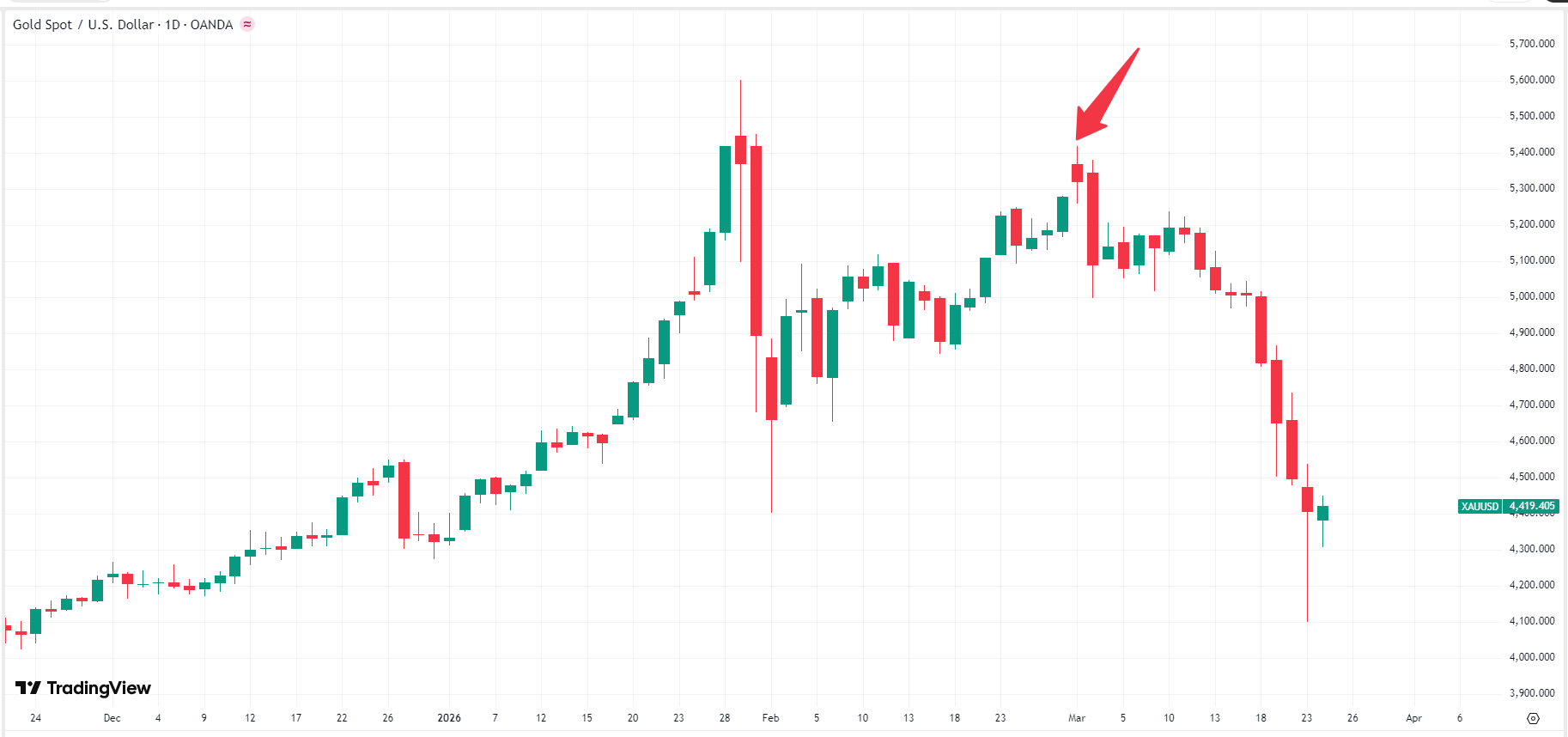 Gold price chart, source: TradingView
From a technical standpoint, the fact that gold prices have broken below the February 2 low of $4,400 means the head-and-shoulders top formation has been triggered. Gold may be ending its six-year bull run to officially enter a bear market, which could be a positive for Bitcoin.
In recent years, geopolitical conflicts, de-dollarization, and interest rate cuts have spurred safe-haven demand for gold, driving its price higher. In contrast, Bitcoin is a safe-haven asset 'in name only' and lacks universal acceptance from global central banks. After surging toward $126,000, it saw its price halved amid intense volatility, proving it is still a risk asset. Therefore, capital flight will benefit Bitcoin as a risk asset, with the potential to break $80,000 in the short term.
However, if the Middle East situation worsens and oil prices spike to drive up inflation, gold prices could break through the $4,400 resistance level. The market might reprice the asset, rendering bearish signals invalid, while Bitcoin's rebound would be stifled, continuing its wide-range fluctuations between $60,000 and $75,000.
Recommended Articles












Comments (0)
Click the $ button, enter the symbol, and select to link a stock, ETF, or other ticker.