


AI Computing Power Ignites Storage Supercycle, Wedbush: Product Prices Surge Over 100%



AI Podcast


A Wedbush report forecasts a memory chip super-cycle, with DRAM and NAND prices potentially surging 130%-150% in H1 2026 due to explosive AI infrastructure demand overwhelming supply. AI servers' significantly higher storage needs are driving this imbalance. Despite this, traditional consumer electronics demand is also recovering. Major memory manufacturers are prioritizing AI-specific, high-margin products, leading to tight general-purpose memory supply, with capacities for 2026 already sold out. UBS suggests AI is restructuring the industry, making operating profit a more reliable indicator than past cyclical metrics for investment timing.
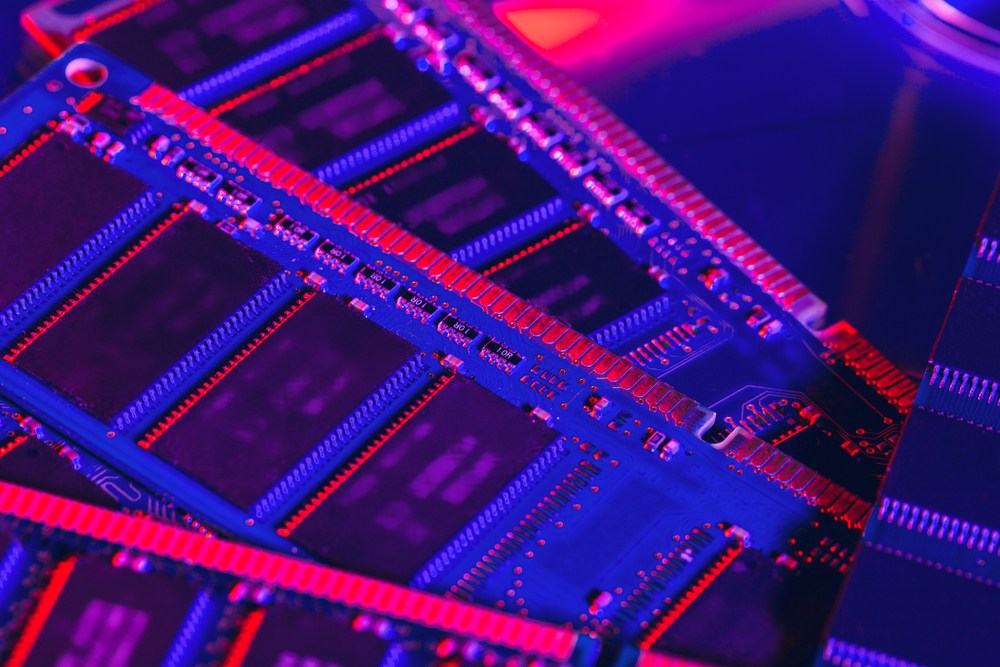
TradingKey - A recent industry report from prominent Wall Street investment bank Wedbush indicates that explosive growth in global AI infrastructure construction is triggering a supply-demand imbalance in the memory chip market. DRAM and NAND prices are poised for "triple-digit gains" in the first half of 2026, with DRAM projected to surge 130%-150% and NAND expected to see similar increases, marking the memory industry's official entry into a new super-cycle.
Wedbush noted that the magnitude of this price surge in memory has exceeded market expectations, reflecting that the pace and strength of the recovery in industry demand are significantly higher than previously forecast.
Meanwhile, the memory supply crunch is also spreading to other parts of the hardware supply chain. Wedbush expects hard disk drive (HDD) manufacturers to adopt more aggressive strategies in future contract pricing, reflecting the widening demand gap across the entire storage supply chain.
AI Computing Power Ignites Storage Supercycle
The underlying logic behind the current surge in memory chip prices is the exponential demand for storage driven by the explosion of AI computing power, which has directly disrupted the industry's original supply-demand balance. AI servers require 8 to 10 times more storage than traditional servers. As global AI large language models transition from the training phase to large-scale scenario-based deployment, AI server shipments are experiencing explosive growth and are rapidly consuming market storage capacity.
From an industry cycle perspective, memory chips are entering a new upcycle, highlighting their long-term investment value. On the demand side, the full-scale explosion of the AI industry and the construction of AI servers and cloud computing infrastructure have generated massive storage demand, making memory chips a core necessity. This, coupled with the gradual recovery of demand for traditional consumer electronics, has created a dual demand driver.
On the supply side, global memory giants are tilting their production capacity toward high-end AI storage. The supply of general-purpose memory chips remains tight, leading to a continuous optimization of the industry's supply-demand structure. Consequently, the upward price cycle exhibits strong sustainability.
Market data confirms the strong momentum of AI demand. According to Gartner's forecast, global AI server shipments will grow by more than 180% year-on-year in 2026, with annual shipments exceeding 1.5 million units. This corresponds to a total demand for AI memory chips of over 12 million units, while the total global capacity for 2025 is only 8 million units, representing a supply-demand gap of more than 30%.
SEMI data indicates that sales of AI server-related chips will reach $169 billion in 2026, a 55% year-on-year increase, with the growth in demand for HBM (High Bandwidth Memory) being particularly significant.
Notably, supply constraints are a key driver of the current memory chip price hike. Global memory industry inventory cycles have dropped to historic lows, with SK Hynix disclosing that its overall inventory is down to approximately four weeks. Leading manufacturers are prioritizing the allocation of advanced capacity to high-margin products required for AI data centers, squeezing consumer-grade storage capacity. Both Kioxia and SK Hynix have stated that their NAND flash and HBM capacities for 2026 are already fully sold out, with the tight supply situation expected to persist into 2027.
Storage Giants Ride the Wave
Driven by the dual drivers of exploding demand for AI computing power and soaring storage prices, core manufacturers in the storage supply chain are seeing unprecedented development opportunities, particularly leading companies with core technologies, capacity advantages, and AI product positioning that are well-positioned to fully capture the industry's dividends.
Micron ( MU )'s latest stellar earnings performance confirms this strong recovery trend. Micron's fiscal 2026 second-quarter revenue grew nearly threefold year-over-year to $23.86 billion, with adjusted earnings per share of $12.20, far exceeding market expectations. The company also provided aggressive guidance, projecting third-quarter revenue to further soar to $33.5 billion, a year-over-year increase of over 200%, with profit expectations also significantly beating analyst forecasts.
Based on this, UBS ( UBS) raised Micron's fiscal 2026 EPS estimate from approximately $41 to approximately $45, and its fiscal 2027 EPS estimate from $42 to approximately $60.
Beyond Micron, earnings forecasts for international storage giants have been significantly raised. Goldman Sachs' latest research report sharply raised Samsung's 2026 operating profit forecast from 181 trillion won to 239 trillion won, approximately $170 billion, representing a fivefold increase year-over-year; SK Hynix's 2026 operating profit forecast was also raised to 202 trillion won, approximately $130 billion.
The strong momentum in the storage industry has also been validated by core players in AI computing power. NVIDIA ( NVDA) CEO Jensen Huang recently stated at the GTC conference that the potential order volume for the Blackwell and Rubin AI systems alone is as high as $1 trillion. NVIDIA's deep collaboration with companies such as Amazon, combined with its priority supply chain security capabilities, provides solid support for storage demand growth over the next two years.
AI Reshapes the Fundamental Logic of the Storage Industry
A new report from the UBS Global Research team suggests that AI computing is restructuring the fundamental logic of the memory industry, rendering traditional cyclical indicators obsolete.
In its latest 'Global I/O Memory Semiconductors' report, UBS reviewed memory industry cycles over the past 20 years and reassessed current leading indicators.
The report notes that the dawn of the AI computing era is pushing the memory industry toward a new supply-demand equilibrium. HBM (High Bandwidth Memory) is consuming more DRAM wafer capacity, and HBM DRAM die sizes are consistently larger than those of DDR. These two supply-side constraints, which increase the 'wafer consumption' per HBM unit, are driving the industry's return-on-equity midpoint higher.
UBS forecasts that the average ROE (Return on Equity) for Samsung, SK Hynix, and Micron will reach 36% between 2026 and 2030, significantly above the 15% average of the past decade. This suggests that relying on old cyclical templates to identify industry peaks may lead to frequent errors.
Previously, investors often used the quarter-on-quarter change in memory contract prices (ASP) as a 'second-derivative' indicator for industry inflection points. However, UBS's review of 10 stock price peaks over the last 20 years revealed an accuracy rate of only 50%, making it difficult to precisely predict price tops in the AI-driven cycle.
UBS proposes that Operating Profit (OP) will serve as a more reliable indicator of industry health, as it integrates price changes, capacity expansion, and cost management, more closely reflecting actual profitability.
Data shows that in 90% of instances over the past two decades, memory stock prices peaked either alongside or ahead of operating profit. Since 2012, stock prices have typically peaked one to two quarters before operating profit. However, UBS warns that AI-induced changes in supply-demand structures may make the timing of earnings more difficult to predict. While operating profit is a key metric, it is not a 'silver bullet'.
This content was translated using AI and reviewed for clarity. It is for informational purposes only.
Recommended Articles










Comments (0)
Click the $ button, enter the symbol, and select to link a stock, ETF, or other ticker.