


Apple’s On-Device AI Delay: A Modest Short-Term Setback with Enduring Strategic Foundations



AI Podcast


Apple's recent hardware launch contrasts with AI development delays, impacting investor sentiment. However, its strategy of focusing on on-device AI, rather than costly cloud infrastructure, offers long-term value. This approach minimizes capital expenditure and shifts inference costs to consumers, unlike cloud-heavy competitors. While the AI feature delays postpone upgrade demand, Apple's substantial installed base and ecosystem provide resilience. The company's low-capital-intensity strategy allows it to avoid the compute arms race and benefit as AI technology matures, suggesting a short-term stumble rather than a fundamental threat to its intrinsic value.
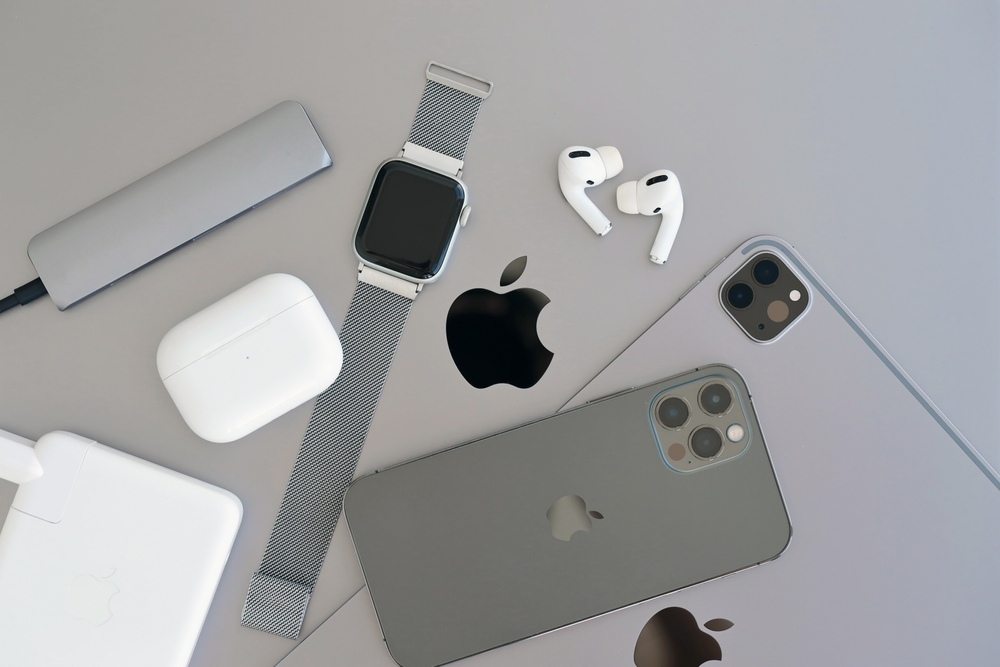
TradingKey - As March began, Apple delivered a set of results that could hardly have been more at odds with itself. On March 11th the company unleashed a barrage of aggressively priced hardware, including the iPhone 17e and a MacBook Neo starting at a mere $599. The aim was clear: to jolt the upgrade cycle back to life. Yet the contrast with its AI efforts could scarcely have been starker.
Fresh reporting from Bloomberg and others in early March confirmed what many had feared: Apple’s large-model development remains bogged down. Not only did recent system updates fail to deliver the long-promised overhaul of Siri, but even the much-vaunted AI smart-home device (codenamed J490 and internally dubbed HomePad) has been pushed back to September. The delay, first signalled in mid-February, has rattled investors. The share price has duly wobbled.
To Wall Street’s short-term gaze, this looks like a classic negative. Yet step back from the immediate mood swings, examine the firm’s financial strategy and the broader competitive landscape, and the episode’s impact on Apple’s intrinsic long-term value is surprisingly contained.
The key is to revisit the company’s deliberate choice in the AI race: build on the device, not in the cloud.
Why shun the cloud arms race? To dodge an endless capital-expenditure sinkhole
The frenzy of cloud-based large models may look irresistible, but Apple’s decision to sit it out is coldly calculated.
First, the technological moat is narrower than it appears—and narrowing fast. Early large models demanded vast resources, but “model distillation” (training smaller versions on the outputs of giants) and a flourishing open-source ecosystem have slashed the catch-up costs for latecomers. Scale alone no longer guarantees permanent supremacy.
Second, pure cloud products suffer from negligible switching costs. User loyalty, data show, lasts only as long as a model remains the best. According to Similarweb’s Global AI Tracker, ChatGPT’s share of generative-AI web traffic fell from roughly 86.7% at the start of 2025 to 64.5% by early 2026 as Google’s Gemini and rivals closed the gap; Gemini’s share, meanwhile, surged from 5.7% to 21.5%. Without an ecosystem lock-in, consumers abandon laggards at will.
The decisive factor, however, is the balance sheet. Cloud AI is devouring free cash flow. Consider the 2025 capital-expenditure figures—and 2026 forecasts—for the five largest technology groups (in billions of dollars):
Company | 2025 CapEx | % of revenue | 2026E CapEx | % of revenue |
Microsoft | ~75 | ~26% | ~120 | ~37% |
Alphabet | ~91.4 | ~23% | ~180 | ~40% |
Amazon | ~132 | ~20% | ~200 | ~28% |
Meta | ~72.2 | ~36% | ~125 | ~50% |
Apple | ~12.7 | ~3% | ~14.3 | ~3% |
The four cloud-heavy giants are on course to spend more than $600 billion combined next year. Apple’s outlays remain firmly anchored in the low single digits as a share of revenue.
Critics argue that paying Google for Gemini API access leaves Apple beholden. In truth, the API fees are a bargain compared with building hundred-billion-dollar infrastructure. Indeed, the sums Apple pays may not even cover Google’s own hardware depreciation and eye-watering electricity bills for serving the iOS user base. History offers a clear precedent: Google already pays Apple roughly $20 billion a year to remain the default search engine on Safari. When genuine killer applications emerge and profitable business models crystallise, Apple—with more than two billion high-value active devices—will be ideally placed to flip from buyer to landlord, charging tolls on traffic through its ecosystem exactly as it has done before.
Why bet on on-device AI? To achieve near-perfect cost-shifting and hardware lock-in
Apple’s focus on the device side reflects a ruthless pursuit of margins.
Training a frontier cloud model can cost tens or hundreds of millions of dollars per run. A typical on-device model costs mere hundreds of thousands. The disparity is vast.
More telling still is the cost transfer. In cloud AI, inference accounts for 70-80% of total expense. On-device AI shifts that burden entirely onto the consumer’s iPhone chip and battery—leaving Apple’s own operating costs close to zero.
The current delay in Apple’s home-grown on-device models is inconvenient but hardly fatal. Third-party solutions can bridge the gap. Once in-house models are ready, they can be swapped in seamlessly; no generic alternative can match the deep, instruction-set-level optimisation Apple can achieve on its unified memory architecture and Neural Processing Units.
Globally, only two tail risks truly matter. One is a genuine worldwide monopoly in large models (currently improbable). The other is a rival smartphone maker offering a must-have, exclusive AI feature that triggers mass defection from iOS (no sign of that yet).
How damaging is the delay? Demand deferred, but the prize remains
The postponement is undeniably unwelcome; it directly affects the “super-cycle” Wall Street most prizes. Analysts had baked into their models the idea that on-device AI would finally unlock replacement demand, especially among the roughly 300 million iPhones more than four years old. Morgan Stanley’s July 2024 note, for instance, lifted its fiscal-2026 iPhone shipment forecast to 262 million units—an extra 27 million on a normalised baseline.
Twenty-seven million extra units may sound modest. Yet it represented the crucial inflection: lifting iPhone sales growth from a near-stagnant 0-1% baseline to more than 10%. In financial terms this is “growth of growth”—the second derivative that matters. The extra revenue, and the consequent expansion of high-margin services, was precisely why investors once awarded Apple such a rich valuation premium.
The delay will push that earnings uplift into the future, causing the current valuation wobble. But the underlying demand has not vanished; it has merely been postponed. Apple’s formidable iOS moat buys it ample strategic breathing room. In the AI era the company need not join the compute arms race. By sticking to its “device, not cloud” playbook it can avoid falling behind while still harvesting the industry-wide gains once the technology matures.
In short, the on-device slowdown is a genuine short-term stumble. Yet as long as the installed base remains secure and Apple’s low-capital-intensity strategy intact, the firm retains formidable resilience. In the face of emotional market swings, a dose of strategic patience may be the wiser course.
Recommended Articles







Comments (0)
Click the $ button, enter the symbol, and select to link a stock, ETF, or other ticker.